
Ready by 10:17pm Sep 19, 2026
How to Understand Your Marking Rubric and Get a Better Grade
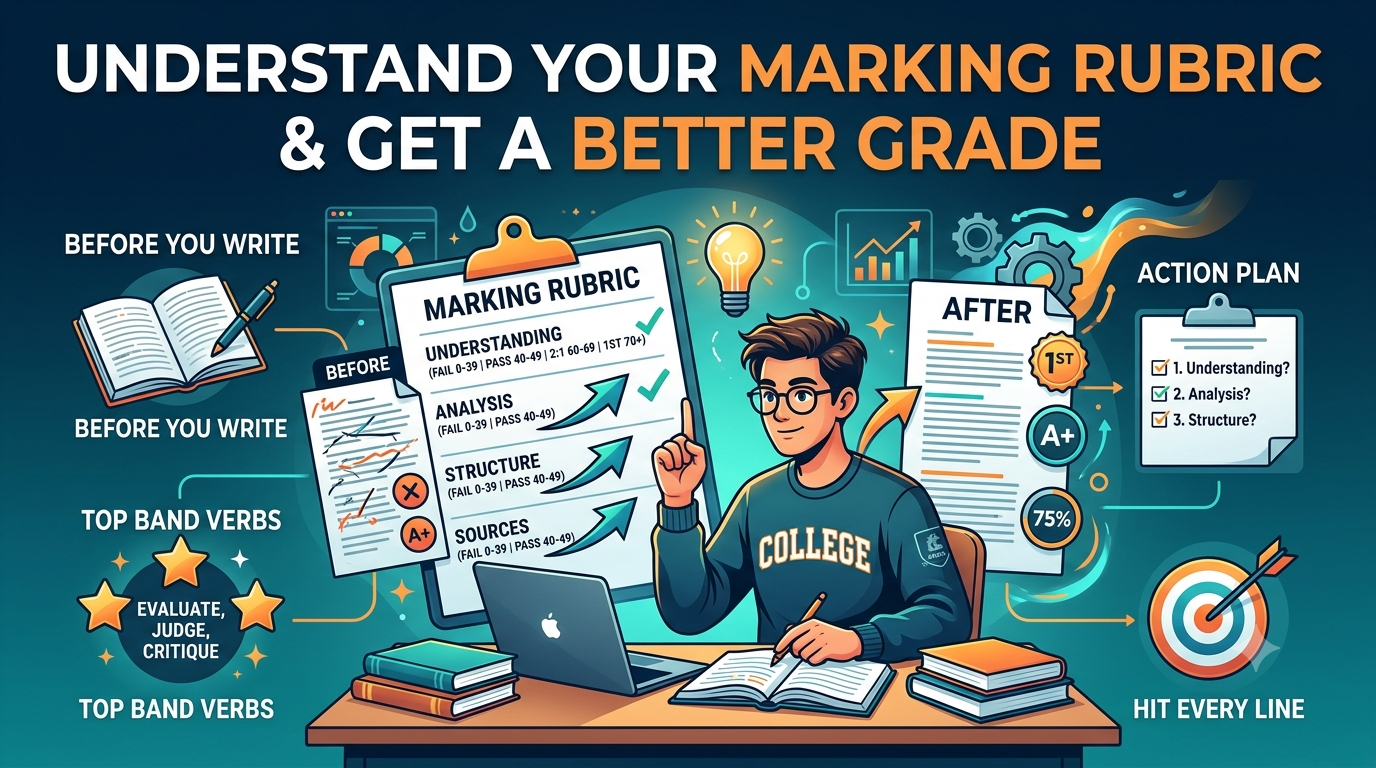
A marking rubric is the exact list of things your marker scores your work against. To use it, read it before you write, turn each criterion into a question about your draft, and pay closest attention to the wording of the top grade band, because those words describe what you have to actually do to reach it.
Most students never read the rubric properly, which is exactly why reading it is such an easy advantage. The rubric is not admin. It is the answer key. It tells you precisely how your work will be judged, and writing to it is one of the simplest ways to lift a grade without working any harder.
What is a marking rubric?
A rubric is the breakdown of criteria your marker uses to grade your work. It lists what is being assessed, often with a description of what each grade band looks like for each criterion. It usually sits in the module handbook or the assignment brief, and it is written for you to read.
Think of it as the marker showing you their scorecard in advance. Once you know what is on it, you can make sure your work hits every line, rather than guessing what they want and hoping you got it right.
What is usually on a rubric?
Rubrics vary by subject and university, but most assess a similar set of things. Knowing the common criteria helps you read any rubric quickly.
| Criterion | What the marker is looking for |
| Understanding | You engaged with the right material and got it right |
| Analysis | You judge and evaluate, rather than just describing |
| Structure | A clear argument the reader can follow throughout |
| Use of sources | Relevant, credible sources used and referenced well |
| Presentation | Formatting, referencing accuracy, and clarity |
These map closely onto what UK markers look for across the board, so once you understand one rubric, most others feel familiar.
What is the difference between a rubric and a brief?
Students often mix these up, so it helps to be clear. The brief is the instruction: it tells you what task to do, the word count, the deadline, and the question to answer. The rubric is the scorecard: it tells you how that task will be judged and what earns each grade. You need both, and they work together.
A common mistake is reading the brief carefully and ignoring the rubric, or the other way round. The brief tells you what to write about. The rubric tells you what a good version looks like. Miss the brief and you answer the wrong question. Miss the rubric and you answer the right question in a way that does not score. Reading both before you start is what keeps your work on target from the first draft.
Why should you read it before you write?
Because it changes what you write, not just how you check it. A student who reads the rubric first writes towards the criteria from the first draft. A student who reads it after, or never, writes in the dark and hopes.
The most common expensive mistake is answering the wrong thing. If the rubric rewards analysis and you hand in description, you can write beautifully and still miss the marks, because you did not do the thing being scored. Reading the rubric first stops this before it happens.
How do you turn a rubric into an action plan?
A rubric is only useful if you act on it. Turn each criterion into a question you ask of your own draft.
- For understanding: have I used the right theories and terms correctly?
- For analysis: have I judged the evidence, or only described it?
- For structure: does my argument follow one clear line?
- For sources: are my sources relevant, credible, and referenced correctly?
- For presentation: is my formatting and referencing clean?
If you can answer yes to each, your work hits the rubric. If not, you know exactly where to improve before you submit.
Why does the top band wording matter most?
Because it tells you what a top grade actually requires, in the marker own words. Rubrics usually describe each grade band separately, and the difference between the wording of the top band and the one below it is the difference you are trying to achieve.
Look at the verbs in the top band. Words like evaluate, judge, critique, and defend describe active thinking, while the band below often uses describe, explain, and outline. If the top band asks you to evaluate and your draft only explains, you now know the exact gap to close. This is the same skill that separates a first from a 2:1.
What if there is no detailed rubric?
Some modules give only a short brief rather than a full grade by grade rubric. When that happens, the brief still contains the criteria, just in less detail, so read it as carefully as you would a rubric. Underline the instruction words, note any weighting it mentions, and look at the learning outcomes for the module, which describe what you are meant to be able to do. If it is still unclear, ask your tutor what a strong submission looks like. Most are happy to explain, and the question shows you are taking the work seriously rather than guessing.
How do rubrics differ between subjects?
The core criteria stay similar, but the balance shifts by subject. An essay based subject like history or politics weights analysis and argument heavily. A science report weights method and accurate results. A practical or creative subject may weight process and reflection. This is why reading your own rubric matters even if you have written good work before in another module. The same effort placed against the wrong criterion does not score, so always check where the marks actually sit for this specific assignment.
One more habit helps: keep the rubric open in a second window while you write, not just while you check. Glancing at it between paragraphs keeps you honest about whether you are still answering what is scored, rather than drifting into what is easy to write.
How do you check your work against the rubric?
Before you submit, go through the rubric line by line with your finished draft open. For each criterion, find the place in your work where you meet it. If you cannot point to where you meet a criterion, you probably have not met it, and that is a fixable problem while there is still time.
This final check is quick and it catches the gaps that cost easy marks. Pair it with a grade prediction for an honest sense of where your draft sits.
Frequently asked questions
What is a marking rubric?
The list of criteria your marker scores your work against, usually with a description of what each grade band looks like. It sits in the module handbook or assignment brief and is written for you to read.
How do I use a rubric to get a better grade?
Read it before you write, turn each criterion into a question about your draft, and focus on the wording of the top grade band, which tells you exactly what a top mark requires.
Why is reading the rubric so important?
Because it stops you answering the wrong thing. If the rubric rewards analysis and you write description, you can write well and still miss the marks. Reading it first keeps your work on target.
What does the top band of a rubric tell me?
It describes what a top grade requires in the marker own words. The verbs there, like evaluate and critique, are the activities you have to visibly perform to reach that band.
Where do I find my marking rubric?
Usually in the module handbook or the assignment brief. If you cannot find it, ask your tutor, because writing without it means guessing how your work will be judged.
Popular posts
What Is Self-Plagiarism? Definition, Examples and How to Avoid It
July 23, 2026
iThenticate vs Turnitin: What Is the Difference?
July 18, 2026
How to Cite Sources: A UK Student’s Guide to Referencing
July 21, 2026
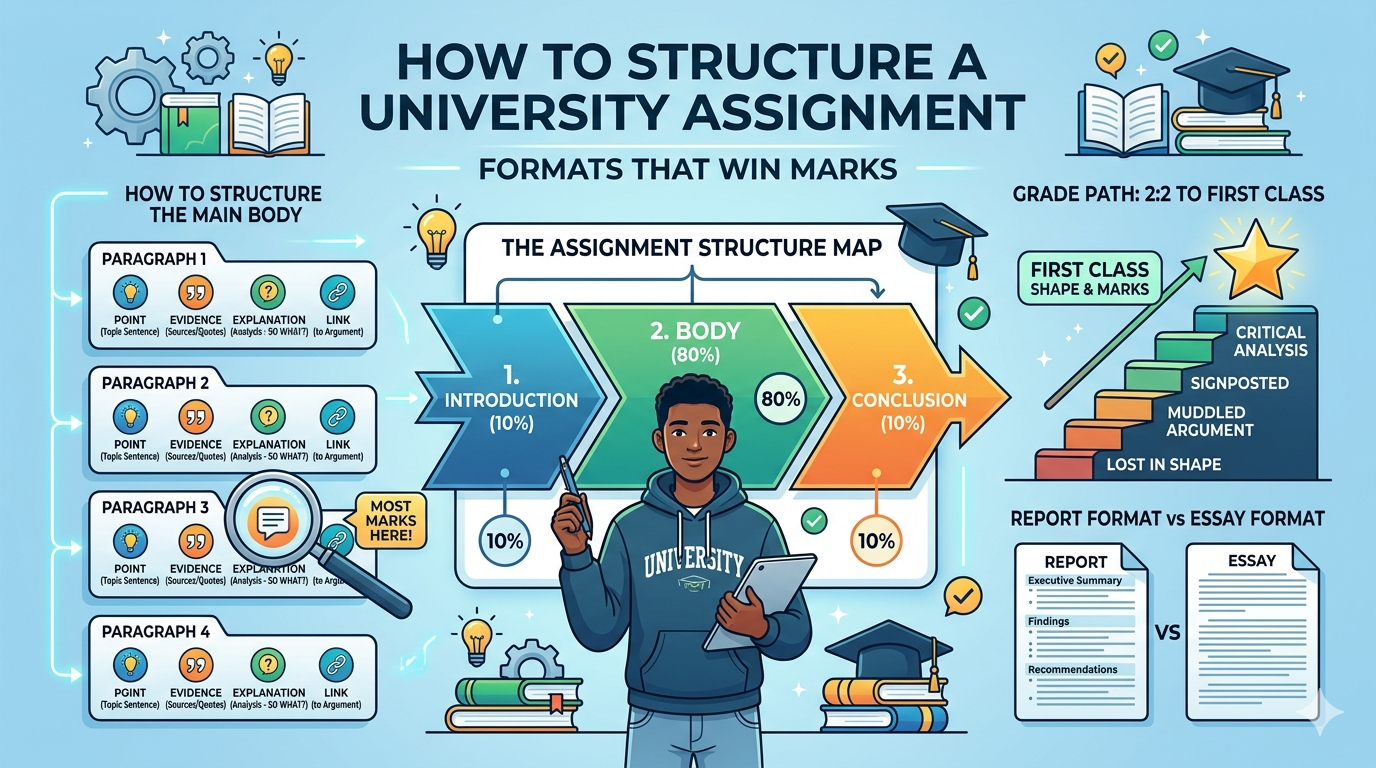
How to Structure a University Assignment: Formats That Win Marks
June 23, 2026
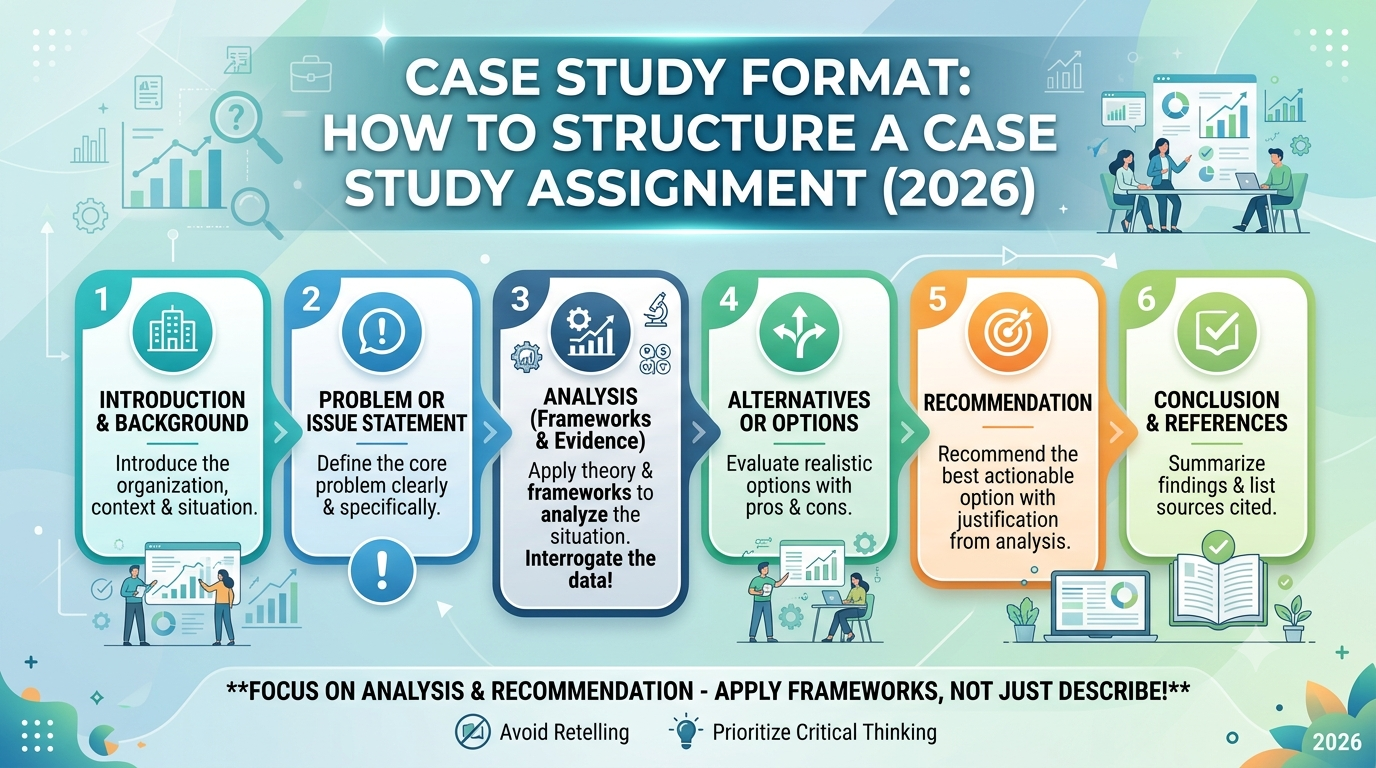
Case Study Format: How to Structure a Case Study Assignment (2026)
August 25, 2026
Want more tips & great deals? Get them sent to your inbox
Please enter a valid E-mail
By clicking "Subscribe" you agree to be contacted via e-mail. You can always unsubscribe from the newsletter


