On this page
The short answer
To tell whether you will pass before results come out, compare your work against two things: the pass mark for your course, and the rubric the marker uses. In the UK the pass mark is usually 40 per cent, in Australia 50 per cent. If your draft clearly meets the lowest passing band on every criterion, you are on the right side of the line. A grade prediction on your draft gives you an outside read while there is still time to act.
The anxiety of waiting for results is worse when you have no idea where you stand. You do not have to wait, because the standard your work is judged against is written down before you submit.
What is the pass mark?
It depends on where you study. The pass mark is the lowest grade that still counts as a pass, and it varies by country and sometimes by programme.
| Region | Typical pass mark |
|---|---|
| United Kingdom | 40 per cent (a Third) |
| Australia | 50 per cent (a Pass) |
| United States | A D grade, though many programmes need a C average |
| Canada and EU | Varies by institution |
Our guide to what counts as a passing grade covers the detail, and university grading systems explains how the scales differ.
How do you tell if your work will pass?
Read the lowest passing band on your rubric, not the top one, and check your draft meets it on every criterion. A pass usually means basic understanding, some relevant evidence, and a structure the reader can follow. If any single criterion falls below that band, that is the one putting your pass at risk, so fix it first. Passing is rarely about the whole piece; it is usually about one weak area dragging the rest down.
Does passing each assessment mean you pass the module?
Not always. Some modules require a minimum mark in a specific assessment, a minimum overall average, or a pass in every component. So you can pass one essay and still have work to do on the module as a whole. Check your programme handbook for the rule that applies to you, because the single assessment mark is only part of the picture.
How can you check before you submit?
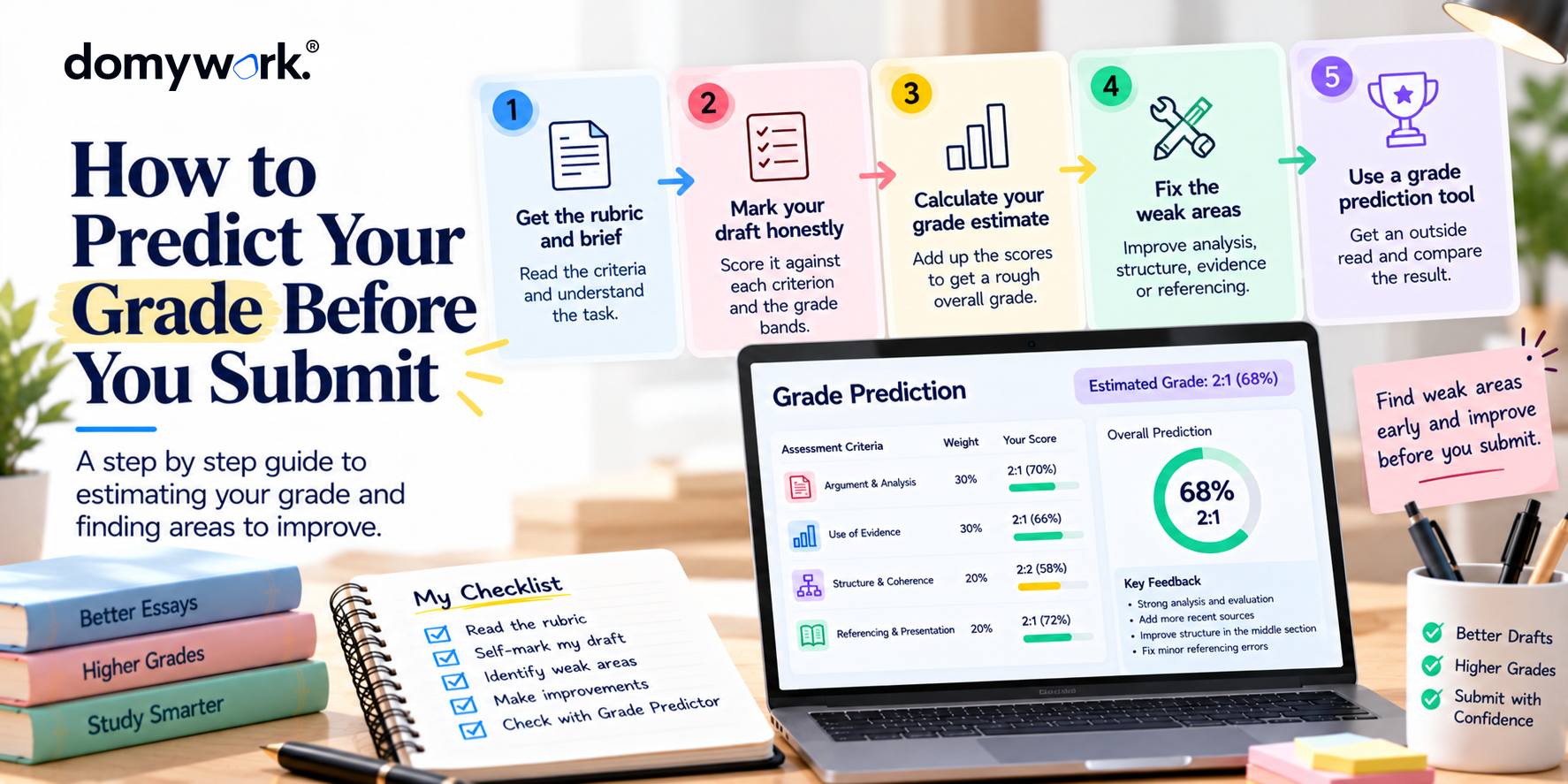
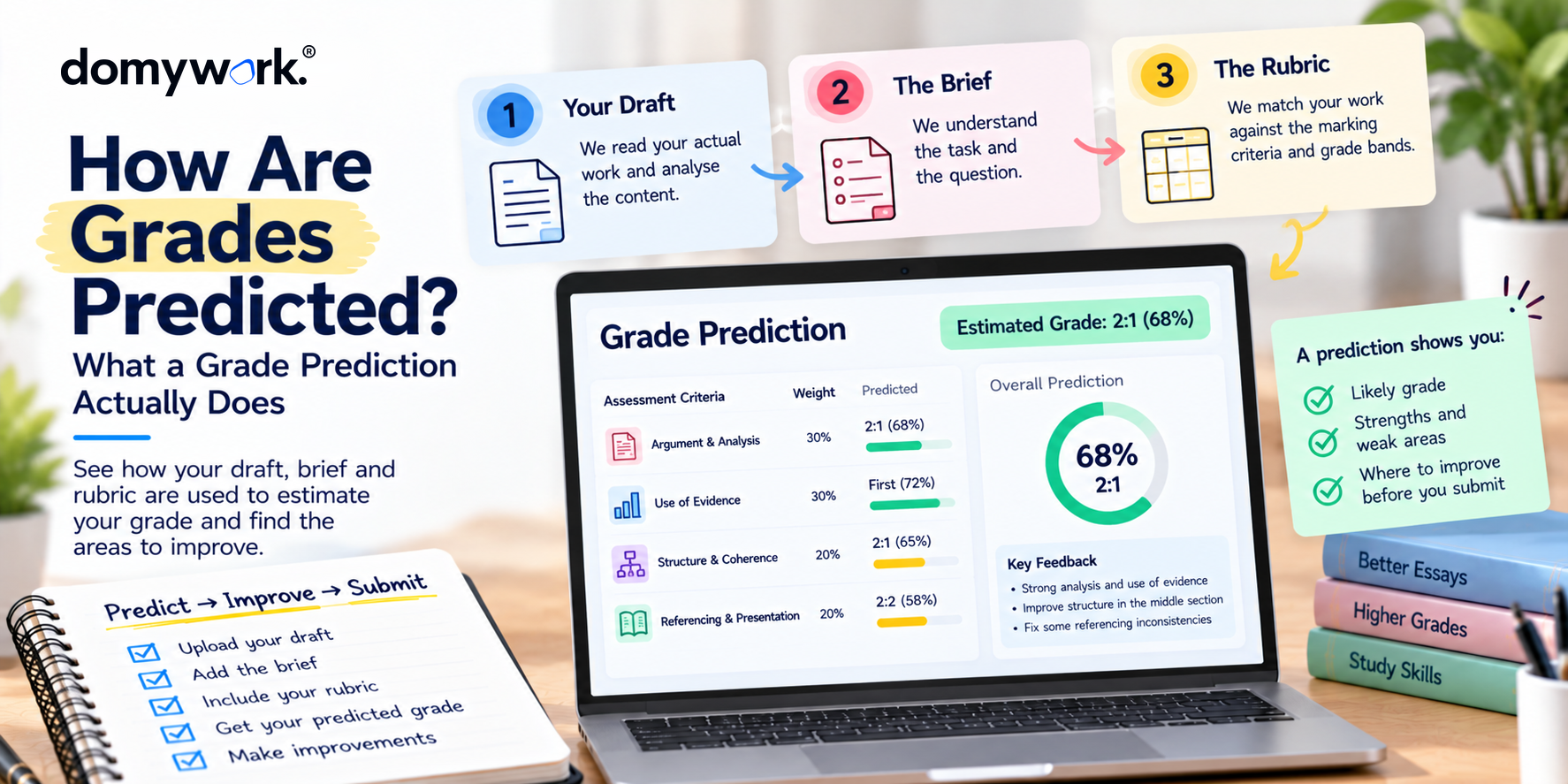
Get an outside read on the draft. Upload your draft, the brief and the rubric to Grade Predictor, and it shows your likely grade against the criteria, so you can see whether you are clear of the pass line with time to fix things. The first two predictions are free with no card, it is a one-off payment after that rather than a subscription, and your uploads are deleted after the prediction. Pair it with your own rubric check for two reads of the same work.
What if the prediction says you are close to the line?
Act on the weakest criteria first, since that is where a pass is won or lost. Add evidence where claims are unsupported, tighten the structure so your argument is easy to follow, and fix referencing, which our guide to reading your rubric helps you target. If the problem is a whole missing section rather than a weak one, prioritise writing that, because an incomplete answer is the most common reason work slips below the pass mark.
What if you think you have already failed?
Most universities allow a resit or resubmission, often with the final mark capped at the pass mark. The rules, deadlines and caps are set by your university, so read the regulations and speak to your tutor early rather than waiting. Failing one assessment is usually recoverable if you act quickly.
Frequently Ask Questions
What is the pass mark at university?
It varies. The UK is usually 40 per cent, Australia 50 per cent, and the US and others differ by programme.
How do I know if I will pass before results?
Check your draft against the lowest passing band on the rubric, on every criterion, and confirm nothing falls below it.
Can I check whether I will pass before submitting?
Yes. A grade prediction on your draft, brief and rubric shows where you sit while there is still time to improve.
What happens if I fail?
Most universities allow a resit or resubmission, often capped at the pass mark. Check your programme regulations.
Written by the DoMyWork team. First published 1 Nov 2026.