
Ready by 7:46am Sep 14, 2026
Entrepreneurship Dissertation Topics: 110+ Ideas with Research Aims (2026)
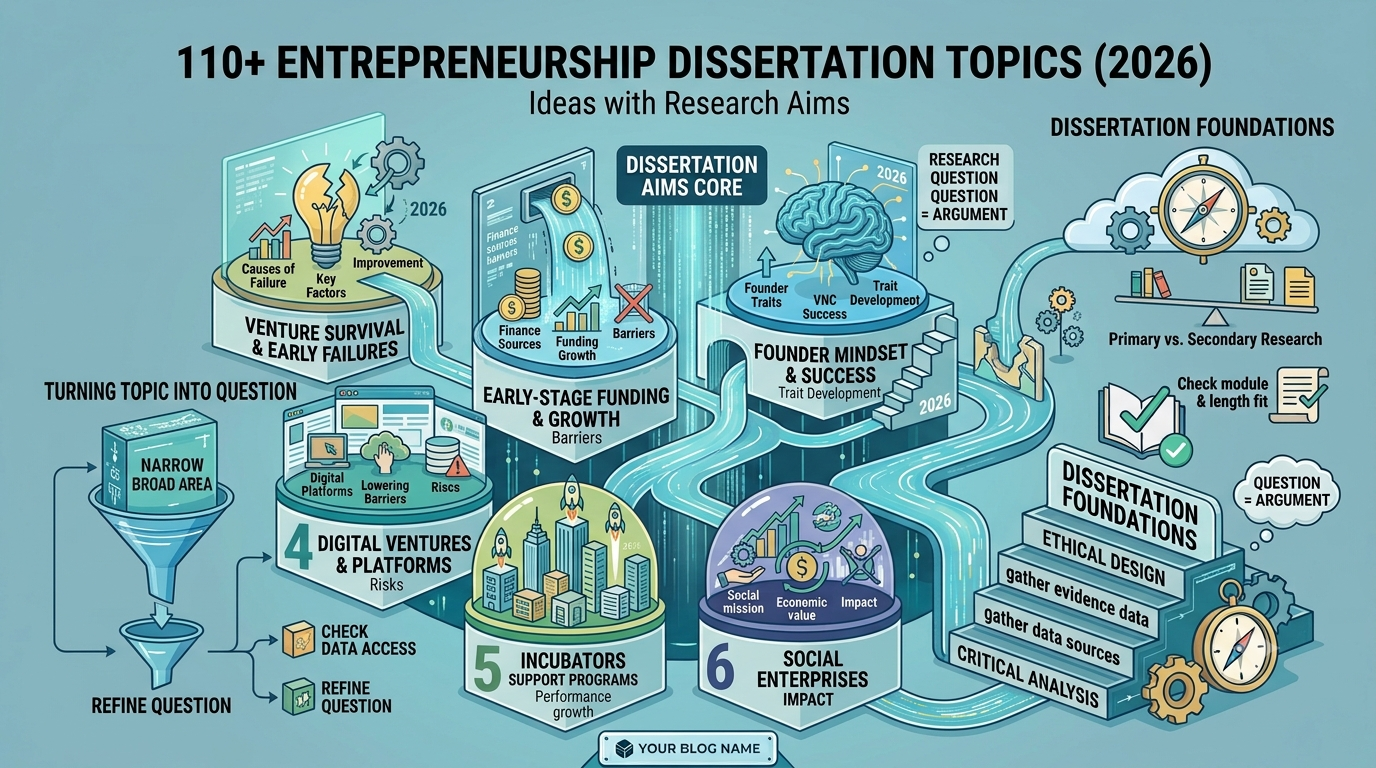
A strong entrepreneurship dissertation topic is specific, researchable and current, focused on a clear relationship you can test with data you can access. Fruitful areas include starting and funding ventures, the entrepreneurial mindset, small business growth, social, digital and technology entrepreneurship. This guide gives 110+ topics with six developed examples and a method for shaping any idea into a research question.
Choosing an entrepreneurship dissertation topic is the first real decision of your project, and it shapes everything that follows. Entrepreneurship spans everything from a founder’s mindset to the funding of a venture, so the best topic is not the broadest but the one you can research well: focused on a specific relationship, grounded in a context you can reach, and connected to a current issue. That focus depends partly on an early decision about method, since entrepreneurship questions can call for interviews with founders, survey data, or existing datasets, a choice our qualitative vs quantitative research guide helps you weigh. This guide walks through how to choose, develops six topics to full aim-and-objectives level, then lists more than 110 further ideas grouped by area.
How do you choose a strong entrepreneurship dissertation topic?
A good topic meets several conditions at once. It should be relevant to your course and current, interesting enough to sustain you for months, and narrow enough to answer within a dissertation. Above all it must be researchable in practice: entrepreneurship research often relies on reaching founders and small business owners, who can be hard to access, so confirm that access before committing. A strong topic also usually addresses a gap or a live issue in the field, which reading recent studies, much as you would when writing a literature review, helps you find. The most common mistake is choosing something too broad: ‘start-up success’ is a field, while ‘how access to early-stage finance affects the growth of UK technology start-ups’ is a question you can investigate.
Six developed entrepreneurship dissertation topics (with aims and objectives)
The six topics below are worked to the level your proposal will need, each with a research aim and three objectives, so you can see how a broad idea becomes a defined study.
1. The factors influencing small business survival in the first five years
Research aim: To identify the factors that most influence whether small businesses survive their first five years.
- To examine the main causes of early business failure.
- To assess which factors most affect survival.
- To evaluate how founders can improve their odds.
2. How access to finance affects start-up growth
Research aim: To investigate how access to early-stage finance affects the growth of start-ups.
- To examine the sources of finance available to start-ups.
- To assess how funding affects growth.
- To identify the barriers to raising finance.
3. The role of the entrepreneurial mindset in venture success
Research aim: To examine how an entrepreneurial mindset affects the success of new ventures.
- To define the traits associated with an entrepreneurial mindset.
- To assess their relationship with venture outcomes.
- To consider whether the mindset can be developed.
4. How digital platforms enable new ventures
Research aim: To analyse how digital platforms lower barriers to entry and enable new ventures.
- To examine how founders use digital platforms to start up.
- To assess their effect on early growth.
- To identify the risks of platform dependence.
5. The impact of incubators and accelerators on start-up performance
Research aim: To evaluate how incubators and accelerators affect the performance of early-stage start-ups.
- To examine the support these programmes provide.
- To assess their effect on growth and survival.
- To identify which forms of support matter most.
6. How social entrepreneurship creates social and economic value
Research aim: To investigate how social enterprises balance and create social and economic value.
- To define social entrepreneurship and its aims.
- To assess how social enterprises measure impact.
- To examine the tension between social mission and profit.
110+ entrepreneurship dissertation topics by area
The ideas below are grouped by sub-area. Treat each as a starting point to narrow around a context and sample you can access. For related fields, see our business dissertation topics and management dissertation topics guides.
Starting and funding a venture
- How founders identify and evaluate opportunities.
- The role of business planning in start-up success.
- How access to finance affects start-up growth.
- The impact of crowdfunding on new ventures.
- How venture capital shapes start-up strategy.
- The role of bootstrapping in early growth.
- How angel investment affects start-ups.
- The impact of grants on early-stage ventures.
- How founders decide when to seek funding.
- The role of pitching in raising finance.
The entrepreneurial mindset and traits
- How the entrepreneurial mindset affects venture success.
- The role of risk tolerance in entrepreneurship.
- How resilience affects founder outcomes.
- The relationship between creativity and entrepreneurship.
- How self-efficacy affects venture creation.
- The role of opportunity recognition in success.
- How founder motivation shapes a venture.
- The effect of prior experience on entrepreneurship.
- How entrepreneurial education affects intentions.
- The role of passion in founder persistence.
Small business growth and survival
- The factors influencing small business survival.
- How SMEs achieve sustainable growth.
- The barriers to scaling a small business.
- How management skills affect SME survival.
- The role of networks in small business growth.
- How digital adoption affects SME performance.
- The effect of location on small business success.
- How SMEs build customer loyalty.
- The role of innovation in SME competitiveness.
- How economic conditions affect small businesses.
Innovation and technology entrepreneurship
- How technology start-ups scale rapidly.
- The role of innovation in venture success.
- How founders manage disruptive technology.
- The impact of R&D on start-up growth.
- How tech start-ups protect intellectual property.
- The role of product-market fit in success.
- How lean start-up methods affect outcomes.
- The barriers to commercialising new technology.
- How AI is reshaping entrepreneurship.
- The role of prototyping in venture development.
Social and sustainable entrepreneurship
- How social enterprises create value.
- The tension between social mission and profit.
- How social entrepreneurs measure impact.
- The role of sustainability in new ventures.
- How green start-ups gain competitive advantage.
- The funding challenges of social enterprises.
- How social entrepreneurship tackles local problems.
- The role of purpose in attracting customers.
- How social ventures scale their impact.
- The barriers facing sustainable start-ups.
Digital and online entrepreneurship
- How digital platforms enable new ventures.
- The rise of the solo online entrepreneur.
- How e-commerce lowers barriers to entry.
- The role of social media in start-up marketing.
- How influencer businesses are built.
- The impact of the gig economy on entrepreneurship.
- How online marketplaces affect small ventures.
- The risks of platform dependence for founders.
- How digital tools support lean start-ups.
- The role of data in digital entrepreneurship.
Entrepreneurial ecosystems and policy
- How entrepreneurial ecosystems support start-ups.
- The role of government policy in entrepreneurship.
- How incubators and accelerators affect start-ups.
- The impact of universities on start-up creation.
- How regional factors shape entrepreneurship.
- The role of mentorship in venture success.
- How networks support new founders.
- The effect of tax policy on start-ups.
- How culture affects entrepreneurial activity.
- The role of clusters in supporting innovation.
Women and minority entrepreneurship
- The barriers facing women entrepreneurs.
- How access to finance differs for women founders.
- The role of networks in women’s entrepreneurship.
- How minority entrepreneurs overcome barriers.
- The impact of immigrant entrepreneurship.
- How gender affects funding decisions.
- The role of role models in women’s entrepreneurship.
- How support programmes affect underrepresented founders.
- The motivations of women entrepreneurs.
- How diversity affects venture outcomes.
Family business and succession
- How family businesses manage succession.
- The role of family dynamics in business decisions.
- How family firms balance tradition and change.
- The challenges of professionalising a family business.
- How family businesses sustain across generations.
- The role of trust in family enterprises.
- How conflict affects family business performance.
- The impact of next-generation involvement.
- How family firms approach innovation.
- The effect of family values on strategy.
Failure, resilience and learning
- What founders learn from business failure.
- How resilience affects recovery from failure.
- The causes of start-up failure.
- How founders cope with setbacks.
- The role of learning in serial entrepreneurship.
- How failure affects future ventures.
- The stigma of failure in entrepreneurship.
- How founders pivot in response to problems.
- The role of persistence in overcoming setbacks.
- How support networks help founders recover.
- How economic shocks affect small ventures.
Entrepreneurial finance and strategy
- How founders manage cash flow in early stages.
- The role of financial literacy in venture survival.
- How pricing strategy affects start-up growth.
- The impact of financial planning on SMEs.
- How ventures manage the risk of rapid growth.
- The role of strategy in scaling a start-up.
- How founders decide on a business model.
- The effect of competition on start-up strategy.
- How ventures build competitive advantage.
- The role of partnerships in venture growth.
What makes a strong entrepreneurship dissertation topic?
Beyond meeting the practical conditions above, the strongest topics share a clear angle. They focus on a specific relationship, such as how one factor affects a venture outcome, rather than describing a broad area, which gives you something to test rather than summarise. They are grounded in a definable context, a sector, a country, a type of founder or venture, which keeps the scope manageable and the data reachable. And they connect to a current issue or a gap in the literature, which gives the work relevance. A topic that combines a focused relationship, a clear context and a genuine gap will nearly always make a stronger dissertation than a broad or descriptive one.
How do you turn a topic into a research question?
A topic is a starting area; a research question is what your dissertation answers, so the next step is to sharpen one into the other. Take your chosen area, add a specific context and a relationship to investigate, and phrase it as a question evidence can answer, so ‘start-up funding’ becomes ‘how does access to early-stage finance affect the growth of UK technology start-ups?’. From there you decide what data you need and whether it is best gathered fresh or drawn from existing sources, a choice our primary vs secondary research guide helps you make, then set the plan out in a research proposal. Grounding the question in entrepreneurship theory is what turns it into research rather than commentary.
Tips for refining your topic
- Start from areas that genuinely interest you, then narrow to a specific question within them.
- Check you can reach the founders, ventures or data the question needs before committing.
- Read recent entrepreneurship journals to spot gaps and current debates.
- Discuss your shortlist with your supervisor early, since they can flag what is feasible.
- Keep the scope tight; a narrow question answered well beats a broad one answered thinly.
Once you have a topic and question, the next steps are designing the study and organising the write-up. Our how to write a dissertation methodology guide covers the research design, and our how to structure an assignment guide helps you organise the whole piece. Before you submit, it is worth checking your own finished draft for originality, which you can do with our plagiarism check. Whichever area you choose above, the same principle holds throughout: narrow the topic, match the method to it, and let a clear, evidenced argument carry the work.
Popular posts

Primary vs Secondary Research: Which Should You Use?
February 25, 2026

How to Write a Capstone Project Outline (Structure and Example)
June 25, 2026
140 Marketing Research Topics for Papers (2026)
September 7, 2026

110+ Nursing Dissertation Topics and Ideas for 2026
March 2, 2026
110+ Hospitality and Cookery Assignment Topics for 2026
July 10, 2026


Want more tips & great deals? Get them sent to your inbox
Please enter a valid E-mail
By clicking "Subscribe" you agree to be contacted via e-mail. You can always unsubscribe from the newsletter


