
Ready by 8:58am Oct 27, 2026
Grading rubrics explained
A grading rubric is the scoring guide your marker uses on your work. It lists the criteria they judge, such as argument, evidence, structure and referencing, and describes what each grade band looks like for each one. Read it closely and you know exactly what the mark is built from, which is often the difference between a good grade and a band higher.
What is a grading rubric?
A rubric turns a vague instruction into a set of things that are actually marked. Each criterion usually carries a weight, and each has descriptions for the different grade bands. The marker reads your work against those descriptions and decides where it sits. That is why two assignments on the same topic can earn very different grades: the rubric, not the topic, decides the score. For the marker’s side of this, see how to understand your marking rubric and what UK university markers look for.
What are the three types of rubric?
- Analytic: a separate score for each criterion, added up for the total. The most detailed type, and the most useful to you, because it shows where marks are won and lost.
- Holistic: one overall judgement against whole-grade descriptors, rather than a score per criterion. Faster for the marker, but it tells you less about where you fell short.
- Single-point: one column describing the standard expected, with room for the marker to note where you went above or below it. Common in feedback-led courses.
How do you read your rubric?
- Find the weights. Put your time where the marks are. A criterion worth 30 per cent deserves more than one worth 10.
- Read the top band for each criterion as a checklist. That is the standard you are aiming at, in the marker’s own words.
- Match each part of the brief to a criterion. Anything in the brief that is not in the rubric is still expected, but it is not where the marks sit.
- Check the format and referencing bands. These are easy marks that tired drafts throw away.
What do markers look for in each band?
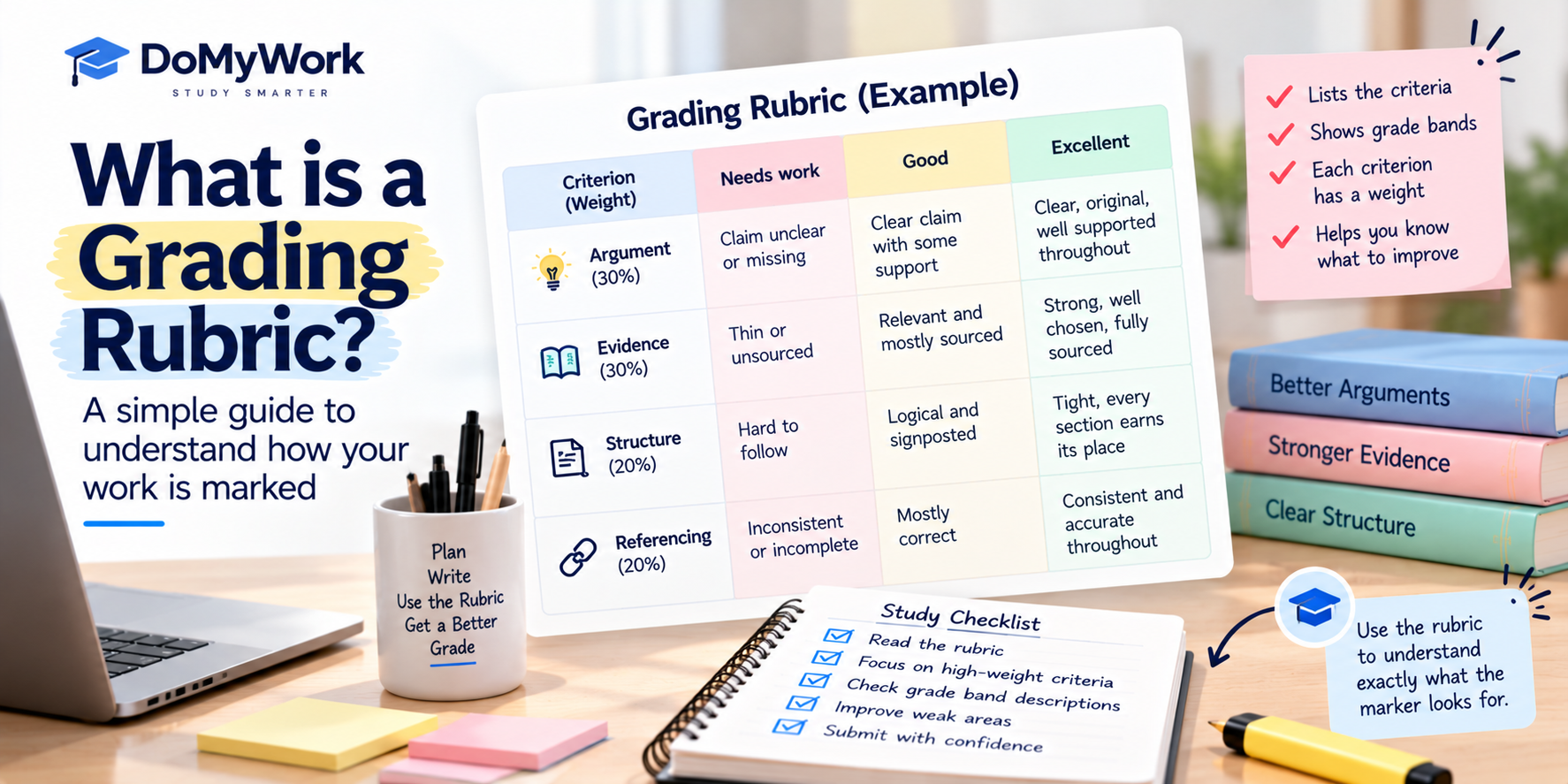
Here is a short analytic rubric of the kind you might be handed. The wording is illustrative, but the shape is standard.
| Criterion | Weight | Needs work | Good | Excellent |
|---|---|---|---|---|
| Argument | 30% | Claim unclear or missing | Clear claim with some support | Clear, original, well supported throughout |
| Evidence | 30% | Thin or unsourced | Relevant and mostly sourced | Strong, well chosen, fully sourced |
| Structure | 20% | Hard to follow | Logical and signposted | Tight, every section earns its place |
| Referencing | 20% | Inconsistent or incomplete | Mostly correct | Consistent and accurate throughout |
Read across a row to see how to move from Good to Excellent. The gap is usually specific and fixable: one more source, a clearer claim, a tighter section. The structure band is easier once you have read how to structure an assignment, and the referencing band once you follow the Harvard referencing guide.
What is peer assessment?
Some courses ask classmates to mark a draft against the same rubric. Treat it as a free dry run. If a peer using the rubric cannot find your argument, the marker may not either. It is a cheap way to catch a weak band before it costs you.
How do you turn your rubric into a grade prediction?
Reading the rubric tells you what is marked. The next question is how your draft would actually score against it. Grade Predictor answers that: upload your draft, the brief and the rubric, and it applies them to show the likely grade, so you can fix the weak criteria before you submit. The first two predictions are free with no card, and your upload is deleted after the prediction. For a worked write-up against a rubric, the case study format guide shows the pattern.
What are the common rubric mistakes?
- Writing to the task instead of the criteria, so good work misses the marked points.
- Ignoring the weights, and spending the most time on a low-value criterion.
- Leaving referencing and formatting to the end, where easy marks get lost.
- Reading only the top band, and not seeing what drops a draft into the one below.
Frequently Ask Questions
What is a grading rubric?
The scoring guide a marker uses, listing the criteria they judge and describing what each grade band looks like for each one.
What is an analytic rubric?
A rubric that scores each criterion separately and adds them up, so you can see exactly where marks are won and lost.
How do markers use rubrics to grade?
They read your work against each criterion’s band descriptions, decide where it sits, and combine those judgements into the final grade.
Popular posts

Nursing Dissertation Topics: 110+ Ideas with Research Aims (2026)
March 2, 2026
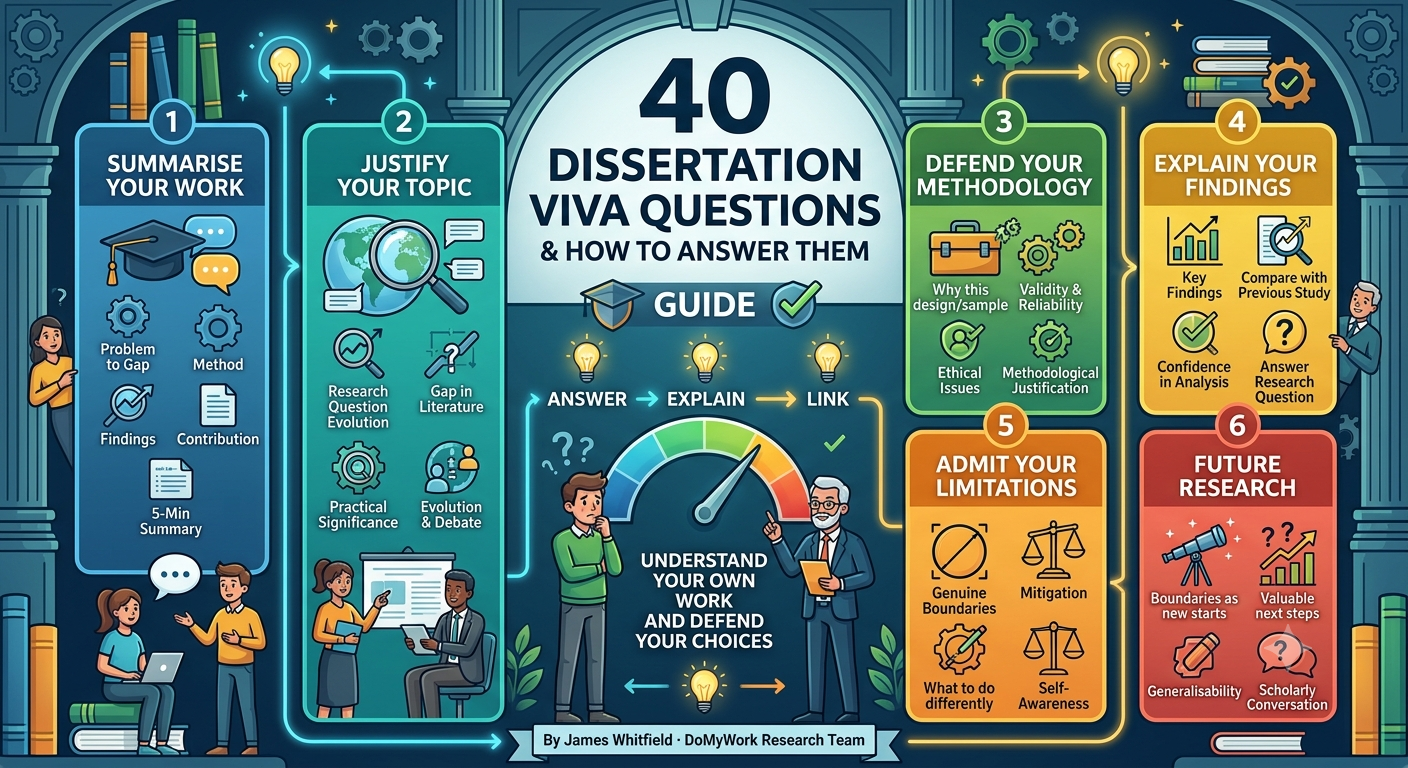
40 Dissertation Viva Questions and How to Answer Them
July 9, 2026

120+ Marketing Dissertation Topics and Ideas for 2026
March 14, 2026
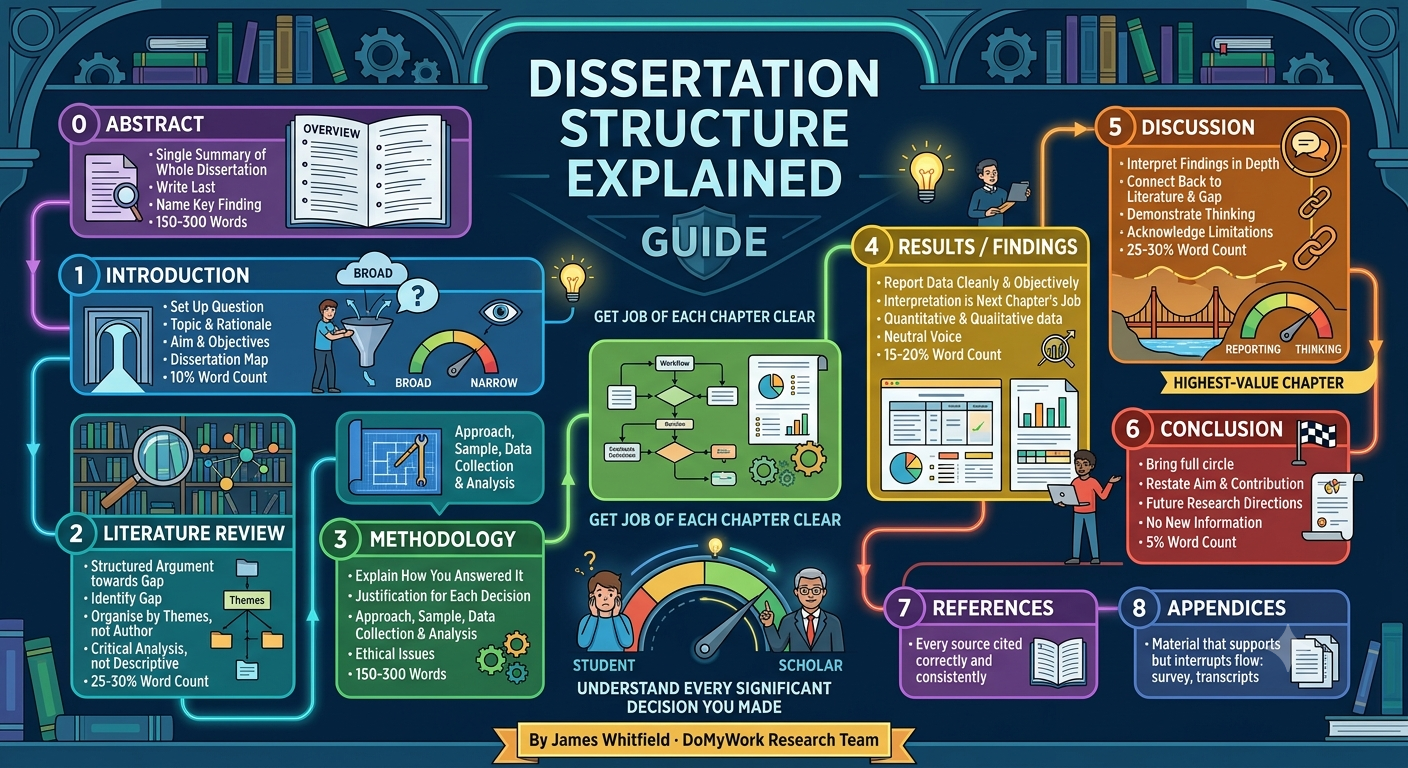
Dissertation Structure Explained Chapter by Chapter
July 11, 2026
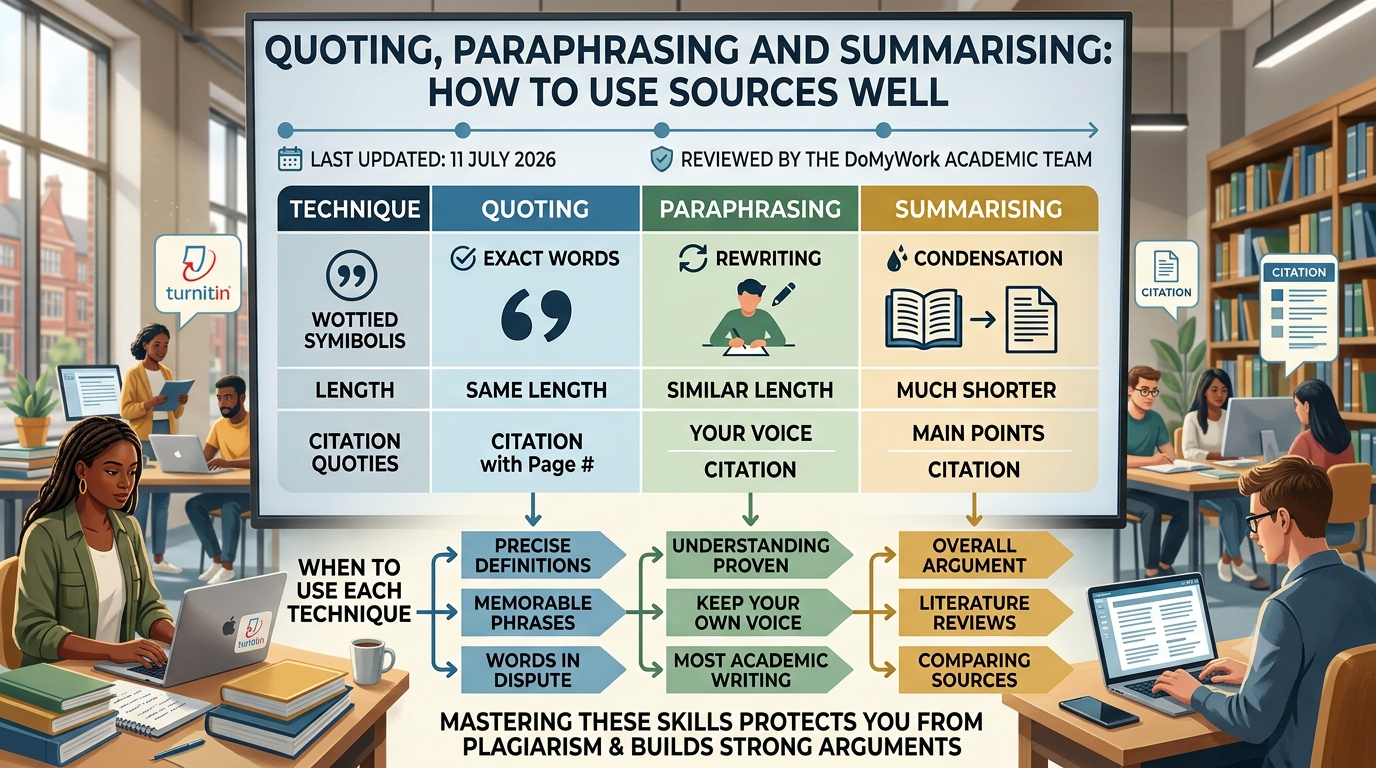
Quoting, Paraphrasing and Summarising: How to Use Sources Well
July 22, 2026
Want more tips & great deals? Get them sent to your inbox
Please enter a valid E-mail
By clicking "Subscribe" you agree to be contacted via e-mail. You can always unsubscribe from the newsletter
We use cookies for analytics and ads to improve DoMyWork. Accept or reject them; the site works either way. Privacy Policy