
Ready by 7:03am Oct 16, 2026
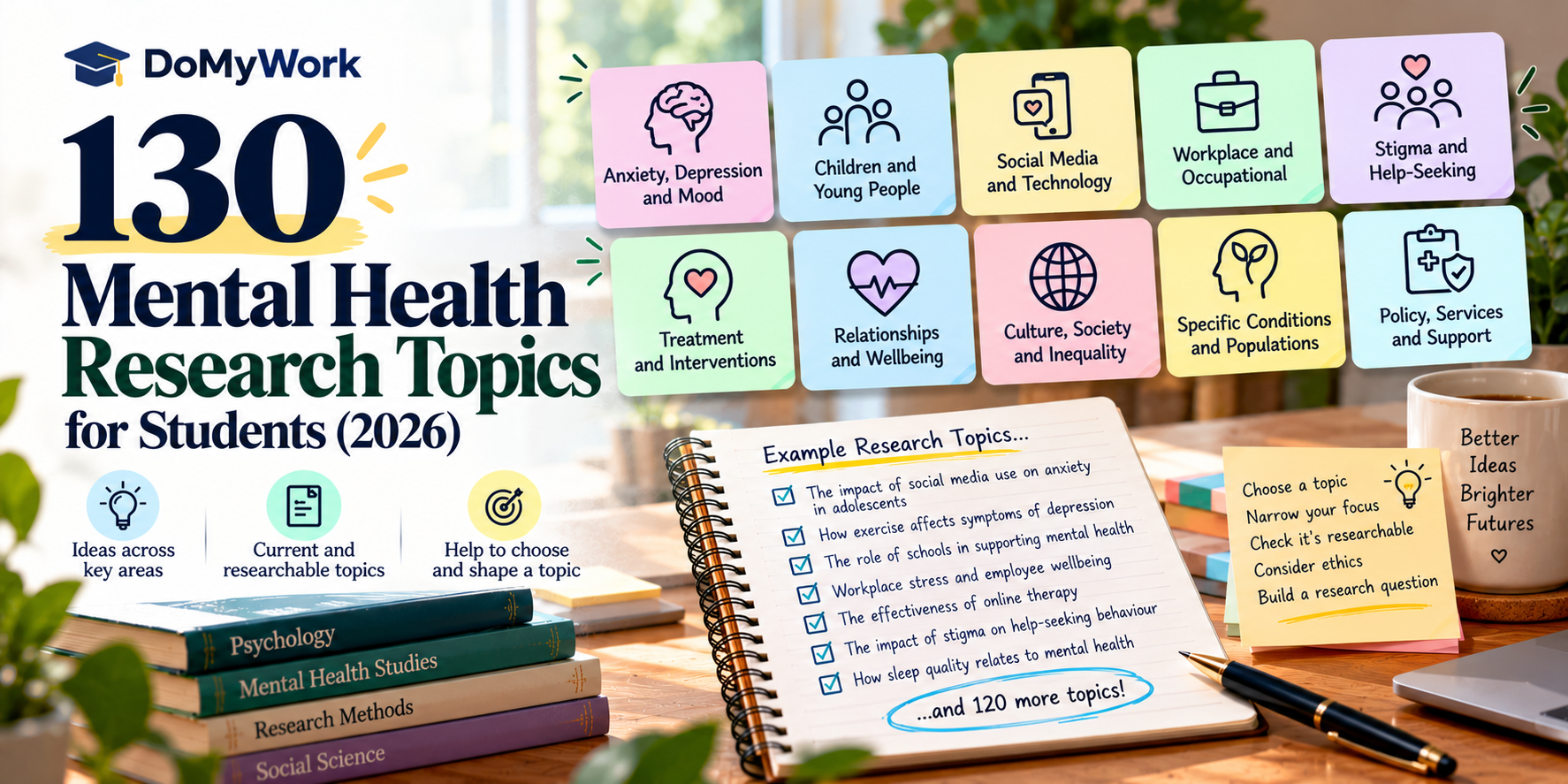
130 Mental Health Research Topics for Students (2026)
A strong mental health research topic is specific, researchable and handled with care, focused on a clear relationship you can study ethically. Fruitful areas include anxiety and depression, young people, social media, the workplace, stigma, treatment and society. This guide gives 130 topics grouped by area, with guidance on choosing one and shaping it into a research question.
Mental health is one of the most important and fast-moving areas of research, which makes it a rich source of topics for psychology, nursing, education and social science students. It is also a sensitive subject, so a good topic here is not only focused and researchable but handled with care for the people it concerns. Because mental health research usually involves people, the choice between measuring and understanding matters early, which our qualitative vs quantitative research guide helps you weigh. This guide gives 130 topics grouped by area, then shows how to shape one into a research question and study it responsibly.
How do you choose a mental health research topic?
A good topic meets several conditions at once. It should be relevant to your course and current, focused on a specific relationship rather than a whole area, and researchable in practice, which for mental health usually means access to participants or existing data within strict ethical limits. Sensitive topics or vulnerable groups raise real ethical requirements, so a workable topic is one you can study without risk to participants. A strong topic also addresses a live issue or a gap, which reading recent studies, much as you would when writing a literature review, helps you find. The most common mistake is choosing something too broad: ‘anxiety’ is a field, while ‘how social media use relates to anxiety in first-year university students’ is a question you can investigate.
130 mental health research topics by area
The topics below are grouped by area. Narrow any of them to a specific group, setting or condition you can study ethically.
Anxiety, depression and mood
- The effectiveness of cognitive behavioural therapy for anxiety.
- How exercise affects symptoms of depression.
- The relationship between sleep and mood.
- Factors that predict recovery from depression.
- How social support affects anxiety.
- The role of rumination in depression.
- The link between chronic stress and anxiety.
- How mindfulness affects anxiety symptoms.
- The impact of loneliness on depression.
- How diet relates to mood.
- The effectiveness of self-help for mild anxiety.
- How comorbidity affects treatment of mood disorders.
- How seasonal change affects mood.
Children and young people
- The relationship between social media use and adolescent anxiety.
- How school pressure affects young people’s mental health.
- The effect of early intervention on child outcomes.
- How bullying affects mental health.
- The impact of exams on student stress.
- How the family environment affects child mental health.
- How peer relationships affect adolescent wellbeing.
- The role of schools in supporting mental health.
- How screen time affects children’s wellbeing.
- The impact of parental mental health on children.
- How adverse childhood experiences affect later mental health.
- The effectiveness of school counselling.
- How the pandemic affected young people’s mental health.

Social media and technology
- How social media use relates to body image.
- The effect of social comparison on wellbeing.
- How online communities support mental health.
- The impact of cyberbullying on mental health.
- How digital detoxes affect wellbeing.
- The role of mental health apps in support.
- How influencer content affects young people.
- The effect of screen time on sleep and mood.
- How online therapy compares with in-person therapy.
- The relationship between social media and loneliness.
- How gaming affects mental health.
- The effect of constant connectivity on stress.
- How online misinformation affects mental health beliefs.
Workplace and occupational
- The causes of workplace burnout.
- How remote work affects mental health.
- The impact of job insecurity on wellbeing.
- How workload affects stress.
- The role of managers in employee mental health.
- How workplace wellbeing programmes affect staff.
- The effect of long hours on wellbeing.
- How work-life balance affects mental health.
- The impact of workplace stigma on help-seeking.
- How organisational culture affects wellbeing.
- The mental health of healthcare workers.
- How flexible working affects wellbeing.
- The effect of commuting on stress.
Stigma, awareness and help-seeking
- How stigma affects help-seeking.
- The effectiveness of mental health awareness campaigns.
- How culture shapes attitudes to mental health.
- The role of language in mental health stigma.
- How attitudes affect help-seeking among men.
- The impact of media portrayals of mental illness.
- How education reduces stigma.
- The effect of public disclosure on attitudes.
- How stigma varies across communities.
- The role of peer support in reducing stigma.
- How schools can reduce stigma.
- The impact of self-stigma on recovery.
- How social media shapes mental health conversations.
Treatment, therapy and services
- The effectiveness of CBT compared with other therapies.
- How access to therapy affects outcomes.
- How waiting times affect mental health outcomes.
- The effectiveness of group therapy.
- How the therapeutic relationship affects recovery.
- The role of digital therapy tools.
- How early intervention services affect outcomes.
- The effectiveness of mindfulness-based therapy.
- How relapse can be prevented.
- The role of community mental health services.
- How integrated care affects outcomes.
- The effectiveness of talking therapies.
- How service design affects engagement.
Mental health and society
- How social inequality affects mental health.
- The relationship between poverty and mental illness.
- How housing affects mental health.
- The mental health impact of unemployment.
- How discrimination affects wellbeing.
- The effect of social isolation on mental health.
- How community affects wellbeing.
- The impact of urban living on mental health.
- How migration affects mental health.
- How austerity affects mental health services.
- The effect of social connection on wellbeing.
- How loneliness affects public health.
- The relationship between debt and mental health.
Lifestyle, physical health and wellbeing
- How exercise affects mental health.
- The relationship between diet and wellbeing.
- How sleep affects mental health.
- The effect of nature on wellbeing.
- The relationship between alcohol and mental health.
- The impact of chronic illness on mental health.
- How physical activity reduces stress.
- The role of nutrition in mood.
- How gratitude practices affect wellbeing.
- The effect of hobbies on mental health.
- How mindfulness affects wellbeing.
- The relationship between fitness and mood.
- How lifestyle change affects recovery.
Specific groups and populations
- The mental health of university students.
- How mental health affects older adults.
- The wellbeing of unpaid carers.
- Mental health in the LGBTQ+ community.
- How mental health affects new parents.
- The mental health of veterans.
- How mental health affects refugees and asylum seekers.
- The wellbeing of people with disabilities.
- Mental health in rural communities.
- How mental health affects athletes.
- The wellbeing of frontline workers.
- Mental health among ethnic minority groups.
- How mental health affects people with long-term conditions.
Current issues and policy
- The mental health legacy of the pandemic.
- How mental health policy affects services.
- The impact of funding on mental health care.
- How the cost-of-living crisis affects wellbeing.
- The role of prevention in mental health policy.
- How schools are responding to a youth mental health crisis.
- The impact of social media regulation on wellbeing.
- How workplaces are responding to burnout.
- The future of digital mental health care.
- How communities build mental health resilience.
- The effect of climate anxiety on young people.
- How mental health is addressed in primary care.
- The role of public health in mental wellbeing.
How do you turn a topic into a research question?
A topic is a starting area; a research question is what your study answers, so the next step is to sharpen one into the other. Focus your theme onto a specific group and relationship, and phrase it as a question evidence can answer, so ‘social media and mental health’ becomes ‘how does daily social media use relate to anxiety in first-year university students?’. From there you decide what evidence you need and whether to gather it yourself or draw on existing datasets, a choice our primary vs secondary research guide helps you make, then set the plan out in a research proposal. For psychology students, our psychology dissertation topics guide develops many of these ideas further with research aims and objectives.
Researching a sensitive topic responsibly
Mental health research carries an ethical weight that not every topic does, so it deserves a note of its own. If your study involves people, especially anyone who may be vulnerable, you will need ethical approval, careful consent, and a plan for protecting participants, including signposting them to support if a topic touches on distress. Where primary research would be too intrusive, secondary data or a literature-based study is often the more responsible route, and many strong mental health dissertations are built entirely on existing evidence. Handle the subject with care in your writing too, using accurate, respectful language throughout. Whichever topic you choose, the same principle holds: keep it focused, keep it ethical, and let a careful, evidenced study, rather than the sensitivity of the subject alone, carry the work. Our how to structure an assignment guide helps you organise it.
Popular posts

Education Dissertation Topics: 110+ Ideas with Research Aims (2026)
September 14, 2026

120+ Business Dissertation Topics and Ideas for 2026
March 2, 2026

How to Check Your Turnitin Score Before Submitting
April 7, 2026

Personal Statement Examples and How to Write Your Own (2026)
September 9, 2026

What Do UK University Markers Actually Look For?
May 22, 2026


Want more tips & great deals? Get them sent to your inbox
Please enter a valid E-mail
By clicking "Subscribe" you agree to be contacted via e-mail. You can always unsubscribe from the newsletter


