
Ready by 8:15am Oct 15, 2026
Sociology Dissertation Topics: How to Choose a Focused Topic That Actually Works
Choosing a sociology dissertation topic can feel easier than it really is. Social issues are everywhere: inequality, education, media, culture, crime, gender, migration. Because of this, many students assume the topic will “just come naturally.”
In reality, sociology dissertations often struggle not because the subject is weak, but because the topic is too broad, too emotional, or too descriptive. Students try to cover too much society in one piece of research, and the depth suffers.
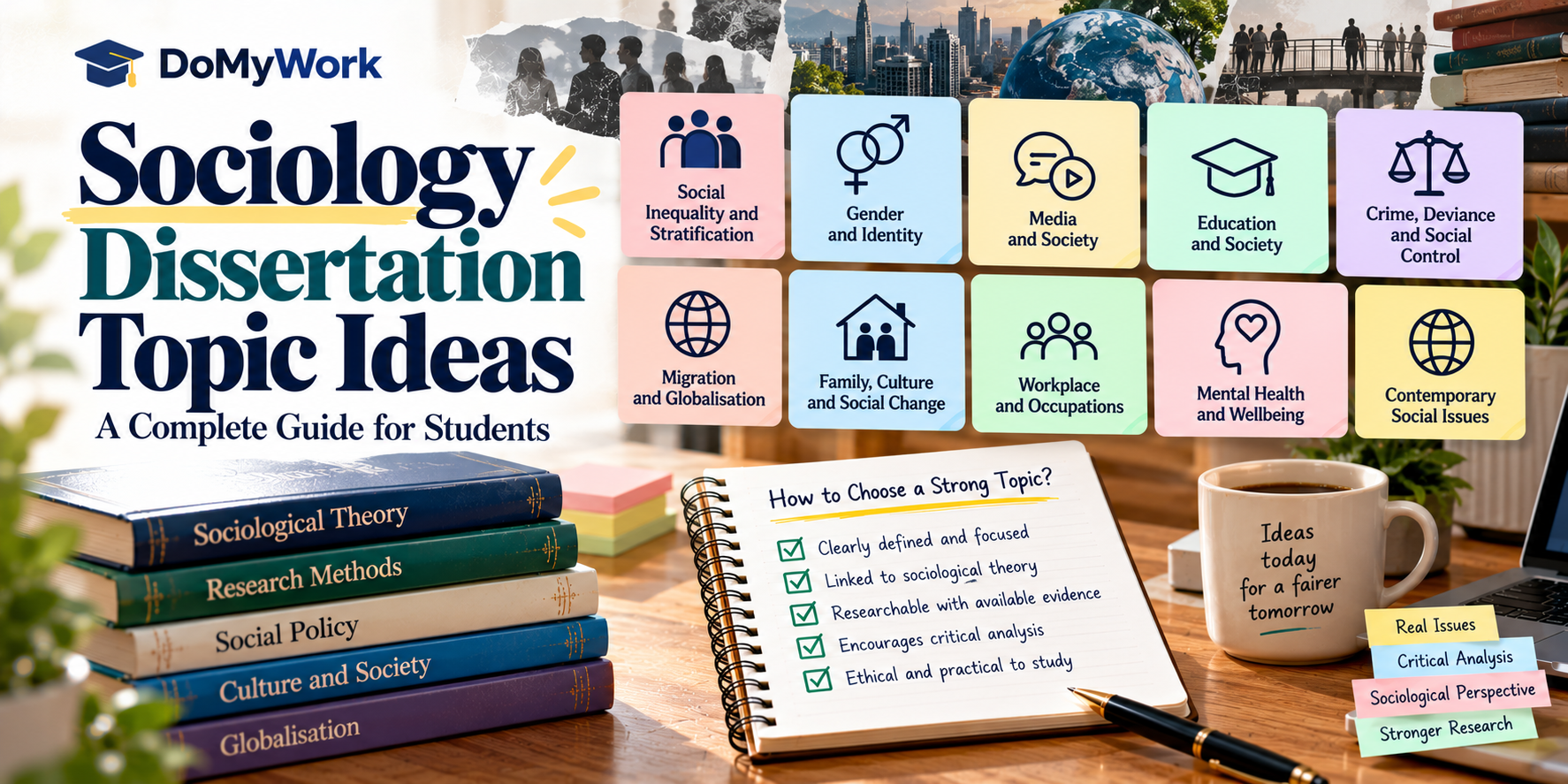
A strong sociology dissertation doesn’t try to explain society as a whole. It focuses on one clearly defined social issue, examines it using theory, and supports arguments with evidence. This guide will help you choose a sociology dissertation topic that is focused, researchable, and academically strong, without making the process overwhelming.
What Examiners Really Expect from a Sociology Dissertation
Across universities, sociology examiners are not looking for opinions or moral arguments. They want to see how well you can think sociologically.
Strong sociology dissertations usually show:
- Clear understanding of sociological theories and perspectives
- Critical analysis rather than description of social issues
- Awareness of social structures, power, and context
- Use of evidence to support arguments
- A focused and well-defined research question
Where many students lose marks is by describing social problems instead of analysing them. Writing about inequality, crime, or media influence is not enough on its own the key is explaining how and why these issues operate within society.
Why Students Often Choose the Wrong Sociology Topic
Most topic problems start early, often with good intentions.
Some students choose topics that are:
- Too broad to analyse properly
- Based mainly on personal opinions
- Emotionally driven but academically weak
- Difficult to support with evidence
- Covering multiple social issues at once
For example, a topic like “Social inequality in modern society” sounds important but is impossible to explore in depth within a dissertation. A more focused topic allows you to go deeper and apply theory more effectively.
The goal is not to choose the biggest issue, it’s to choose the clearest one.
How to Choose a Strong Sociology Dissertation Topic
Before finalising your topic, slow down and think practically. These four questions help eliminate weak ideas early.
1. Can the Topic Be Clearly Defined?
If you can’t explain your topic in one or two sentences, it’s probably too broad. Strong sociology topics are specific and easy to outline.
2. Can You Apply Sociological Theory?
Your topic should naturally connect to sociological perspectives such as:
- Functionalism
- Conflict theory
- Feminism
- Symbolic interactionism
If theory feels forced or difficult to apply, the topic may lack academic depth.
3. Is There Evidence Available?
Sociology research often relies on:
- Surveys or interviews
- Secondary data and reports
- Case studies
- Policy documents
Choose a topic where evidence is accessible and relevant.
4. Does the Topic Encourage Analysis?
A good sociology topic pushes you to ask why and how, not just what. If your topic encourages explanation rather than questioning, it may lead to descriptive writing.
Social Inequality and Stratification Topics
Social inequality remains one of the strongest areas for sociology dissertations because it is well supported by research and theory.
Focused topic examples include:
- Social class and access to higher education
- Income inequality and life opportunities
- Digital inequality and social exclusion
- Poverty and social mobility
These topics work well because they allow you to examine structures of power, not just individual experiences.
Gender and Identity Topics
Gender-related topics are popular but need careful focus to avoid generalisation.
Strong topic directions include:
- Gender inequality in the workplace
- Construction of gender roles in society
- Gender and identity in media representation
- Intersection of gender, class, and ethnicity
These topics perform best when theory is used to explain social patterns rather than personal viewpoints.
Media and Society Topics
Media-focused sociology topics examine how communication shapes beliefs, behaviour, and identity.
Effective topic areas include:
- Media influence on public opinion
- Social media and identity formation
- Representation of social groups in media
- Media and political participation
These topics allow you to analyse power, representation, and ideology within modern society.
Education and Society Topics
Education-related sociology topics explore how social factors influence learning and opportunity.
Strong topic examples include:
- Social background and academic achievement
- Education and social mobility
- Cultural capital and school success
- Inequality in access to education
These topics work well because they connect individual outcomes to wider social structures.
Crime, Deviance, and Social Control Topics
Crime-related topics allow exploration of norms, power, and authority in society.
Focused topic directions include:
- Social causes of youth crime
- Media representation of crime
- Policing and community relations
- Social responses to deviance
These topics are strongest when they move beyond crime statistics and examine social meaning and control.
Migration and Globalisation Topics
Migration topics are increasingly relevant and allow strong comparative analysis.
Possible topic areas include:
- Migration and cultural identity
- Integration of migrant communities
- Globalisation and social change
- Transnational families and social ties
These topics benefit from linking local experiences to global processes.
Family, Culture, and Social Change Topics
These topics explore how relationships and social norms evolve over time.
Strong topic examples include:
- Changing family structures
- Marriage and social expectations
- Generational change and values
- Cultural traditions in modern society
These topics work particularly well with qualitative research.
Common Sociology Dissertation Topic Mistakes
Many students struggle because they:
- Choose topics that are too broad
- Describe social issues instead of analysing them
- Ignore sociological theory
- Select topics with unclear data sources
- Try to cover multiple issues at once
Strong sociology dissertations focus on one clear issue and explore it in depth.
Turning a Sociology Topic into a Strong Research Question
A good sociology topic leads to a focused research question.
Weak:
How does society affect people?
Stronger:
How does social class influence access to higher education?
Clear research questions give your dissertation direction and structure.
Final Thoughts
A sociology dissertation doesn’t need to explain society as a whole. It needs to examine one social issue clearly, critically, and thoughtfully.
When the topic is focused, theory fits naturally, evidence is easier to manage, and analysis becomes stronger. Take time to refine your idea, narrow your focus, and choose a topic that allows you to show real sociological understanding, not just awareness of social problems.
Popular posts

What Is a Capstone Project? Types and Examples
June 24, 2026

Dissertation Topics 2026: How to Choose the Best Topic + 150 Ideas
February 21, 2026
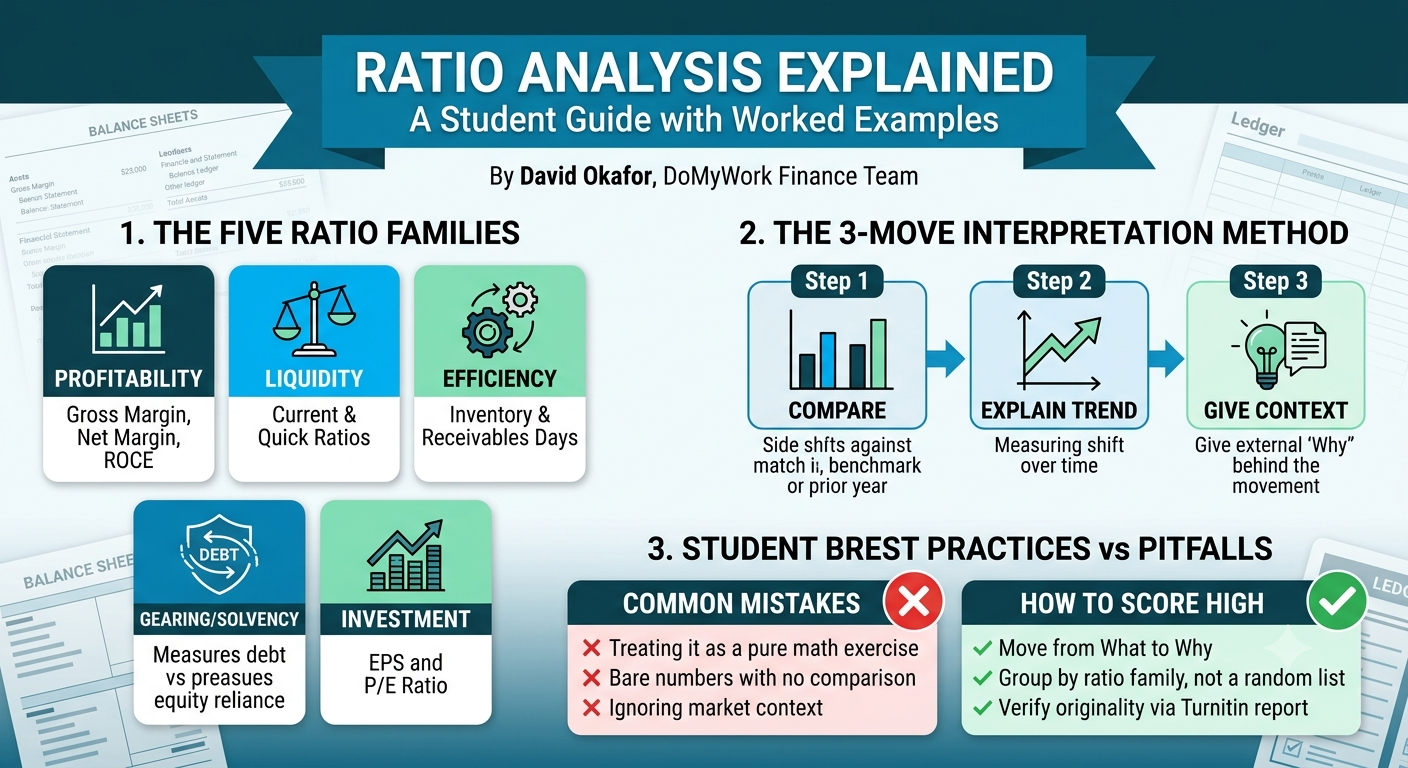
Ratio Analysis Explained: A Student Guide With Worked Examples
July 14, 2026

120+ Finance Dissertation and Assignment Topics for 2026
July 15, 2026

iThenticate vs Turnitin: What Is the Difference?
July 18, 2026



Want more tips & great deals? Get them sent to your inbox
Please enter a valid E-mail
By clicking "Subscribe" you agree to be contacted via e-mail. You can always unsubscribe from the newsletter


