

Ready by 3:26am Oct 6, 2026
How to Check Your Turnitin Score Before Submitting
You cannot see your official Turnitin score until after you submit, because student access is controlled entirely by your university. The workaround is a private pre-check through a verified third-party service that runs your file through the genuine Turnitin engine, so you can read the same report your tutor will see, fix what needs fixing, and only then submit for real.
The moment every student dreads
You have spent weeks on your assignment. You have read the sources, written up your arguments, and formatted your references. You hit submit, and then, a few hours later, your inbox pings with a Turnitin similarity report showing a score you were not expecting.
For thousands of students every year, this is a genuine nightmare. Not because they copied someone else’s work deliberately, but because they had no way of seeing their score beforehand. The good news is that you do not have to go in blind. With the right tools, you can check your Turnitin score before submitting and fix any issues while there is still time.
This guide covers exactly how to do that, what the score actually means, and what you should do if you find something unexpected.
Check your Turnitin score for UK universities, US Universities, Australian universities, European universities, and Canadian universities.
What is Turnitin and why does it matter?
Turnitin is an academic integrity platform used by over 15,000 institutions globally, including the vast majority of UK universities. When you submit an assignment through your university’s learning management system, whether that is Canvas, Moodle, or Blackboard, your work is almost certainly being run through Turnitin automatically.
The platform does two things. First, it checks your text for similarity against a database containing billions of web pages, published academic journals, and a vast collection of previously submitted student papers. Second, and this is increasingly important in 2026, it checks for AI-generated content, flagging sections that appear to have been written by tools like ChatGPT or run through a paraphrasing tool afterwards.
The problem is that as a student, you typically do not see your full Turnitin report until after you have submitted. By that point, it is too late to make changes.
Can You Access Turnitin Directly?
No, not through the official platform. Turnitin sells its licences exclusively to institutions, not to individual students. If you visit turnitin.com directly, there is no option to create a personal student account or upload a document for checking.
Three routes exist for students who want to see a report before submitting. Some tutors enable a draft submission point, or the built-in Draft Coach tool, letting you check a limited number of times before the deadline, though this depends entirely on whether your course has switched it on. A third-party Turnitin check service, such as DoMyWork’s Plag Check, runs your document through the actual Turnitin engine and returns the same report your lecturer will see.
The key advantage is that your paper is not stored in Turnitin’s student submission database, so checking your work this way does not create a self-plagiarism risk on your final submission. The third route, a generic free plagiarism tool, only checks the open web and will not show you what your real institutional report contains, so treat any number it gives as a rough sense check rather than a prediction.
Understanding your Turnitin report
When you get your report, whether through a draft submission or a pre-check service, you will see two separate scores.
The similarity score is a percentage representing how much of your text matches content elsewhere in Turnitin’s database, calculated as Similarity Score = (Matched Words ÷ Total Words) × 100. So if your dissertation runs to 10,000 words and 1,200 of those words sit inside passages that match something in the database, your score is (1,200 ÷ 10,000) × 100, which is 12%. A key thing to understand here: the similarity score is not a plagiarism verdict. It is a tool for flagging potential issues that a human will then review. A paper with a 35% similarity score made up entirely of properly cited direct quotes is unlikely to be a problem. A paper with a 9% score containing one uncited paragraph lifted from a website could absolutely lead to a misconduct investigation. Those two examples share almost nothing except the fact that both would produce a number, which is exactly why the score matters far less than what is generating the matches behind it.
The AI writing detection score is a separate measurement covering how machines like your writing reads. Since Turnitin updated its detection model, it now identifies two categories: content that appears to be AI-generated, and content that appears to have been AI-generated and then processed through a paraphrasing tool. This is a significant development. It means that running ChatGPT output through a paraphraser is no longer a reliable way to avoid detection. AI detection only displays sentence-level highlights and an exact percentage when the overall score reaches 20% or above. Below this threshold, an asterisk is shown instead of a number, because Turnitin’s own testing found scores in that range less reliable.
What is a safe similarity score?
There is no single fixed threshold, and different universities, or even different departments within the same university, apply different standards. As a general guide across most institutions, a score under 15% is normally low-risk and unlikely to prompt review beyond a brief glance. A score between 15% and 25% is typical for well-referenced academic writing, and your tutor will check the sources behind the matches rather than the number itself. A score above 25% usually attracts a closer look, though it can still be entirely explainable depending on the assignment.
What changes this picture is subject and assignment type, not a fixed cutoff. A law essay that extensively quotes case law can legitimately sit well above 25% with no issues, because statutes and judgments are quoted in fixed wording by every student citing them correctly. A business essay at the same score with no direct quotes is a different story entirely, since there is far less legitimate reason for that much overlap. Always read your department’s own guidance if it publishes one, since it will override any general figure.
Two contrasting real-world patterns are worth holding in your head as you read your own report. A student can submit a 30% score built almost entirely from correctly quoted theory and a standard reference list, and it never becomes an issue, because every match is explainable at a glance. Another student can submit a 2% score where that tiny sliver is a single unattributed sentence carrying someone else’s original argument, and it becomes a real problem, because a marker only needs to find one clearly uncited idea, not a large percentage, to raise a concern. The number tells you how much is matched. It never tells you, by itself, whether that match matters.
How to reduce a high score before final submission
If your pre-submission check comes back with a score you are not comfortable with, do not panic. You have time to fix it. Here is a practical approach:
- Open the full report and identify every highlighted passage, not just the overall percentage.
- Work through each flagged passage. Ask: is this passage cited? If yes, does it have quotation marks? If no citation exists, is this something you paraphrased too closely?
- For passages that are cited but too closely paraphrased, rewrite from memory rather than editing the source. Read the original, close the document, then write the idea in your own words.
- For passages that are direct quotes but lack proper formatting, add quotation marks and ensure your citation is complete.
- Check whether your reference list is inflating the score. Many institutions exclude bibliographies by default, but not all. If yours is being counted, ask your module tutor whether exclusions apply.
Once revisions are done, run the check again to confirm the score has improved before the final submission.
The AI detection side, what to watch for
If you use AI tools at any point in your writing process, whether for drafting, summarising research, or editing, check your AI detection score carefully. Turnitin’s detection specifically targets text that was AI-generated and then paraphrased, which means the old workaround of running AI text through a rephrasing tool is no longer reliable.
The most effective way to address a high AI detection score is genuine rewriting. That means reading each flagged section and expressing the ideas in your own voice, adding your own examples, your own analytical commentary, and sentence structures that vary naturally rather than settling into an even, predictable rhythm. This is more work than plugging text into a paraphraser, but it produces better academic writing, and it is the approach that actually holds up under scrutiny.
Need plagiarism checks at scale? Get bulk Turnitin reports for your business in the UK, US, Australia, Europe and Canada.
Why checking before you submit changes everything
The students who are caught out by Turnitin are almost always those who submitted without knowing their score. The students who avoid problems are the ones who check early, identify issues, and address them before the deadline.
A pre-submission check does not guarantee a perfect score. But it gives you the information you need to make an informed decision, rather than hoping for the best and waiting for your report to appear after you have already hit submit.
DoMyWork’s Plag Check runs your document through the genuine Turnitin engine and returns the full report, similarity score, AI detection, and source breakdown, for £4, delivered within 15 minutes. Your paper is not added to Turnitin’s student database, which means checking it in advance will not cause your own work to match against itself when you submit the real version.
Frequently asked questions
Is a 20% similarity score safe to submit?
Usually yes, provided the matches are spread across many sources rather than concentrated in one. Open the source breakdown rather than judging the number alone, since a 20% score built from citations and quotes reads very differently from 20% concentrated in a single uncited passage.
Can my university see that I ran a pre-check elsewhere?
No. A third-party check that keeps your file out of Turnitin’s repository leaves no trace on your official submission. Your university only sees the report generated when you submit through their own system.
How many times should I check before submitting?
Once after your first full draft, and once more after you have made significant revisions, is usually enough. Checking after every small edit rarely changes the picture and mostly adds cost without adding insight.
Does a low AI score guarantee I will not be flagged?
Not with certainty, since Turnitin suppresses exact percentages under 20% and shows an asterisk instead, precisely because that range is less reliable in both directions. A low score is a good sign, not an absolute guarantee.
What should I do if my check comes back worse after editing?
Check whether you added new quotations or references, since these are matching text by definition and can raise the score even as the writing genuinely improves. Read the new matches before assuming the edit made things worse.
Popular posts

How to Write a Dissertation Proposal: Step by Step With an Example
April 17, 2026
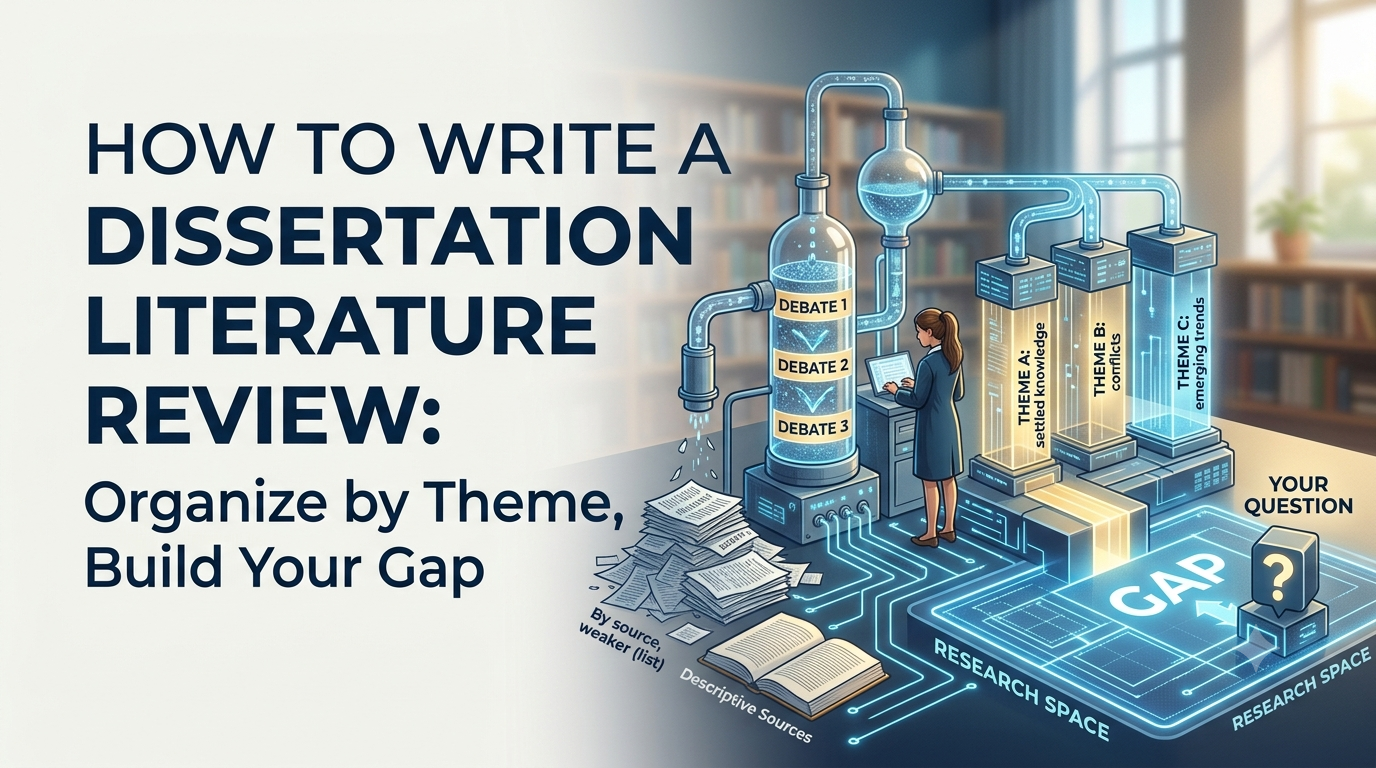
How to Write a Dissertation Literature Review
August 1, 2026
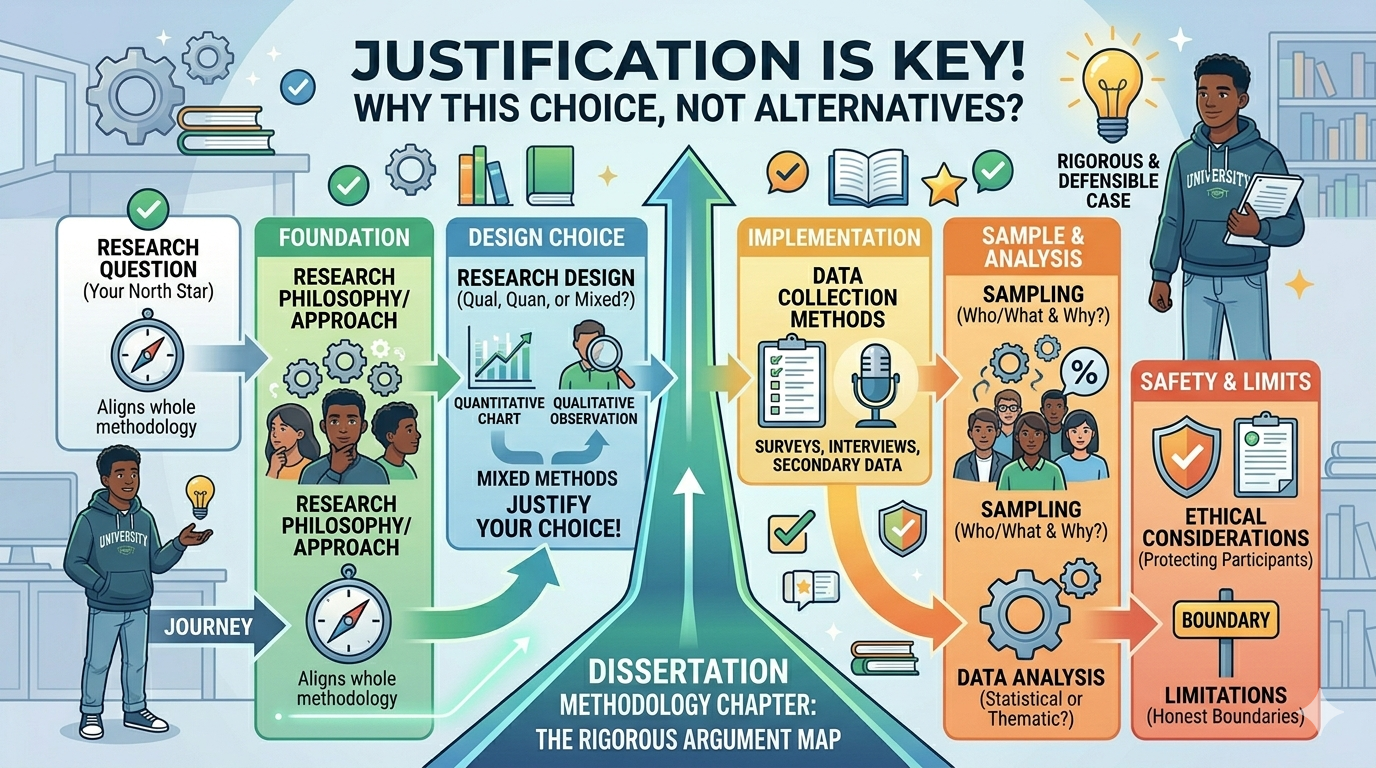
How Do You Write a Dissertation Methodology Chapter?
June 25, 2026
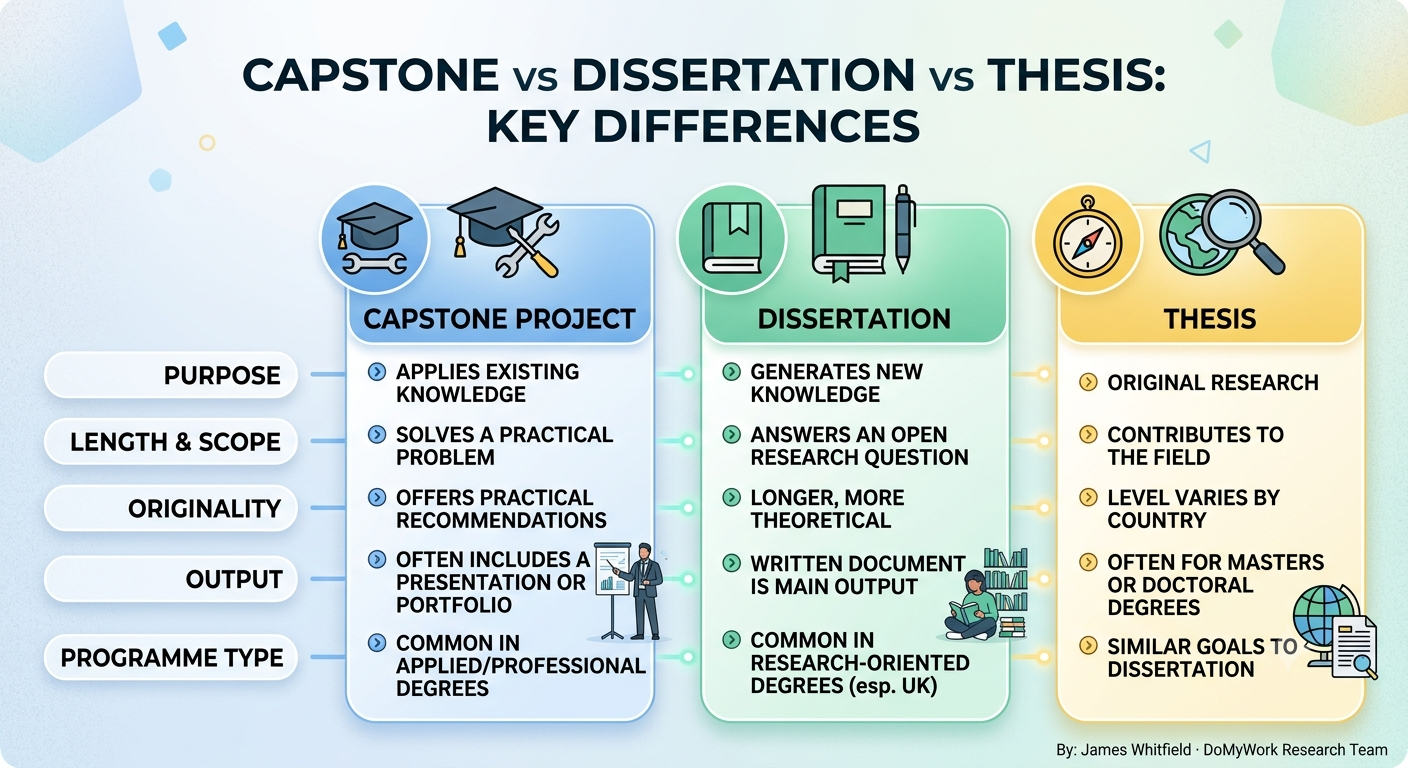
Capstone Project vs Dissertation vs Thesis: Key Differences
June 29, 2026
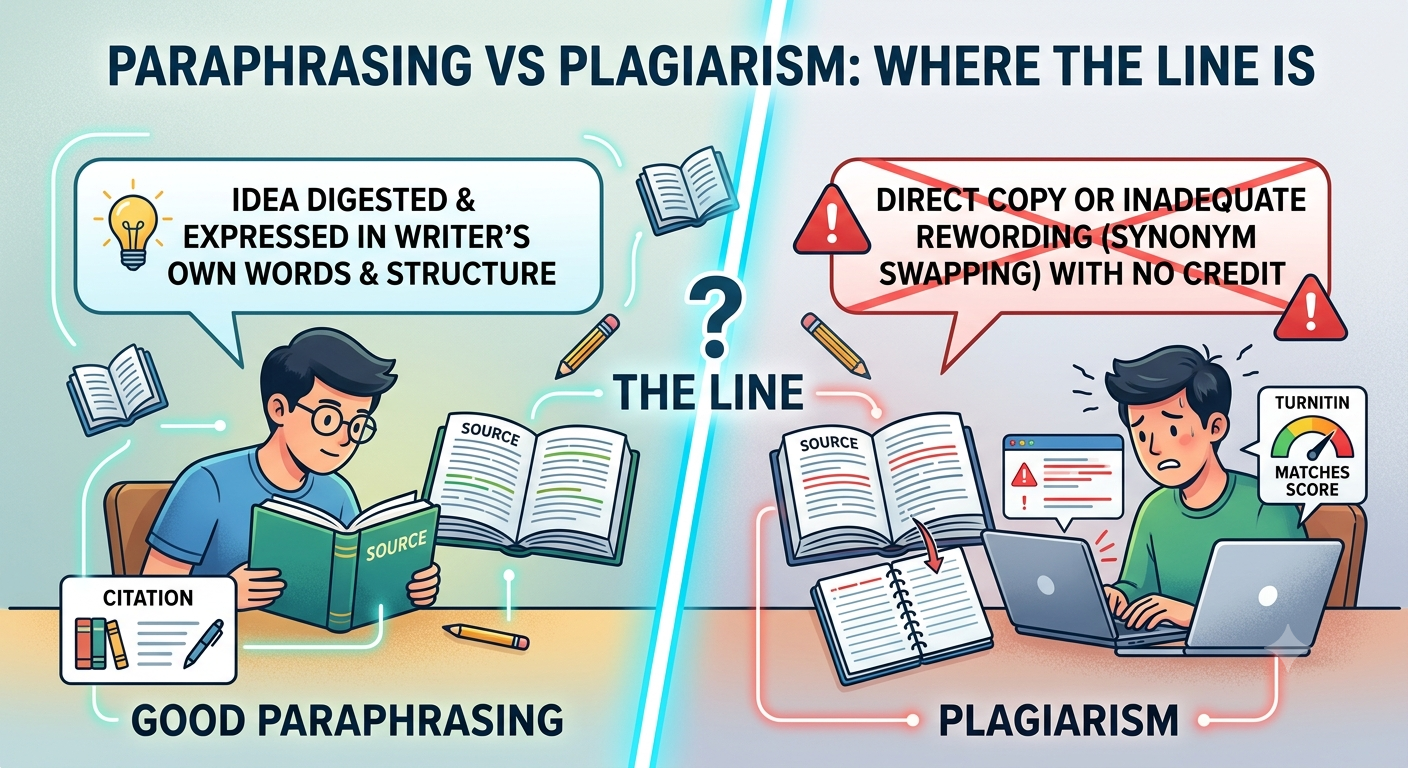
Paraphrasing vs Plagiarism: Where the Line Is
July 9, 2026
Want more tips & great deals? Get them sent to your inbox
Please enter a valid E-mail
By clicking "Subscribe" you agree to be contacted via e-mail. You can always unsubscribe from the newsletter


