
Ready by 5:12pm Sep 30, 2026
Best Plagiarism Checkers for Students in 2026
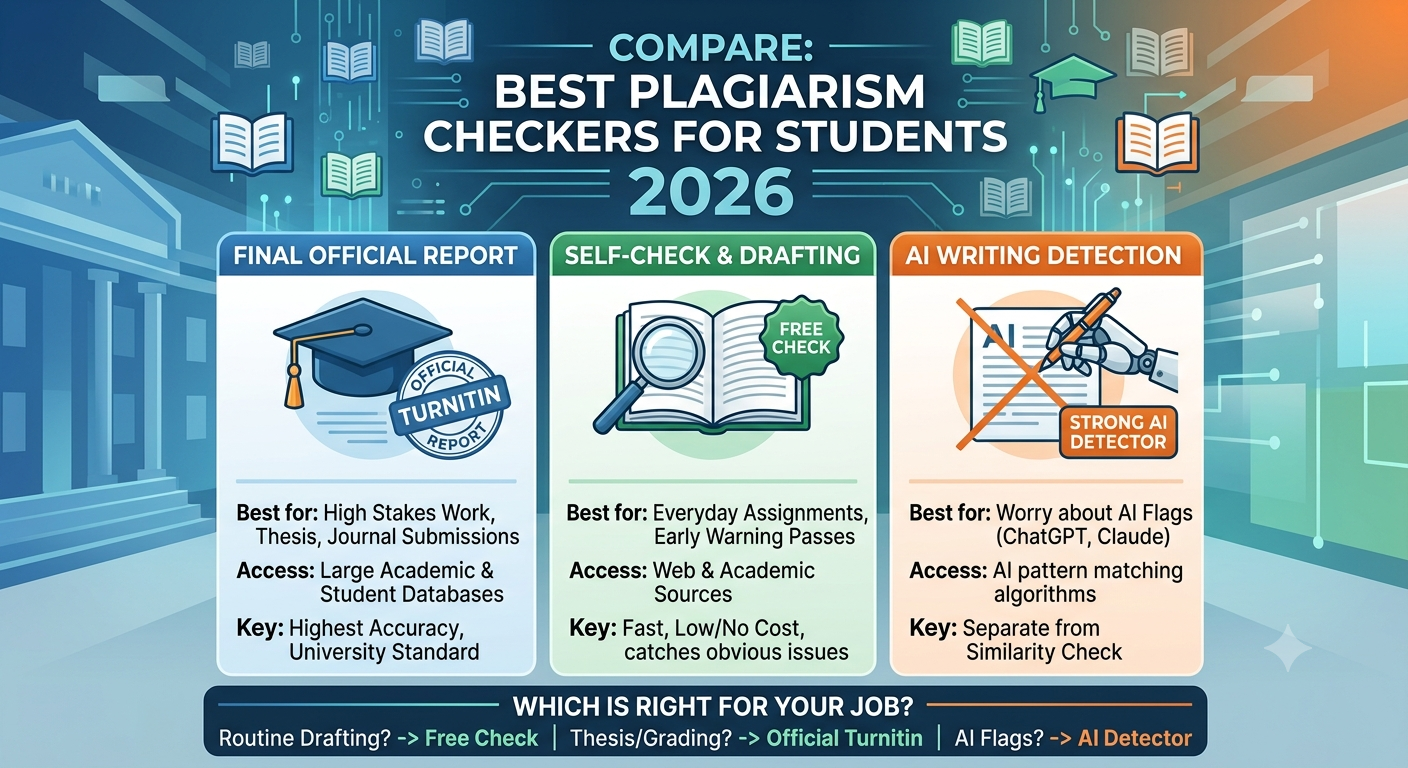
The best plagiarism checker depends on the job. For a thesis you want Turnitin level accuracy. For everyday assignments you want speed and a fair price. For AI writing you want a strong AI detector. This guide ranks the main options by use case, so you can pick the right one in a minute rather than paying for features you do not need.
Every student eventually searches for a plagiarism checker, usually the night before a deadline, and the results are a wall of tools that all claim to be the best. They are not all the same, and the right one for you depends entirely on what you are checking and why. A quick essay does not need the same tool as an eighty thousand word thesis, and someone worried about AI flags needs something different again. This guide cuts through the noise by ranking the main checkers against the jobs students actually have.
What is the best plagiarism checker for students?
If you want a single answer, the most accurate result for academic work comes from Turnitin, because it is the system your university uses and it checks against the largest academic database. The catch is that you usually cannot run Turnitin yourself, since it sits behind your institution login. So the real question is not which tool is best in the abstract, it is which tool gives you the result you need, for the work you have, at a price you can justify. For most students that means a free or low cost checker for drafting and an official Turnitin report for the final, high stakes check.
How we compared them
There is no point ranking checkers on vibes, so we looked at the things that actually change your outcome. Database size and type matter most, because a tool that only scans the open web will miss academic sources your tutor can see. Access matters, since the best engine is useless if you cannot run your own work through it. We also weighed AI detection, privacy and storage, reporting quality, and price, because a brilliant checker that stores your unpublished thesis in a shared database is a poor choice for a researcher.
- Database: does it check academic papers and journals, or just the web?
- Access: can a student run it directly, without an institution login?
- AI detection: does it flag AI writing, and how reliably?
- Privacy: is your file stored, or deleted after the report?
- Reporting: do you get a clear source breakdown, not just a number?
- Price: free, pay per use, or subscription, and what does it cost over a term?
The main checkers at a glance
| Tool | Best for | Database | AI detection | Price |
|---|---|---|---|---|
| Turnitin | The final official score | Largest academic | Yes, separate | Set by institution |
| DoMyWork | Self check plus official report | Academic and web | Yes | Check at $5 report |
| Scribbr | Detailed self check | Turnitin based | Limited | Higher per check |
| Quetext | Quick web checks | Mostly web | Add on | Subscription |
| Copyleaks | AI detection focus | Web and academic | Strong | Subscription |
| Grammarly | Writing plus a basic check | Mostly web | Basic | Subscription |
Best overall for students
For most students, the best value comes from pairing a free check during drafting with an official Turnitin report at the end. That combination covers the two jobs you actually have, catching problems early while you can still fix them, and confirming the exact figure your examiner will see. DoMyWork is built around this pattern, with a free plagiarism checker for the drafting passes and a $5 official report for the final check, so you are not locked into a subscription you only need twice a year.
Best for a thesis or dissertation
For a thesis, accuracy and privacy outrank everything, because the stakes are high and the work is unpublished. You want a check against academic databases, a full source breakdown rather than a bare percentage, and a guarantee that your file is not stored where it could later match against you. Our thesis plagiarism checker is built for long documents and keeps your research private. If you are also comparing the two most searched names, our guide on Scribbr vs Turnitin covers that head to head in detail.
Best free option
A genuinely free checker is the right tool for everyday assignments and for the many drafting passes a longer piece needs. The thing to watch is what free actually means. Some free checkers cap the word count harshly, some are thin web only scanners, and a few quietly store your work. A good free checker gives you a real source breakdown and deletes your file afterwards. Use the free pass to catch the obvious problems, then decide whether the assignment is important enough to warrant an official report.
Best for AI detection
If your worry is AI flags rather than copied text, you need a tool with a dedicated AI detector, which is a different feature from plagiarism matching. The strongest options check your writing against the patterns of tools like ChatGPT, Gemini and Claude. We rank these separately in the best AI content detectors, and explain how far to trust any of them in how accurate are AI detectors, because false positives are a real risk and no detector should be treated as the final word.
Best for value across a term
Cost adds up quietly. A student who checks every assignment, every term, for three or four years runs a lot of checks, and the model you choose decides whether that total stays small or grows into a real expense. Premium per check services get expensive fast if you check often. Subscriptions only pay off if you check constantly. For most students the cheapest path over a degree is free checks for the routine work and a pay per use official report for the few pieces that truly matter.
What to watch out for
A few traps catch students out. The first is privacy, so always confirm whether a tool stores your file, especially for unpublished work. The second is fake accuracy, where a cheap web only scanner implies it matches Turnitin but checks a fraction of the sources. The third is essay related sites that bundle a checker with services that could put your account at risk, so stick to tools focused on checking. The fourth is treating any single number as a verdict. A good checker shows you the matches, and you judge them.
Do free plagiarism checkers really work?
Yes, within limits, and understanding those limits is the key to using one well. A good free checker will reliably catch the obvious problems, copied passages, missed quotation marks, and text lifted from common web sources, which is exactly what you want while you draft. Where free checkers fall short is depth. Many scan a smaller pool of sources than Turnitin, so they can miss academic papers behind subscriptions, and some cap how many words you can check at once.
So the honest position is that a free checker is excellent for the routine job of cleaning up a draft, and not a substitute for an official check on high stakes work. Treat the free pass as your early warning system. If it flags something, fix it. If it comes back clean, that is reassuring but not a guarantee, because the sources it cannot see still exist. For the final, graded piece, confirm with a check against academic databases.
How accurate are checkers compared to Turnitin?
Accuracy depends mostly on the database behind the tool, not on clever marketing claims. Turnitin is accurate for academic work because it checks against the largest collection of student papers and published research, and because it is the exact system your university grades on. Tools that run a Turnitin based check come closest, since they use the same matching. Independent checkers vary, because their databases are different, so their numbers can read higher or lower than Turnitin would. For catching clear problems any decent tool works, but for a precise final figure the only certainty is an official Turnitin result.
What is the difference between a plagiarism checker and an AI detector?
They answer two different questions, and confusing them causes a lot of needless worry. A plagiarism checker measures matching text, the overlap between your words and other sources. An AI detector measures how a machine like your writing reads, regardless of whether it matches anything. A piece can score clean on plagiarism and still trigger an AI flag, or the reverse. Universities increasingly run both, so if AI is a concern for you, make sure your tool actually offers AI detection rather than assuming the plagiarism check covers it. See does Turnitin detect AI for how the two sit side by side.
How to get the most out of any checker
A checker is only as useful as the way you read its report, so a few habits make a big difference.
- Check early and often while drafting, not just once at the end, so problems surface while you can still fix them.
- Always open the source breakdown and judge the largest single match first.
- Distinguish harmless matches, such as quotes and references, from passages that need rewriting.
- Recheck after edits, since changes can add new matches as well as remove old ones.
- Confirm the tool deletes your file, especially for unpublished work.
Used this way, even a simple free checker becomes a genuine quality tool rather than a number generator. The students who get the least from checkers are the ones who glance at the percentage, panic or relax, and never open the detail where the real information lives.
Common mistakes students make with plagiarism checkers
The most common mistake is treating the percentage as a grade, when it is nothing of the sort. The second is leaving the check until the night before, when there is no time to fix anything it finds. The third is chasing a lower number by deleting citations, which turns honest work into real plagiarism. The fourth is trusting a thin web only scanner that implies it matches Turnitin while checking a fraction of the sources. Avoid these four and a checker becomes an asset rather than a source of stress.
When is a paid report worth it?
A paid official report earns its place on work where the exact figure matters and the stakes are high, which usually means a dissertation, a final year project, or a journal submission. For these, knowing precisely what your examiner or editor will see is worth the small cost, because a surprise at that stage is expensive in time and stress. For everyday assignments, a free check is normally enough, so the smart pattern is to spend nothing on routine checks and reserve a paid report for the few pieces that genuinely warrant it.
How often should you check your work?
More often than most students do, and earlier. The instinct is to run one check the night before submission, but by then there is no time to act on what it finds. A better rhythm is to check at natural milestones, when you finish a major section, after you add your references, and again once the full draft is done. Each check is cheap or free, and catching a problem with a week to spare is the difference between a calm fix and a panic. For a long piece, treat checking as part of writing rather than a final gate.
Do I need both a plagiarism checker and an AI detector?
If your university checks for both, then yes, because they catch different things and a clean result on one says nothing about the other. A plagiarism checker tells you whether your text matches other sources. An AI detector tells you whether your writing reads as machine generated. You can pass one and be flagged by the other. The simplest approach is to use a tool that offers both, or to run a quick AI check alongside your similarity check, so there are no surprises on either front when your work is assessed.
Frequently asked questions
Which plagiarism checker do universities use?
Most use Turnitin, which is why its result is the one that matters in the end. Students cannot usually run it themselves, so they use accessible tools for drafting and an official report for the final check.
Is there a completely free plagiarism checker?
Yes, several offer free checks, though many cap length or check fewer sources. A free check is great for catching obvious issues, while a paid official report is best for high stakes work.
Can a plagiarism checker also detect AI writing?
Some can, through a separate AI detector. Plagiarism matching and AI detection are different features, so check that a tool offers both if you need both.
Will these checkers store my work?
It varies, so always check the policy. For an unpublished thesis, choose one that deletes your file after the report rather than adding it to a database.
How many times should I check my work?
Check major drafts as you write, then run a final check before submission. The early checks catch problems while you can still fix them.
Do plagiarism checkers store my work?
It varies by tool, so always check the policy. For unpublished work like a thesis, choose one that deletes your file after the report rather than keeping it in a database where it could match against you later.
Can I use one checker for everything?
You can, but the best results come from matching the tool to the task: a free check for drafting, and an official report for high stakes work where the exact figure matters.
What is the best free plagiarism checker for students?
A good free checker gives a real source breakdown, checks more than the open web, and deletes your file afterwards. Use it for drafting, and add an official report for high stakes work where the exact figure matters.
Does a paid checker catch more than a free one?
Often it checks more academic sources, which matters for a thesis or a journal piece. For everyday assignments a good free checker catches the problems that count, so save the paid option for high stakes work.
Want the result your university sees, without the login? Get the official Turnitin report for $5.
Popular posts
How to Write an Annotated Bibliography (with Example, 2026)
September 1, 2026
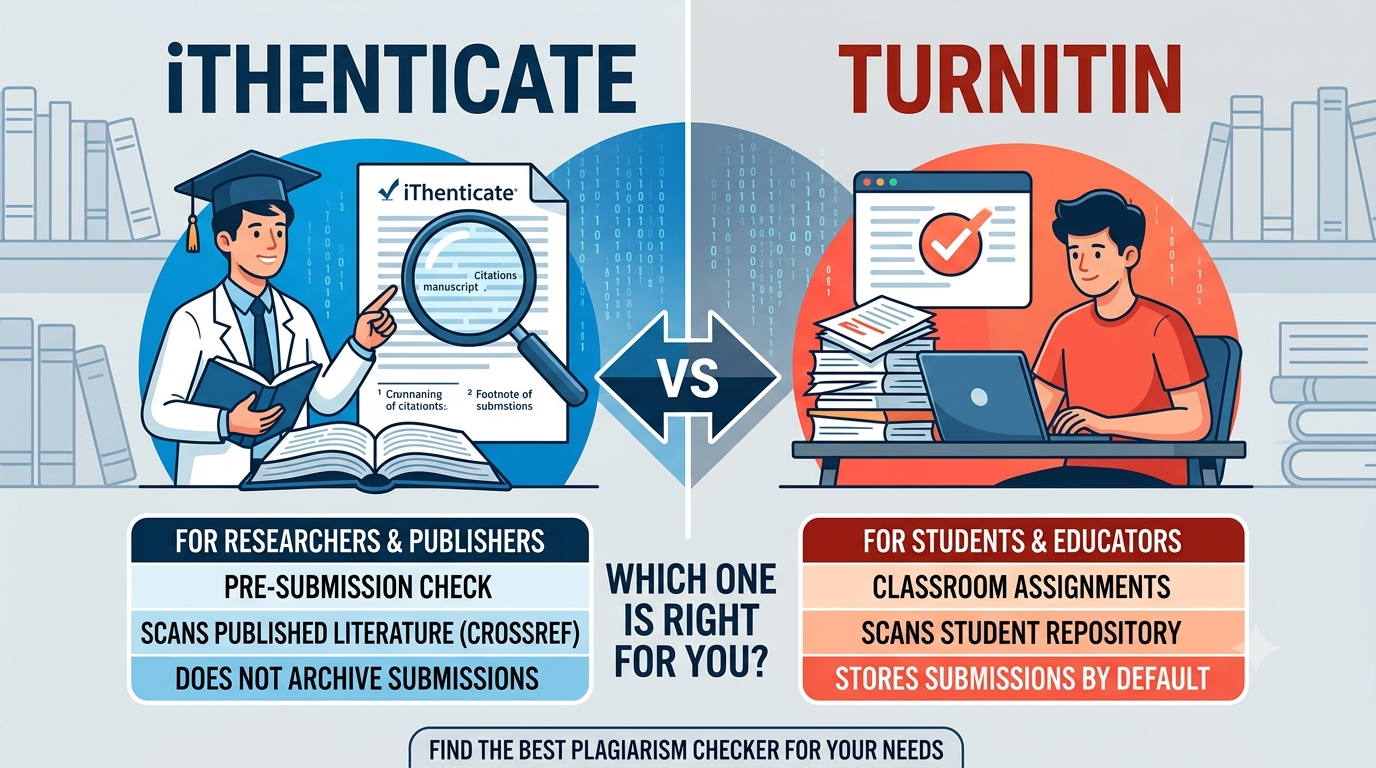
iThenticate vs Turnitin: What Is the Difference?
July 18, 2026
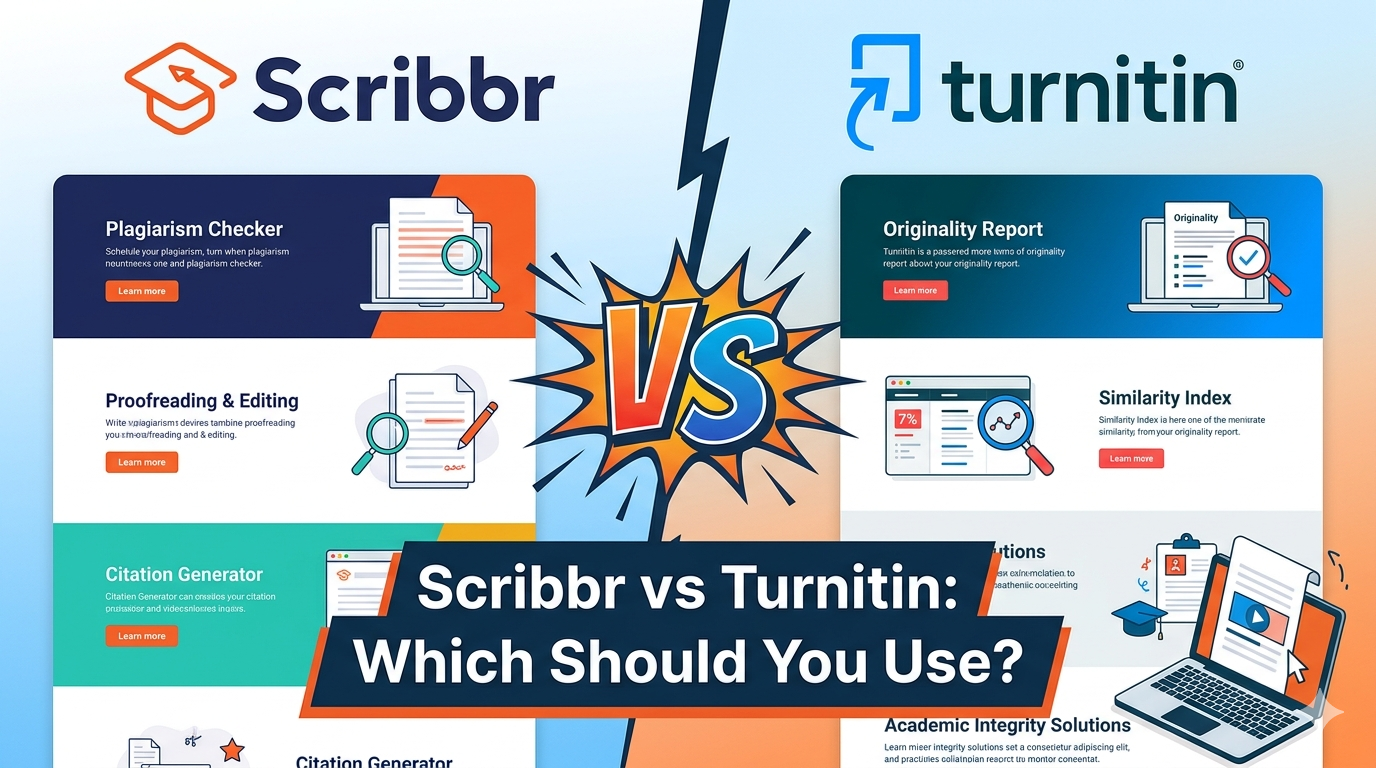
Scribbr vs Turnitin: Which Plagiarism Checker Is Better? (2026)
June 5, 2026
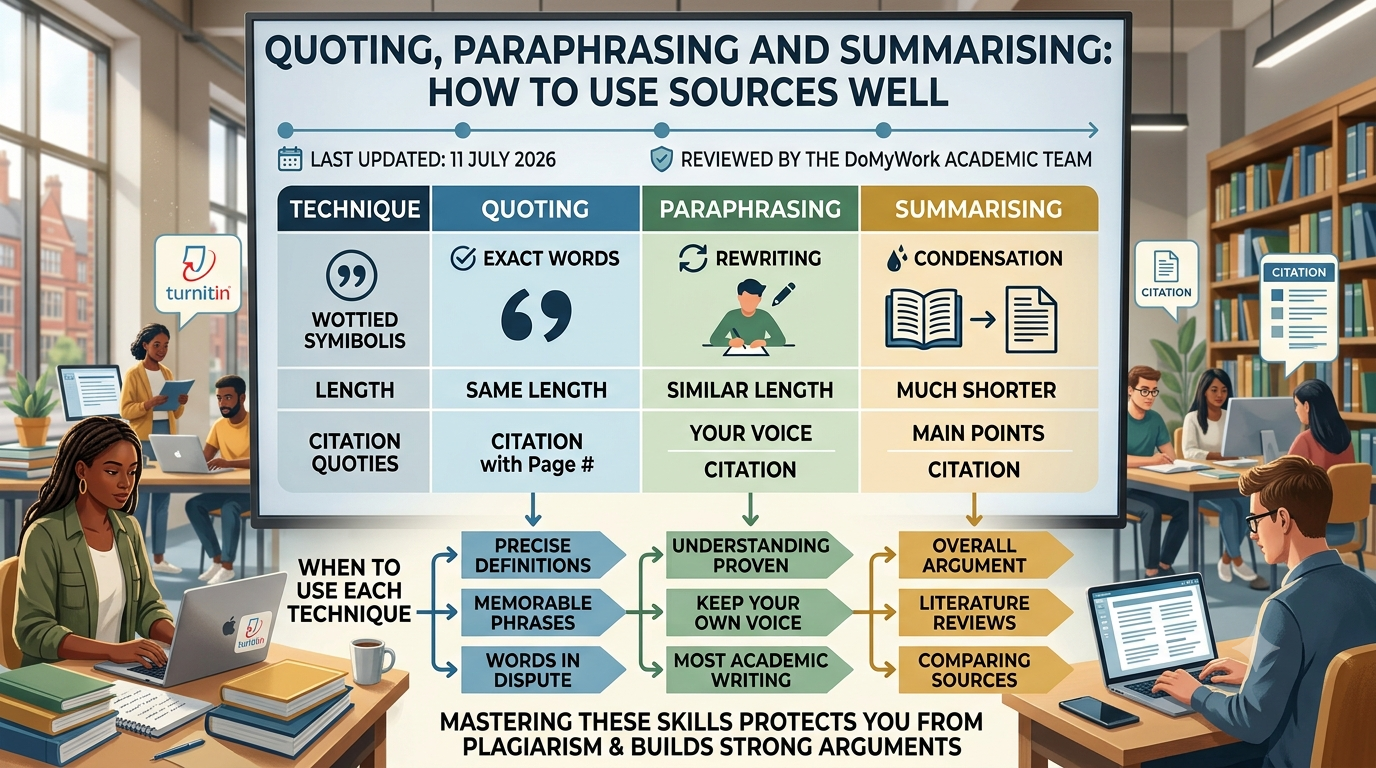
Quoting, Paraphrasing and Summarising: How to Use Sources Well
July 22, 2026
Law Assignment Help: A Practical Guide to Higher Marks
June 15, 2026
Want more tips & great deals? Get them sent to your inbox
Please enter a valid E-mail
By clicking "Subscribe" you agree to be contacted via e-mail. You can always unsubscribe from the newsletter


