
Ready by 3:25pm Sep 6, 2026
How to Write a Cover Letter: A Step-by-Step Guide (2026)
To write a cover letter, address it to a named person, open with the role and a clear reason for applying, use one or two paragraphs to evidence your most relevant skills with examples, explain why you fit this employer, and close confidently with a call to action. Keep it to one page, and tailor it to every job.
A good cover letter turns your CV from a list into a case for why you should be interviewed. The secret is not clever writing but tailoring: matching your experience to the specific job and evidencing it. This guide walks through how to write a cover letter step by step, what goes in each paragraph, and how to tailor it fast, so you can write one that actually gets read.
What is the purpose of a cover letter?
A cover letter introduces you and makes the case that your skills and experience fit a specific role. It sits alongside your CV and does what a CV cannot: it explains why your background matters for this job and this employer, and it shows how well you communicate in writing. A strong cover letter can be the difference between an application that is read and one that is skimmed and set aside.
How do you write a cover letter step by step?
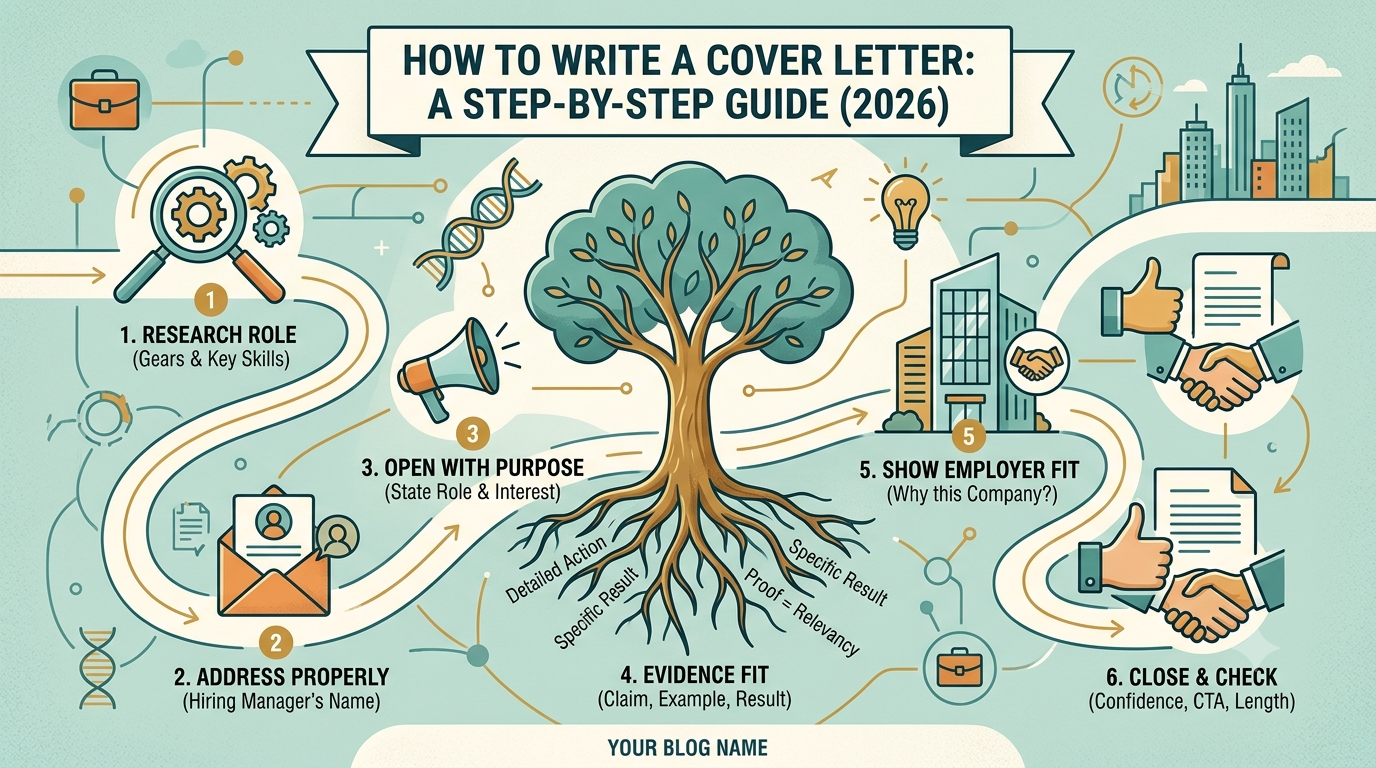
Follow these steps in order. Each maps to a part of the finished letter.
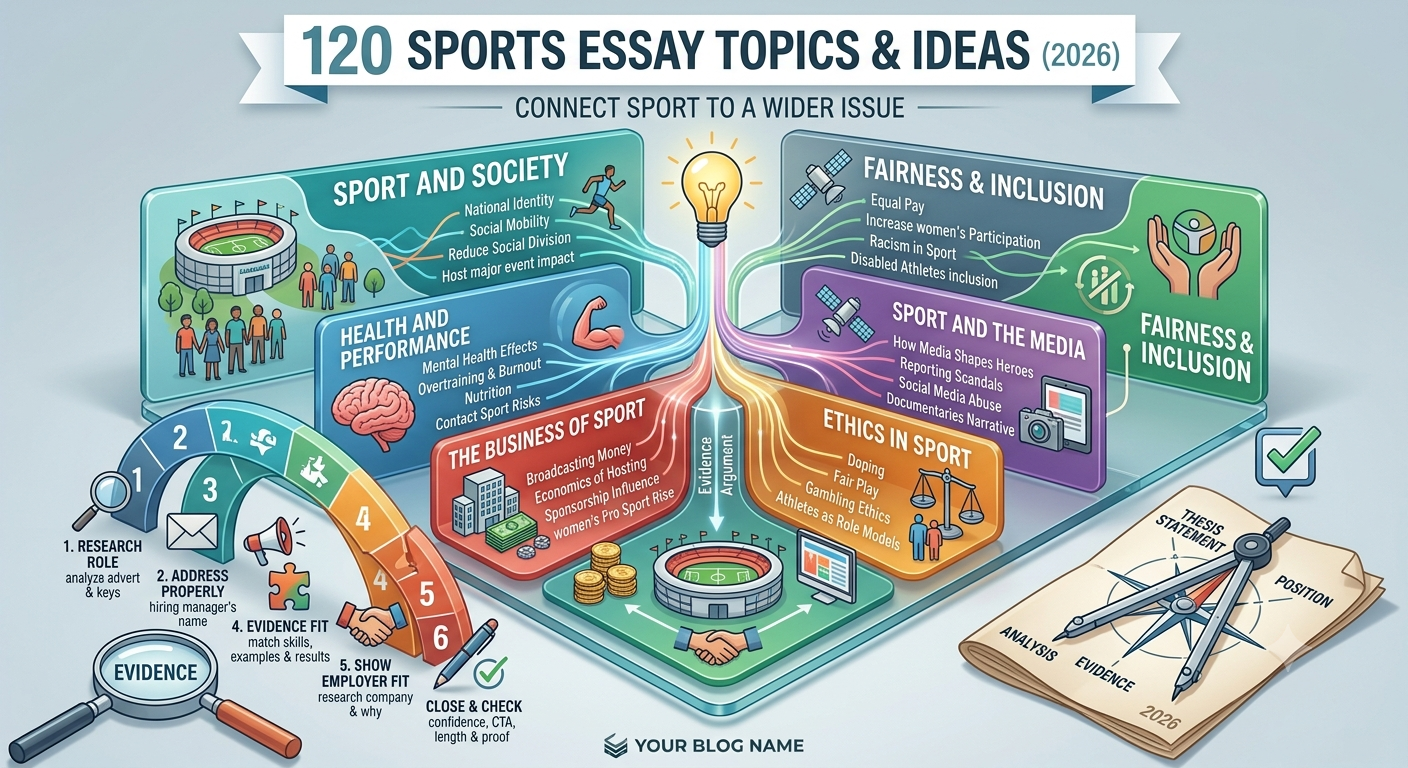
| Step | What to do |
|---|---|
| 1. Research the role | Read the advert and note the key skills and requirements it lists. |
| 2. Address it properly | Find and use the hiring manager’s name where you can. |
| 3. Open with purpose | State the role and a specific, genuine reason for applying. |
| 4. Evidence your fit | Match your experience to the requirements, with brief examples and results. |
| 5. Show employer fit | Refer to something specific about the employer or role. |
| 6. Close and check | End with a call to action, then proofread and check the length. |
What goes in each paragraph?
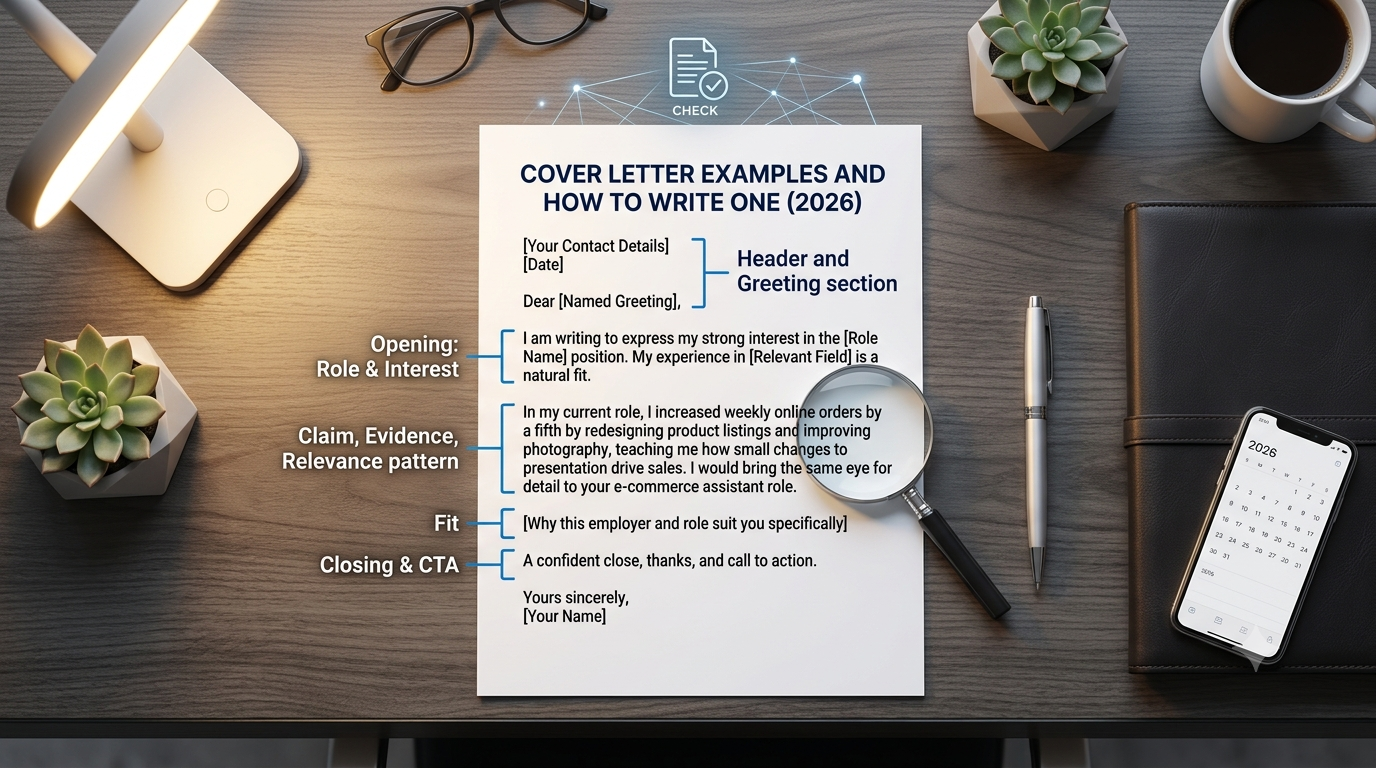
- Opening: name the role, where you saw it, and a clear reason you are applying, in one or two sentences.
- Body: take the two or three most important requirements from the advert and, for each, give a short evidenced example of when you demonstrated it, ideally with a result.
- Employer fit: show you have researched them, and explain why you want to work there specifically, not just anywhere.
- Closing: thank the reader, express enthusiasm, and ask for the next step, such as an interview.
For finished examples of these paragraphs in context, see our cover letter examples guide, which shows weak and strong versions side by side.
How do you tailor a cover letter quickly?
Tailoring is what makes a cover letter work, and it does not have to be slow. Keep a strong base letter, then for each application change three things: the opening reason for applying, the examples you choose to match this advert’s key requirements, and the employer-fit paragraph. Mirror the language of the advert where it fits your genuine experience, since many employers scan for the skills they listed. That focused tailoring beats a longer, generic letter every time.
How long should a cover letter be?
One page, no more. Aim for three or four short paragraphs and around 250 to 400 words. Employers read many applications quickly, so a concise, specific letter that gets to the point is far stronger than a long one. If it runs over a page, cut the least relevant example rather than shrinking the font.
Common cover letter mistakes
- Sending the same generic letter to every employer.
- Repeating your CV instead of adding context and relevance.
- Claiming skills with adjectives but no evidence or results.
- Forgetting to change the company or role name from a previous version.
- Spelling and grammar errors, which undermine a letter about your attention to detail.
Clear, well-structured writing carries a cover letter, the same clarity our how to write a first-class essay guide covers for academic work.
Frequently asked questions
How do you start a cover letter?
Address it to a named person where possible, then open by stating the role you are applying for and a specific, genuine reason you are interested, rather than a generic line.
How long should a cover letter be?
One page, usually three or four short paragraphs and around 250 to 400 words. Keep it concise and specific, since employers read applications quickly.
What should you not put in a cover letter?
Avoid generic templates, a word-for-word repeat of your CV, unevidenced claims, famous quotes, and any leftover company or role name from a previous application.
Do I need a cover letter if one is not requested?
If the application allows it, a tailored cover letter usually helps, since it lets you make the case for your fit. If the employer explicitly says not to include one, follow their instruction.
Popular posts

Want more tips & great deals? Get them sent to your inbox
Please enter a valid E-mail
By clicking "Subscribe" you agree to be contacted via e-mail. You can always unsubscribe from the newsletter


