
Ready by 6:46pm Oct 21, 2026
120 Sports Essay Topics for Students (2026)
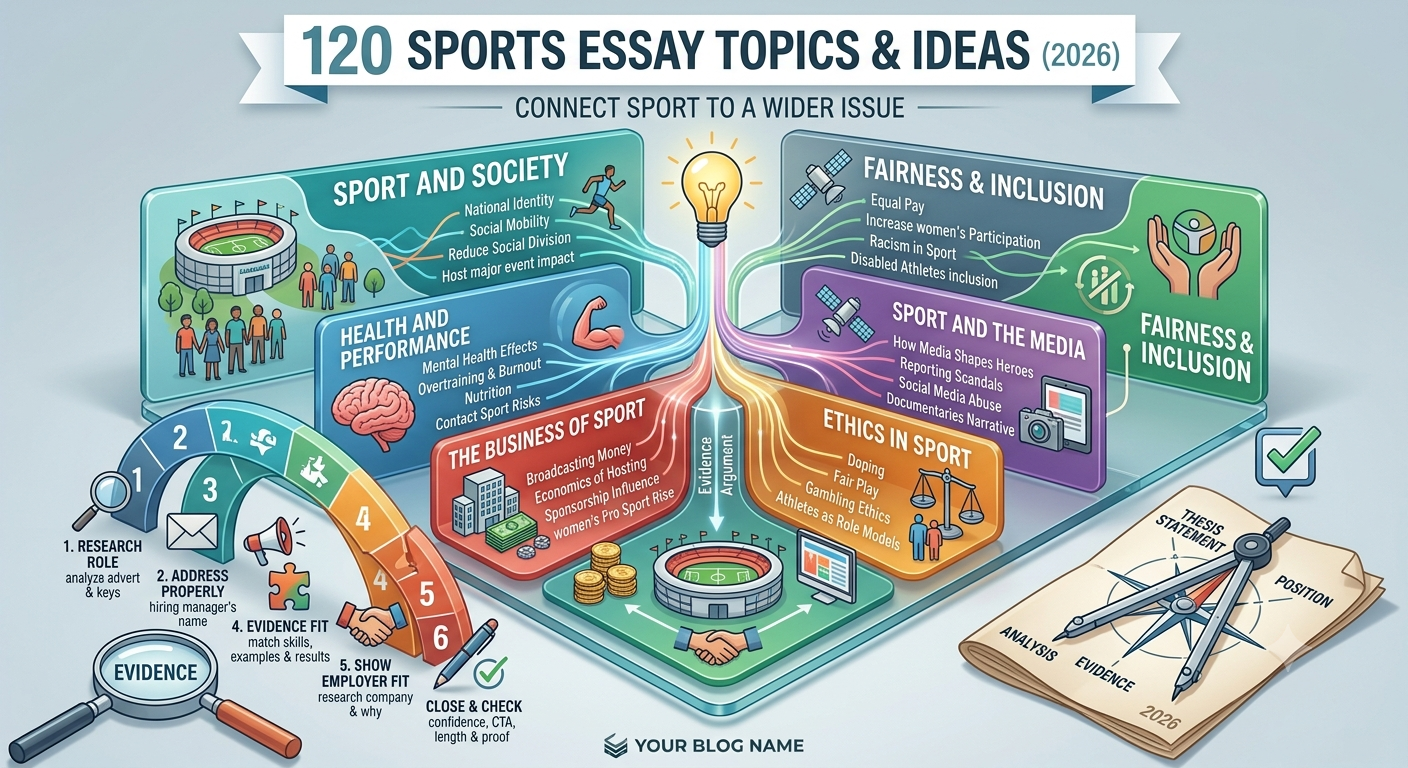
A strong sports essay topic connects sport to a wider issue, such as society, health, business, ethics, media or technology, rather than simply describing a game or player. Choose a focused, arguable angle you can support with evidence, and use sport as a lens on a broader question.
Sport is a great essay subject because it connects to so much else: identity, health, money, ethics, politics and culture. The strongest sports essays use sport as a lens on a wider issue rather than recounting a match, and because they are arguments, the same habits that lift any essay, a clear position and analysis rather than description, decide the grade, which is why it helps to keep the principles of critical writing in mind from the outset. This guide gives 120 topics grouped by theme, then shows how to write a strong one.
What makes a good sports essay topic?
A good sports essay topic does two things. It connects the sport to a wider issue, so the essay has something to argue beyond the events of a game, and it is narrow and arguable enough to defend with evidence in the length you have. ‘Football’ is not a topic; ‘whether the commercialisation of football has harmed the game for ordinary fans’ is one you can argue. The best topics also draw on evidence you can find, whether statistics, examples or research, so it is worth checking that a debate exists and that sources are available before you commit. Sport is rich in strong feelings, so the skill is turning a passion into a reasoned, evidenced argument.
120 sports essay topics by theme
The topics below are grouped by theme. Narrow any of them to a specific sport, league or country you can find evidence on.
Sport and society
- How sport builds national identity.
- The role of sport in social mobility.
- Whether sport can reduce social division.
- How sport shapes gender norms.
- The impact of hosting a major sporting event.
- Sport and community belonging.
- How sport is used in politics.
- Participation gaps in sport.
- The role of school sport in society.
- How sport represents a nation abroad.
- Sport as a tool for social change.
- How local clubs shape communities.
- The social value of grassroots sport.
- How sport reflects social inequality.

Health and performance
- The physical benefits of regular sport.
- The mental health effects of exercise.
- Overtraining and athlete burnout.
- The role of nutrition in performance.
- How technology improves performance.
- The risks of contact sports.
- Youth sport and long-term health.
- The psychology of winning and losing.
- Recovery and its role in performance.
- How aging affects athletic ability.
- The link between exercise and academic performance.
- How sleep affects athletic performance.
- The health risks of extreme sports.
- How exercise reduces stress.
The business of sport
- How broadcasting money has changed sport.
- The economics of hosting major events.
- Sponsorship and its influence on sport.
- How ticket pricing affects access.
- The rise of women’s professional sport.
- Player transfers and club finances.
- How merchandising drives revenue.
- The commercialisation of sport.
- Streaming and the future of sports viewing.
- The value of a club to a local economy.
- How social media monetises athletes.
- The economics of stadium building.
- How gambling sponsorship shapes sport.
- The business model of a major league.
Ethics in sport
- Doping and how to tackle it.
- Fair play versus winning at all costs.
- The ethics of gambling in sport.
- Corruption in sports governance.
- The pressure on young athletes.
- The ethics of performance technology.
- Match-fixing and its consequences.
- The ethics of hosting events in certain countries.
- Should athletes be role models?
- The ethics of extreme risk in sport.
- Cheating and sportsmanship.
- The fairness of financial dominance in sport.
- The ethics of animal use in sport.
- Player welfare versus commercial demands.
Sport and the media
- How the media shapes sporting heroes.
- The reporting of scandals in sport.
- How social media affects athletes.
- Media coverage of women’s sport.
- How commentary shapes perceptions.
- The role of highlights in shaping opinion.
- How the media builds rivalries.
- The effect of constant coverage on athletes.
- How documentaries reshape sporting narratives.
- The media and national sporting pride.
- How sport journalism has changed.
- The portrayal of failure in sport.
- How social media fuels abuse of athletes.
- The media’s role in athlete branding.
Fairness, inclusion and gender
- Closing the gender gap in sport.
- Equal pay in professional sport.
- How to increase women’s participation.
- Inclusion of disabled athletes.
- The debate over transgender athletes.
- Racism in sport and responses to it.
- How class affects access to sport.
- The representation of minorities in sport.
- How to make sport more accessible.
- The role of role models in inclusion.
- Barriers to participation for girls.
- The Paralympics and changing attitudes.
- How disability sport is funded.
- Discrimination in sports crowds.
Technology and the future of sport
- How technology has changed officiating.
- The use of data analytics in sport.
- Wearable technology and performance.
- The debate over video assistant referees.
- How esports is reshaping sport.
- The role of AI in coaching.
- How technology affects fan engagement.
- The future of stadiums and viewing.
- How virtual reality is used in training.
- The ethics of performance-enhancing technology.
- How social media reshapes fandom.
- The impact of streaming on sport.
- How data changes team selection.
- The future of participation in a digital age.
Youth, school and grassroots sport
- The benefits of school sport.
- Whether competitive sport helps children.
- The pressure on young athletes.
- How to encourage lifelong participation.
- The role of PE in schools.
- How grassroots sport is funded.
- The effect of early specialisation.
- How sport supports child development.
- Access to sport in deprived areas.
- The role of parents in youth sport.
- Burnout among young athletes.
- How schools can widen participation.
- The value of team sport for young people.
- Talent identification and its risks.

Sport, politics and global issues
- How sport is used in international politics.
- The politics of hosting the Olympics.
- Sport and national protest movements.
- How boycotts have shaped sport.
- The role of sport in diplomacy.
- Sportswashing and its ethics.
- How major events affect a host nation.
- The environmental impact of major events.
- How sport crosses political divides.
- Nationalism and international sport.
- The politics of funding elite sport.
- How sport responds to global crises.
- The legacy of mega-events.
- Sport as soft power.
How to write a strong sports essay
A sports essay is still an argument, so treat it like one. Connect the sport to a wider issue and state your position as a clear thesis statement, so the reader knows what you will argue. Support each point with evidence, statistics, examples or research, rather than opinion alone, and analyse what that evidence shows instead of just describing events, which is the analytical habit our critical writing guide builds. Give the opposing view a fair hearing before explaining why your position holds, organise it all within a clear structure, and cite your sources so you avoid plagiarism. Do that, and a topic you care about becomes a strong, reasoned essay.
Choosing the right topic for your assignment
With 120 options above, evidence and interest decide it. Favour a topic where a genuine debate exists and where you can find statistics or examples, since a one-sided or under-evidenced topic gives you little to argue. Check it suits your course and the length you have been set, and narrow it to a specific sport, league or country. A focused, arguable topic on a well-documented issue will always beat a broad take on a fashionable one. Whichever theme you choose above, the same rule holds: use sport as a lens on a wider issue, narrow it, evidence it, and let your argument carry the essay.
Popular posts

How to Write a PESTLE Analysis for an Assignment (with Example, 2026)
August 23, 2026

Can Students Access Turnitin Without Their University? Here Is the Truth
April 15, 2026

How to Write a SWOT Analysis for an Assignment (with Example, 2026)
August 24, 2026
Scribbr vs Turnitin: Which Plagiarism Checker Is Better? (2026)
June 5, 2026

IEEE Referencing: A Full Guide with Examples (2026)
September 6, 2026


Want more tips & great deals? Get them sent to your inbox
Please enter a valid E-mail
By clicking "Subscribe" you agree to be contacted via e-mail. You can always unsubscribe from the newsletter


