
Ready by 3:50pm Oct 23, 2026
Dissertation Submission Checklist: What to Check Before You Submit (2026)
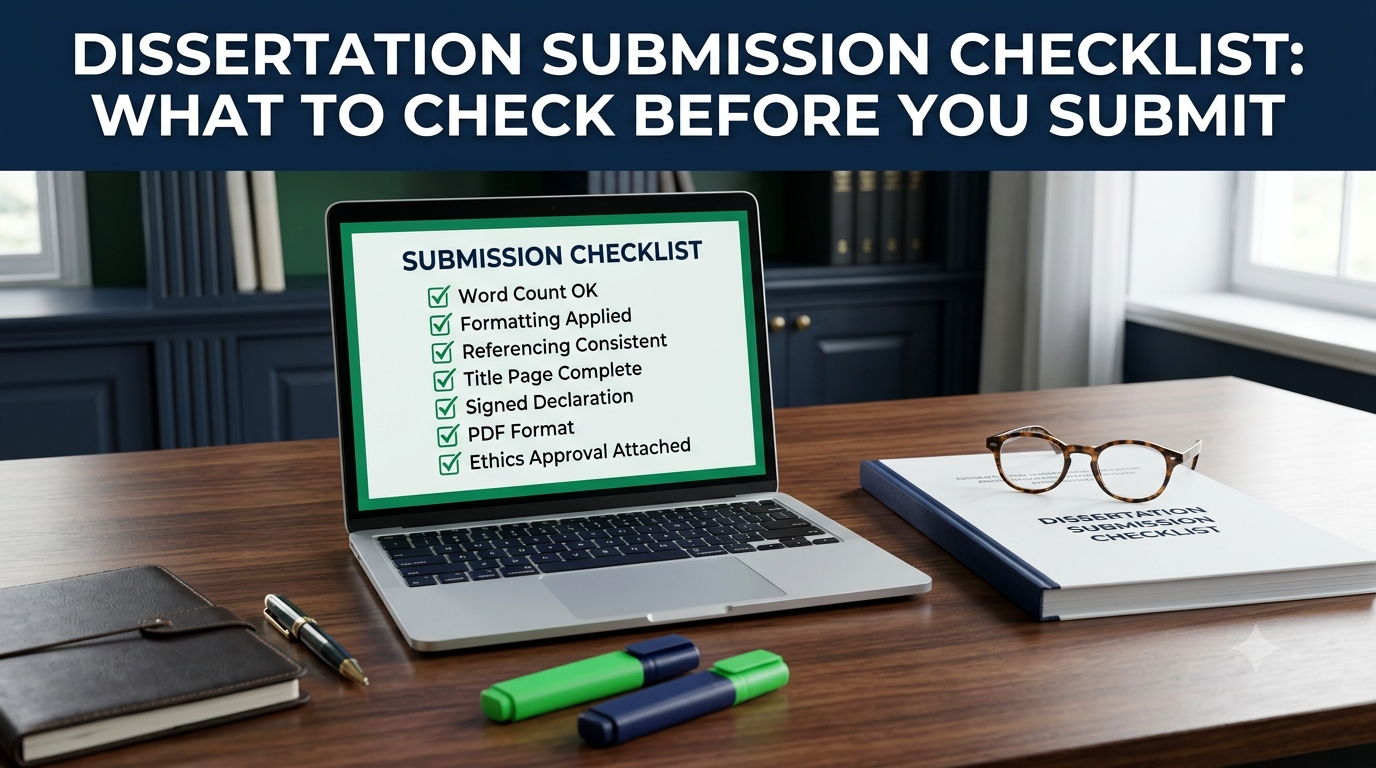
Before submitting your dissertation, check that the content and structure are complete, the word count is within limit, every source is cited and referenced consistently, the similarity score is acceptable, and the whole document is proofread and correctly formatted. Then confirm the title page, declaration, appendices, file format and exact deadline before you upload.
The final days before a dissertation deadline are when easy marks are won or lost. The research is done and the argument is written, but a missing reference, a broken PDF or an over-limit word count can still cost you. This checklist walks through everything to confirm before you submit, in the order most students find useful, with links to detailed guides for each stage. Work through it slowly, because the point of a checklist is to catch the things you are too close to the work to see.
What should be on your dissertation submission checklist?
The table below is the full checklist at a glance. Each row is unpacked in the sections that follow, so use this as the summary and read on for the detail.
| Area | What to confirm |
| Content and structure | Every chapter present and in order, aims answered, no placeholder text left in. |
| Word count | Within the limit, counting only what your brief says counts. |
| Referencing | Every citation has a reference, one consistent style, list in alphabetical order. |
| Academic integrity | Similarity checked, quotes cited, no accidental plagiarism. |
| Formatting | Font, spacing, margins, page numbers and headings match the brief. |
| Front matter | Title page, abstract, contents page and acknowledgements complete. |
| Admin | Declaration signed, ethics approval attached if required, appendices labelled. |
| Submission | Correct file format, file named as instructed, portal and deadline confirmed. |
Is the content complete and in the right structure?
Start with the whole document, not the details. Read the contents page and confirm every chapter is present, in the right order, and doing its job: the introduction sets up the problem, the literature review builds the context, the methodology explains the approach, the results present the findings, the discussion interprets them, and the conclusion answers the question you set. Check that your stated aims and objectives are all addressed somewhere in the work, because a marker will look for exactly that. Our dissertation structure guide sets out what each chapter should contain if you want to sense-check the shape.
Then hunt for the small things that betray a rushed submission: highlighted placeholder text, notes to yourself, figures or tables with the wrong numbers, and cross-references that point to the wrong section. Confirm the conclusion genuinely concludes rather than introducing new material, our dissertation conclusion guide explains the difference, and that the abstract still matches what the finished dissertation actually says, since abstracts are often written early and forgotten.
Is your word count within the limit?
Confirm your exact word limit and, just as important, what counts towards it. Most universities exclude the reference list and appendices from the count, and some also exclude the abstract, tables or footnotes, but this varies by institution, so check your handbook rather than assuming. Going over the limit can be penalised, and going far under can suggest the work is thin. If you need to rebalance, our dissertation word count per chapter guide shows the usual split, so you can see which chapter has run long before you start cutting.
Is every source cited and referenced?
Referencing is where careful students pick up marks and rushed ones lose them. Check that every in-text citation has a matching entry in the reference list, and that every entry in the list is actually cited somewhere in the text, since orphaned references are an easy flag. Confirm you have used one consistent style throughout, that the list is in alphabetical order, and that the small details, dates, page numbers, italics and access dates, are consistent. Our Harvard referencing guide covers the format by source type, and our guide to citing sources covers the wider principles if you are working in another style.
Have you checked the similarity report?
Run a plagiarism or similarity check on your own work before you submit, so there are no surprises when your university runs theirs. The aim is not a score of zero, which is neither realistic nor expected, but a score in your university’s acceptable range with every match properly quoted and cited. Our good similarity score guide explains what figure to aim for and how to read the report, and our guide on checking your score before submitting covers how to run a pre-submission check. If your score is higher than expected, the fix is to quote less and paraphrase properly, not to disguise sources.
Is it proofread and correctly formatted?
Proofreading is most effective when the words feel slightly unfamiliar, so leave a gap between finishing writing and proofreading, and change how you read: print it out, read it aloud, or use text-to-speech to catch what your eye skips. Look for typos, missing words, inconsistent terminology and sentences that no longer make sense after editing. Then check the formatting against the brief: font and size, line spacing, margins, page numbers, heading styles, and captions on every figure and table. Consistent formatting signals a professional, finished piece of work, and inconsistent formatting is the first thing a marker notices.
Have you completed the admin and front matter?
The parts of a dissertation that carry no argument still carry marks and can hold up your submission. Confirm the title page has everything your template asks for, usually the title, your name, student number, course, supervisor and date. Check that the declaration or originality statement is included and signed, and that any required ethics approval is attached, since some departments will not accept a submission without it. Update the contents page so the page numbers are correct after your final edits, and make sure every appendix is labelled and actually referred to in the main text, because an unreferenced appendix looks like padding.
Is the file correct and the deadline confirmed?
Export your dissertation to the format your university requires, which is usually a PDF, and then open that exact file to check it renders correctly: fonts embedded, images not broken, tables not split awkwardly across pages. Name the file exactly as instructed, since some portals reject or lose wrongly-named files. Confirm the precise deadline, the date, the time and the time zone, and the submission portal, then aim to submit at least a few hours early. Upload systems are busiest and slowest right before a deadline, and a technical failure at the last minute is a genuinely avoidable disaster. If the worst happens and you do miss it, our guide on a missed dissertation deadline in the UK explains your options.
A final-week submission timeline
If you have a week left, this is a realistic order to work through the checklist without leaving everything to the last day.
| When | Focus |
| 7 days before | Finish writing. Do a full read-through for structure and argument. |
| 5 days before | Fix all referencing. Run your similarity check and review the matches. |
| 3 days before | Proofread thoroughly, then format the whole document to the brief. |
| 2 days before | Complete the front matter and admin: title page, declaration, contents, appendices. |
| 1 day before | Final pass against this checklist. Export the PDF and open it to test it. |
| Submission day | Submit a few hours early. Confirm the upload succeeded and save the receipt. |
Common last-minute mistakes to avoid
- Submitting the wrong or an older version of the file.
- Leaving the declaration or ethics approval out of the document.
- An incomplete reference list, or citations with no matching reference.
- Going over the word limit because appendices or footnotes were miscounted.
- A PDF where images are broken or fonts have not embedded.
- Leaving the upload to the final hour and hitting a busy portal.
What happens after you submit?
Once you have submitted, save a copy of the final file and your submission receipt, since you may need to prove what you submitted and when. For many taught and research degrees, a viva or oral examination follows, so it is worth starting to prepare while the work is fresh in your mind; our dissertation viva questions guide covers what to expect. And if at any stage before submission you would like a subject expert to review your structure, referencing or argument, our dissertation writing help service provides that guided support.
Ready to take your dissertation further? Get specialist support.
From refining your research question and literature review to methodology, analysis and final structure, dissertation work requires careful planning at every stage. Explore our dissertation writing support for your research project.
Frequently asked questions
What should I check before submitting my dissertation?
Check that the content and structure are complete, the word count is within limit, every source is cited and referenced, the similarity score is acceptable, and the document is proofread and formatted. Then confirm the front matter, file format and deadline.
Does the dissertation word count include references and appendices?
Usually not. Most universities exclude the reference list and appendices, and sometimes the abstract or footnotes, but this varies, so confirm what counts in your own handbook.
What similarity score is acceptable for a dissertation?
Many universities accept up to around 20 per cent when matches are properly quoted and cited, and often a little higher for dissertations because of long reference lists. Always confirm your department’s figure.
What file format should I submit my dissertation in?
Most universities ask for a PDF, though some accept Word. Check the portal instructions, name the file exactly as required, and open the exported file to confirm it renders correctly before uploading.
What happens if I miss my dissertation deadline?
Late submissions are usually capped or penalised on a sliding scale, and score zero after a set window, unless you have approved mitigating circumstances. Submit whatever you have rather than nothing, and contact your supervisor immediately.
Popular posts
Best AI Content Detectors in 2026
July 11, 2026
140 Communication Research Topics (2026)
September 16, 2026
Education Dissertation Topics: 110+ Ideas with Research Aims (2026)
September 14, 2026
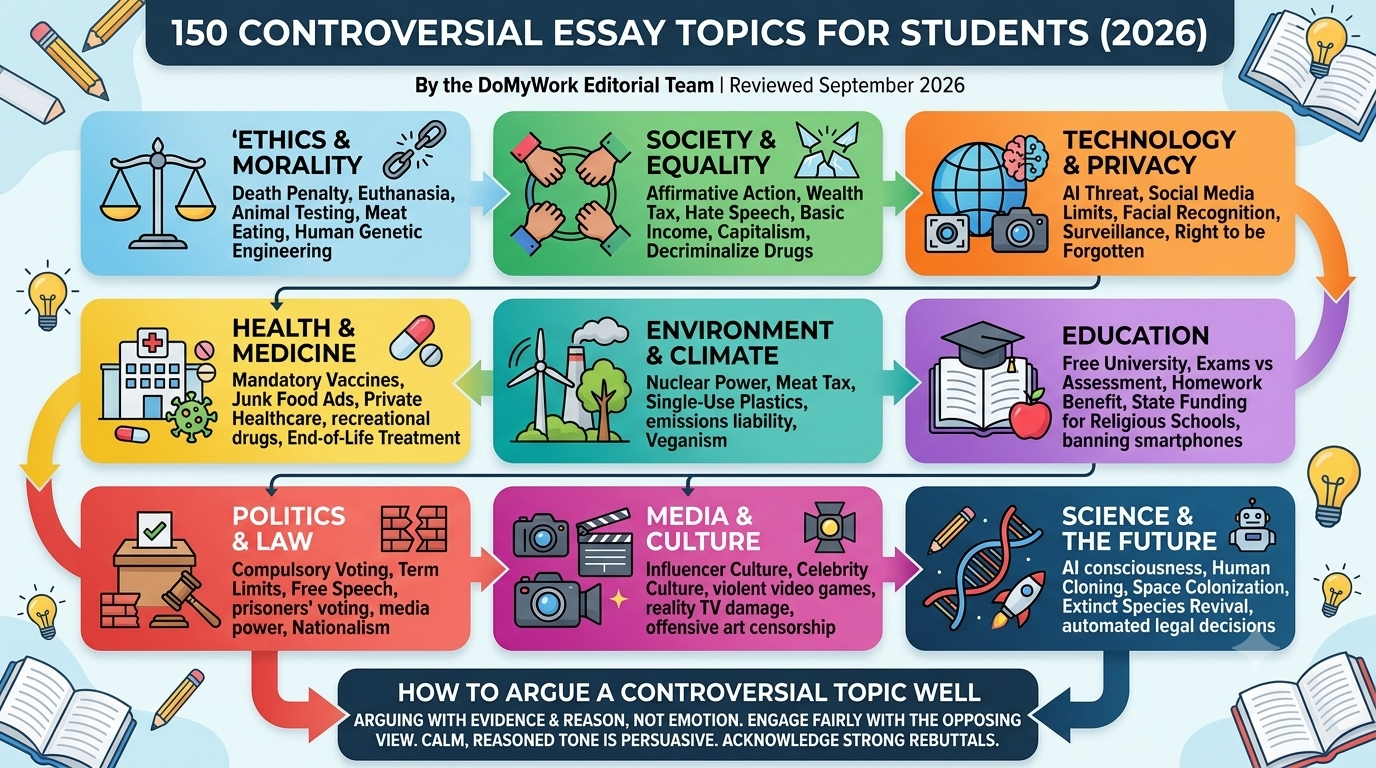
150 Controversial Essay Topics for Students (2026)
September 28, 2026
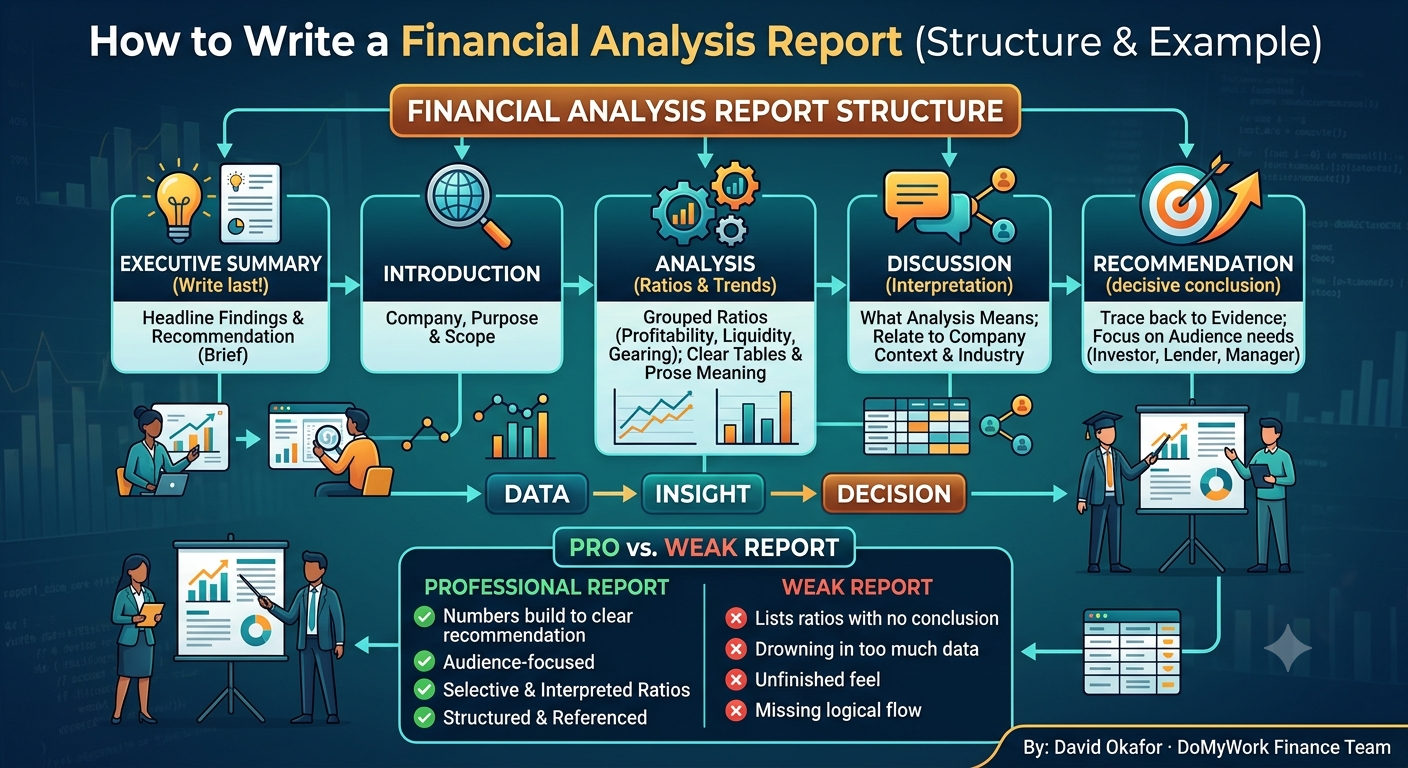
How to Write a Financial Analysis Report (Structure and Example)
July 13, 2026
Want more tips & great deals? Get them sent to your inbox
Please enter a valid E-mail
By clicking "Subscribe" you agree to be contacted via e-mail. You can always unsubscribe from the newsletter


