
Ready by 5:31pm Oct 9, 2026
110+ Hospitality and Cookery Assignment Topics for 2026
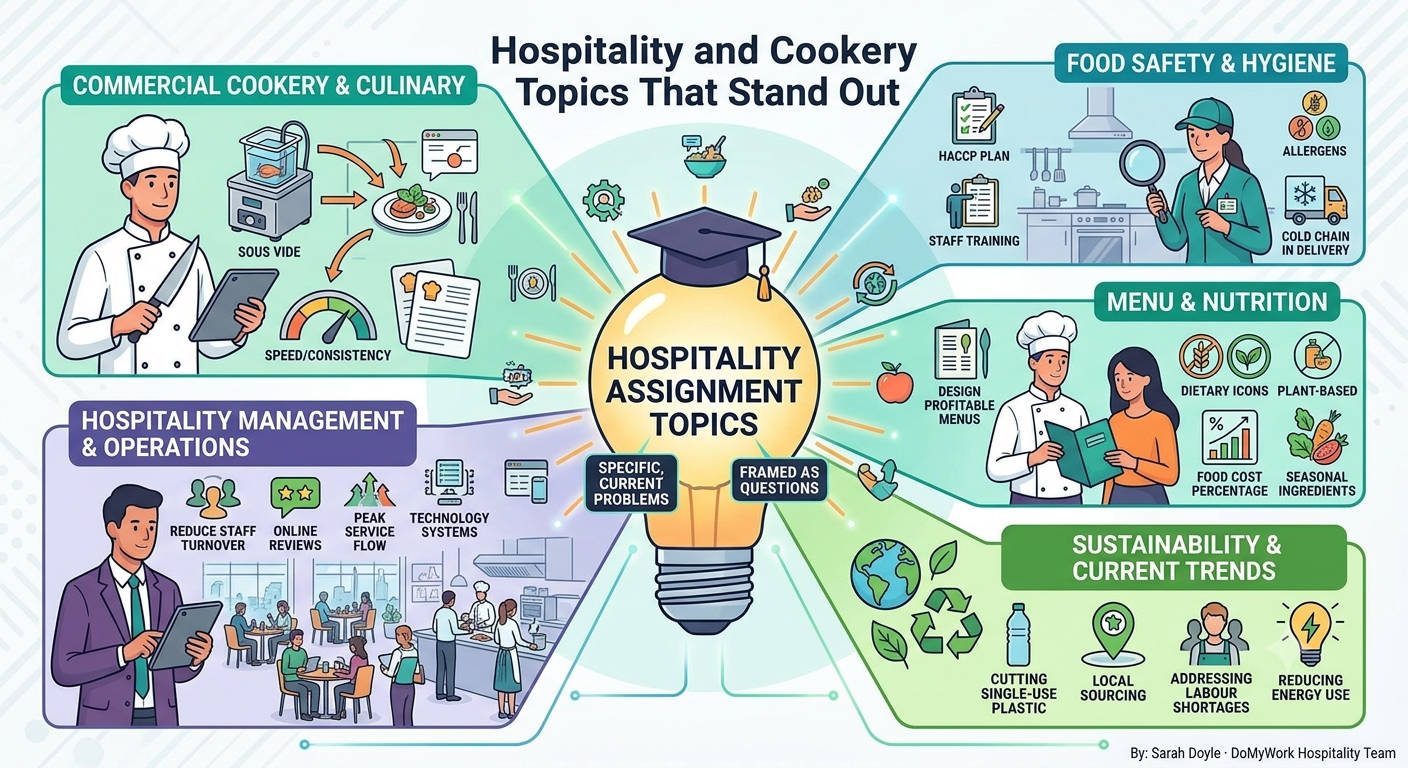
A good hospitality or cookery topic is practical, tied to real kitchen or venue operations, and narrow enough to research with the evidence you can gather. Below are more than 110 hospitality and professional cookery topics for 2026, grouped by area, from kitchen operations and menu costing to food safety, nutrition, sustainability and guest experience, each ready to shape into a clear question.
How do you choose a good cookery or hospitality topic?
Begin with the part of the industry you know best, kitchen production, food and beverage service, events or management, because you will write with more authority on what you have seen in practice. Then check you can gather evidence, whether that is costing data, a small guest survey, or published industry reports. Our cookery assignment help guide explains how these assessments are marked and what evidence they expect.
Keep the scope tight. A whole theme like sustainability is too big; reducing food waste in a single kitchen section is answerable. Several of your assessments have set formats, so match the topic to the task: our guides to menu planning and costing, the commercial cookery logbook and reflective culinary commentary show what each one needs.
Professional cookery and kitchen operations topics
- The impact of the kitchen brigade system on efficiency in a busy service
- Mise en place practices and their effect on service speed and consistency
- How batch cooking affects food quality in high-volume kitchens
- The effect of kitchen layout on workflow and staff safety
- Standardised recipes and their role in maintaining consistency across shifts
- Managing allergen control in a professional kitchen
- The effect of equipment choice on energy use and production speed
- Reducing plate waste through portion control in a restaurant kitchen
- The role of the sous chef in maintaining kitchen standards
- How service styles affect kitchen production planning
Menu planning, development and costing topics
- The effect of menu engineering on restaurant profitability
- How dish costing accuracy affects gross profit margins
- Seasonal menu design and its impact on food cost
- The influence of menu descriptions on customer choice
- Balancing creativity and cost in fine dining menu development
- The effect of plant-based menu options on overall sales
- Menu psychology and the placement of high-margin dishes
- How dietary and allergen labelling affects menu design
Food safety, hygiene and HACCP topics
- The effectiveness of HACCP implementation in small independent kitchens
- Barriers to consistent food hygiene practice among kitchen staff
- Temperature control failures and their causes in food service
- Allergen management and the prevention of cross-contamination
- The impact of staff training on food safety compliance
- Cleaning schedules and their effect on kitchen hygiene ratings
- The role of the food safety culture in preventing incidents
- How food hygiene ratings influence customer choice
Need help turning culinary research into an academic assignment?
From food safety and HACCP reports to menu planning, nutrition analysis and hospitality coursework, academic cookery assignments require both subject knowledge and clear academic structure.
Nutrition, health and special diets topics
- Reformulating menu dishes to reduce salt, sugar and saturated fat
- The challenge of catering for multiple special diets in one kitchen
- Nutritional labelling and its effect on customer food choices
- Healthy children’s menus and their uptake in family restaurants
- Catering for plant-based diets without compromising nutrition
- The role of the chef in promoting healthier eating
- Portion size and its contribution to balanced meals in food service
Sustainability and food waste topics
- Strategies for reducing food waste in a commercial kitchen
- The use of local and seasonal sourcing to lower a menu’s carbon footprint
- Single-use packaging alternatives in takeaway food service
- The business case for sustainability in independent restaurants
- Nose-to-tail and root-to-stem cooking as waste-reduction strategies
- Energy efficiency measures in professional kitchens
- How sustainability claims influence guest choice and loyalty
Food and beverage service topics
- The effect of service style on the guest dining experience
- Upselling techniques and their impact on average spend
- Wine and food pairing and its effect on customer satisfaction
- The role of staff product knowledge in service quality
- Managing service recovery after a complaint
- The impact of technology, such as tablet ordering, on service
- How table turnaround targets affect the guest experience
Hospitality management and guest experience topics
- The drivers of customer loyalty in independent restaurants
- The effect of online reviews on restaurant bookings
- Personalisation and its impact on guest satisfaction in hotels
- Managing seasonality in a hospitality business
- The effect of ambience and design on dining behaviour
- Service quality models and their application in hospitality
- The impact of loyalty schemes on repeat custom
- How brand consistency affects multi-site hospitality operations
Events, banqueting and industry topics
- Planning and delivering large-scale banqueting without loss of quality
- Menu design for dietary-inclusive events
- The logistics of maintaining food quality in outside catering
- Managing peak demand in event catering
- The role of theming in the success of a hospitality event
Workforce and professional practice
- Staff retention challenges in the hospitality sector
- The impact of long hours and pressure on kitchen staff wellbeing
- Skills shortages and their effect on kitchen operations
- Apprenticeships and their role in developing professional chefs
- The value of reflective practice in culinary skills development
- Mentoring and its effect on newly qualified chefs
Need academic support with your cookery coursework?
Practical cookery work often comes with written reflections, reports and supporting academic work. Explore our cookery assignment support for help with the written side of your coursework.
Bakery, pastry and beverage topics
- Consistency challenges in high-volume bakery production
- The effect of ingredient substitution on baked-product quality
- Gluten-free baking and meeting texture expectations
- Shelf life and preservation in artisan bakery products
- Chocolate tempering and quality control in pastry
- Reducing sugar in patisserie without losing quality
- Cocktail menu design and its effect on bar profitability
- Stock control and wastage in bar operations
- The rise of low and no-alcohol drinks in hospitality
- Coffee quality consistency in a high-volume cafe
- Wine list design and its effect on average spend
- Responsible alcohol service and staff training
Culinary trends and innovation topics
- Authenticity versus adaptation in world-cuisine restaurants
- The influence of social media on food trends and menus
- Fusion cuisine and its acceptance among diners
- The revival of heritage and regional British dishes
- Street food formats and their move into fixed premises
- The impact of kitchen display systems on order accuracy
- Sous vide and its effect on consistency and labour
- Automation in food preparation and its effect on skills
- The use of online ordering and its effect on kitchen workflow
- Data and analytics in managing food cost and waste
- Ghost kitchens and the changing shape of food service
Cost control, operations and workforce topics
- Gross profit control through effective portion management
- Supplier selection and its effect on food cost and quality
- Stock rotation and the reduction of spoilage
- Labour cost management in a seasonal hospitality business
- The effect of dynamic pricing on restaurant revenue
Kitchen safety, wellbeing and workforce topics
- Manual handling and injury prevention in professional kitchens
- Heat stress and its effect on kitchen staff performance
- Mental health and wellbeing in high-pressure kitchens
- The effect of split shifts on hospitality staff retention
- Diversity and inclusion in professional kitchen teams
Marketing, service technology and careers topics
- The effect of social media marketing on restaurant footfall
- Influencer partnerships and their return for independent venues
- The role of food photography in menu appeal
- Loyalty apps and their effect on repeat visits
- Managing online reputation across review platforms
- The effect of contactless ordering on tipping and service
- Reservation systems and their effect on table utilisation
- Handheld ordering devices and order accuracy in service
Careers, training and industry trends topics
- The skills gap in professional cookery and how training addresses it
- The value of competitions in developing culinary talent
- Post-pandemic recovery and its effect on hospitality staffing
- Sustainability qualifications and their value to chefs
- The role of apprenticeships in the future hospitality workforce
- Work-life balance and its effect on chef retention
How do you turn a topic into a research question?
A topic names a subject; a research question is something you can answer with evidence. Take one idea above, fix the setting and the outcome you will measure, and decide whether you are describing, comparing or evaluating. Much hospitality research works well as a small case study or a short survey, supported by industry sources. When you reach the write-up, our assignment structure guide keeps it clear, and if a reflective element is required, our reflective culinary commentary guide shows the model to follow.
Frequently asked questions
How do I choose a cookery or hospitality topic?
Start with the area you know best in practice, then check you can gather evidence such as costing data, a short survey or industry reports. Narrow the theme to a single question set in one kitchen, venue or service so it is realistic to research.
What kind of evidence do hospitality assignments need?
Most use a mix of practical data and published sources, for example dish costings, a small guest survey, observation of a service, or industry and food-standards reports. Match the evidence to the task and keep the scope small enough to gather it properly.
Can a cookery topic be a case study?
Yes. A single kitchen, restaurant or event makes a strong case study, letting you go into real depth on one setting rather than spreading a survey too thin. Just be clear about what your single case can and cannot show.
Can I get help with my cookery or hospitality assignment?
Yes. If you would like a subject expert to help you shape a topic, gather the evidence and structure the work, our cookery assignment writing help service is designed around that kind of guided support.
Popular posts
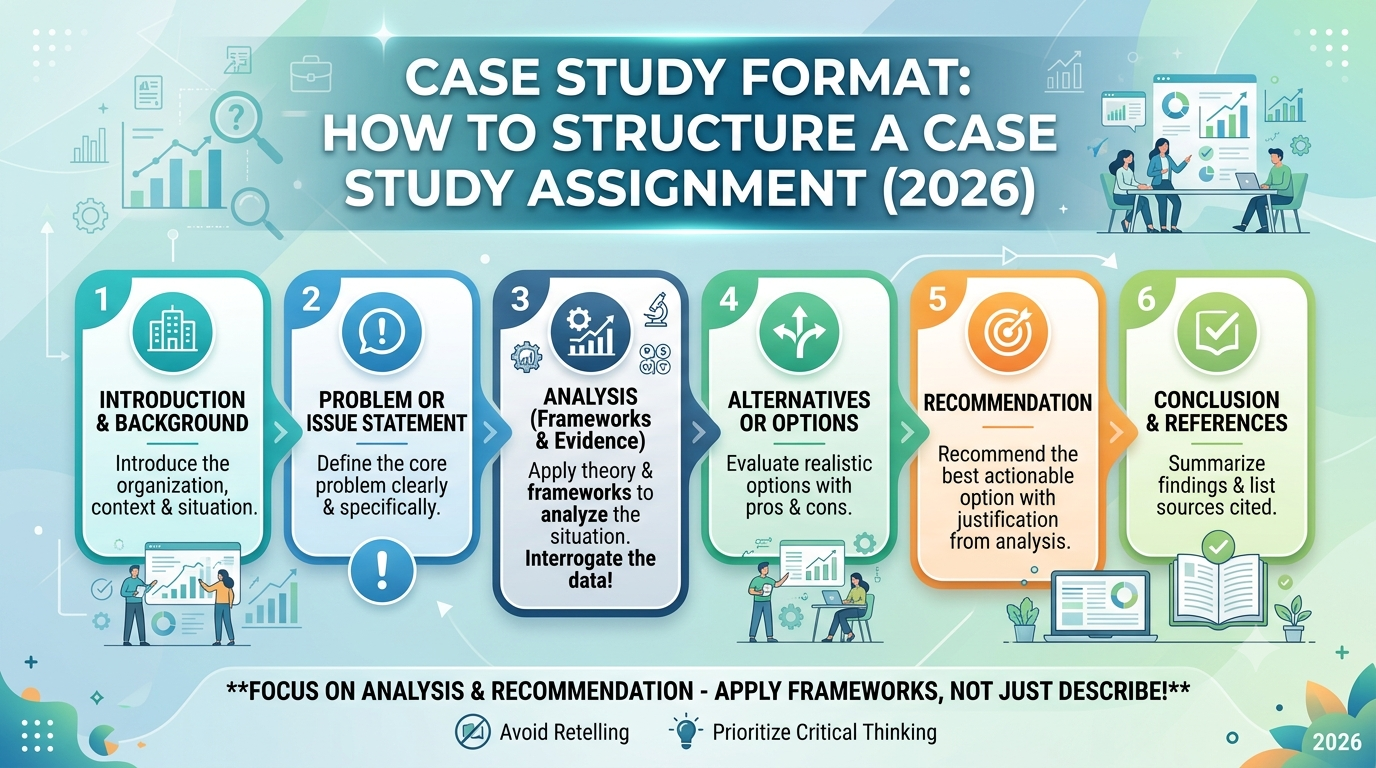
Case Study Format: How to Structure a Case Study Assignment (2026)
August 25, 2026

120+ Business Dissertation Topics and Ideas for 2026
March 2, 2026

How to Write an Annotated Bibliography (with Example, 2026)
September 1, 2026

Personal Statement Examples and How to Write Your Own (2026)
September 9, 2026

How to Write a First Class Essay at a UK University: A Complete Guide for Students
May 11, 2026


Want more tips & great deals? Get them sent to your inbox
Please enter a valid E-mail
By clicking "Subscribe" you agree to be contacted via e-mail. You can always unsubscribe from the newsletter


