
Ready by 10:40am Sep 19, 2026
Coursework Resit and Resubmission: How to Pass the Second Time
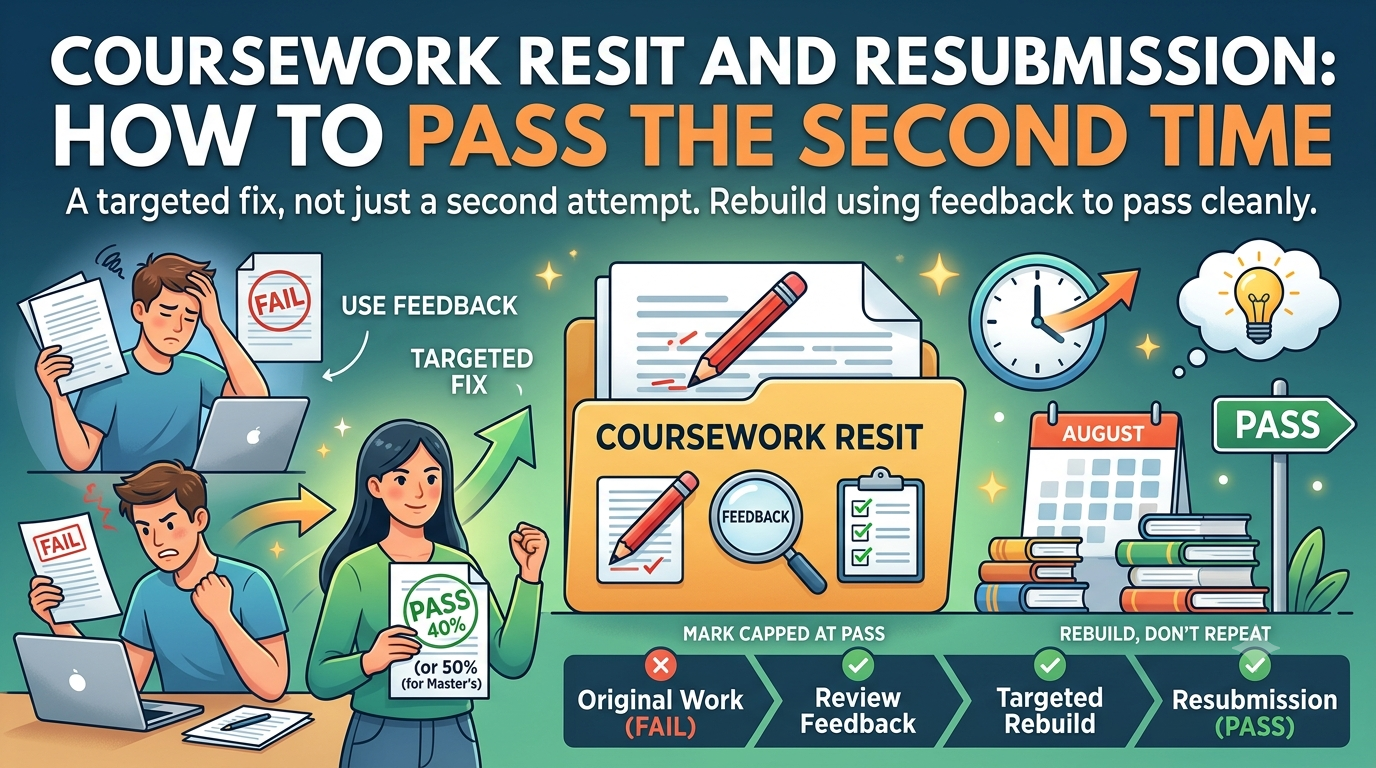
A coursework resit is a chance to resubmit failed work, usually with the mark capped at the pass threshold. To pass, read the feedback closely, because it tells you exactly what the marker wanted and did not get, then rebuild the work around that. A resit is not the same task again, it is a targeted fix.
Failing a piece of coursework feels awful, but a resit is recoverable, and most students who approach it the right way pass. August is when many UK resits fall due, so if you are facing one now, the key is to treat it as a different task from your first attempt, not a repeat of it.
What is a coursework resit?
A resit, sometimes called a resubmission or a referral, is the chance to submit a failed assessment again. It is a normal part of how universities work, not the end of your degree. Most institutions build resits into the calendar precisely because they expect some students to need them.
The most important thing to understand is what a resit is for. It is not a second identical attempt. It is a targeted second chance to fix the specific things that failed the first time, which is why the feedback matters more than anything else you have.
Is the mark capped on a resit?
Usually, yes. Most UK universities cap a resit mark at the bare pass threshold, often 40 per cent at undergraduate level or 50 per cent at master level, regardless of how good the resubmitted work is. This is standard, and it is worth knowing so you can plan realistically.
The cap changes your goal. You are not aiming for a brilliant mark, because you cannot get one. You are aiming to pass cleanly and move on. That actually makes a resit less stressful once you accept it, because the target is clear and achievable rather than open ended.
Rules vary between institutions, and some allow an uncapped resit if you had mitigating circumstances, so always check your own regulations rather than assuming the cap applies.
How is a resit different from the first attempt?
The mindset is the whole difference. On the first attempt you were producing something new, guessing at what the marker wanted. On a resit you are not guessing at all, because the feedback tells you exactly what was missing. That makes a resit, in one sense, easier than the original, since you are aiming at a clear target rather than an unknown one.
The trap is treating it as the same task. Students who reopen the original file and tinker tend to fail again, because they are still inside the thinking that failed the first time. The students who pass usually start with the feedback and the rubric, plan the fixes, and only then return to the work. Same content, completely different result.
How do you use the feedback?
This is the single most important step, and the one students skip most. Your feedback is a map of exactly why the work failed, written by the person who will mark it again. Read it slowly, more than once, and turn every comment into an action.
- Read the whole feedback before you touch the work.
- List every separate point the marker raised.
- Turn each point into a specific fix, not a vague intention.
- Check your fixes against the marking rubric, which tells you what the marker rewards.
- If a comment is unclear, ask your tutor what they meant. This is allowed and expected.
Feedback like needs more critical analysis is not a criticism to feel bad about. It is an instruction. It tells you the work described too much and judged too little, and it tells you exactly where to add value in the resit.
Why do most resits fail again?
Because students resubmit a lightly edited version of the same work, fixing the surface without addressing the real problem. If the first attempt failed on weak analysis, tidying the spelling will not save the resit, because the thing that failed is still there.
The fix is to rebuild around the feedback rather than polish the original. If the marker said the argument was unclear, restructure the argument. If they said it was too descriptive, replace description with judgement. A resit that reads as a genuinely different piece of work passes. One that reads as the same essay with a fresh coat of paint usually does not.
How should you approach the resit step by step?
- Confirm the deadline and the exact requirements, which can differ from the original brief.
- Read the feedback and the rubric together, and build a fix list.
- Rebuild the weak parts properly rather than editing around them.
- Strengthen the parts the feedback did not mention, since they were only just passing.
- Check your referencing and originality before submitting, using an originality check so a fixable problem does not sink the resit.
How do you stay motivated for a resit?
A resit over the summer, when friends have finished, is hard to face, so it helps to reframe it. The capped mark means the bar is a clean pass, not perfection, which is a smaller and clearer target than your first attempt. Break the work into the specific fixes from your feedback, do one at a time, and the task feels manageable rather than like carrying a failure around. Most students who fail a piece of coursework go on to pass the resit, so it is a setback, not a verdict on whether you belong on your course.
Can you get help with a resit?
Yes, and it is sensible to. Your tutor can clarify feedback, student support can explain your options and deadlines, and study support services can help you plan the rebuild. Getting a second read on your resit before you submit is especially useful, because a fresh pair of eyes spots whether you have actually addressed the feedback or just moved around it. Our coursework support can look at a resit against its feedback before you resubmit.
What if you fail the resit too?
It is not usually the end. Depending on your university, the next options can include repeating the module, an academic appeal if something went wrong with the process, or in some cases a further attempt. The routes vary, so speak to your tutor or student support early, because they can explain your specific options and the deadlines that apply.
If the failure was linked to circumstances outside your control, that is worth raising formally, and our guide to coursework extensions and mitigating circumstances explains how.
Frequently asked questions
What is a coursework resit?
A chance to resubmit failed work, sometimes called a resubmission or referral. It is a normal part of university, and it is a targeted second attempt to fix what failed, not a repeat of the same task.
Is a resit mark capped?
Usually, yes, often at the pass threshold of 40 per cent for undergraduates or 50 per cent for master level, regardless of how good the resubmission is. Rules vary, and some allow an uncapped resit with mitigating circumstances, so check yours.
How do I pass a resit?
Read the feedback closely, turn every comment into a specific fix, and rebuild the weak parts properly rather than editing the surface. Check your fixes against the marking rubric before you resubmit.
Why did my resit fail again?
Usually because it was a lightly edited version of the same work. If the first attempt failed on weak analysis or structure, only rebuilding that part will pass the resit.
What happens if I fail the resit?
It is not usually the end. Options can include repeating the module, an appeal, or a further attempt, depending on your university. Speak to your tutor or student support early to learn your routes.
Popular posts

What Is Self-Plagiarism? Definition, Examples and How to Avoid It
July 23, 2026

iThenticate vs Turnitin: What Is the Difference?
July 18, 2026

How to Cite Sources: A UK Student’s Guide to Referencing
July 21, 2026
How to Structure a University Assignment: Formats That Win Marks
June 23, 2026
Case Study Format: How to Structure a Case Study Assignment (2026)
August 25, 2026

Want more tips & great deals? Get them sent to your inbox
Please enter a valid E-mail
By clicking "Subscribe" you agree to be contacted via e-mail. You can always unsubscribe from the newsletter


