
Ready by 10:41am Sep 19, 2026
Coursework Referencing Checklist: Everything to Check Before You Submit
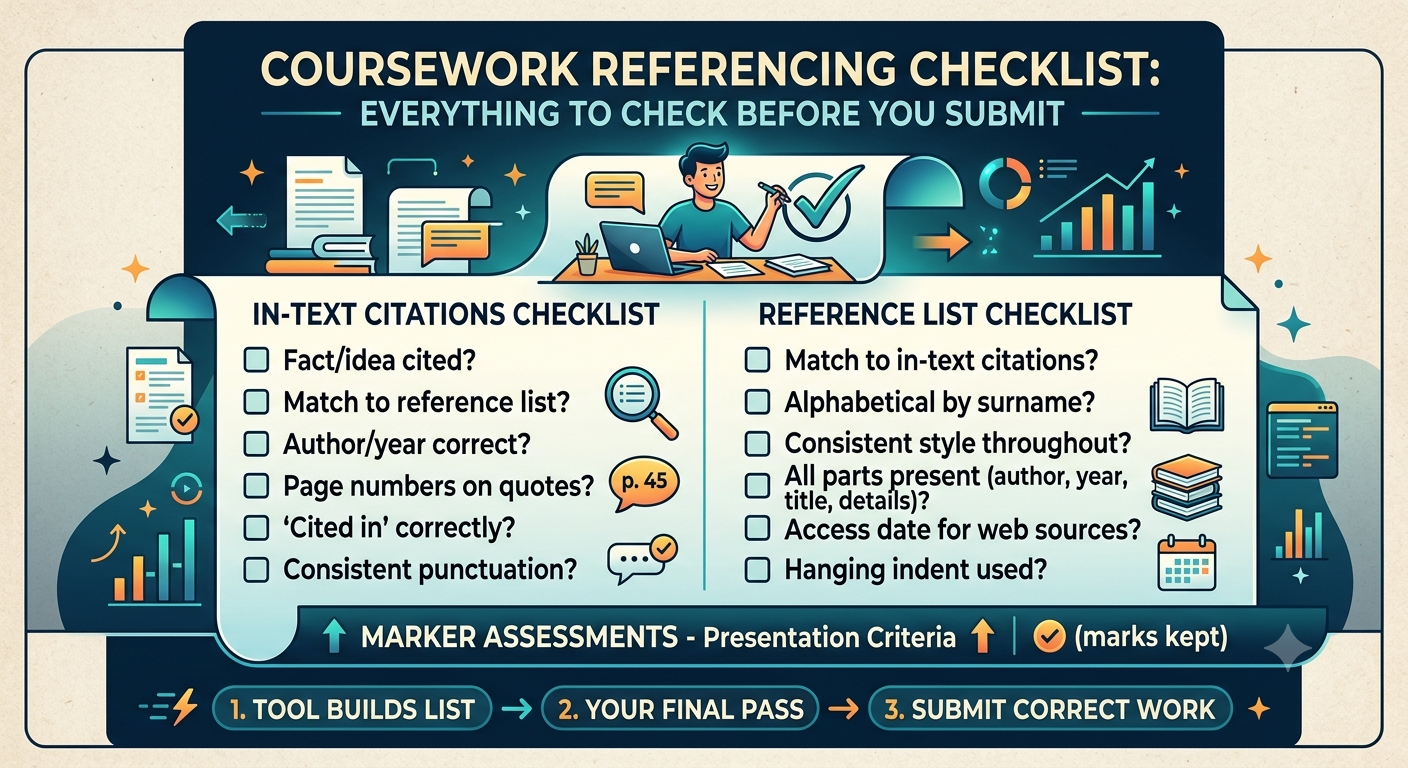
Before submitting coursework, check that every in-text citation has a matching reference list entry and the other way round, that your style is consistent throughout, that direct quotes have page numbers, that secondary sources are marked correctly, and that your reference list is alphabetical and complete. Referencing marks are among the easiest to keep and to lose.
Referencing is where students give away easy marks, not because it is hard, but because it is left to the last minute and checked in a rush. This checklist walks through everything to confirm before you submit, so you keep the marks that referencing accuracy is worth. Work through it as a final pass, separate from proofreading your writing.
Why does referencing affect your grade?
Because referencing accuracy sits inside the presentation criteria that markers assess directly. It will not earn you a top grade on its own, but sloppy referencing loses marks that have nothing to do with how good your ideas are. It also protects you from accidental plagiarism, which is a far more serious problem than a lost presentation mark.
This is one of the easiest places to keep marks with a bit of care, and it links straight to how markers assess your work.
The in-text citation checklist
Start with your in-text citations, the ones inside your writing.
- Every fact, idea, or quote from a source has a citation.
- Every in-text citation has a matching entry in your reference list.
- Author names and years are correct and match the reference list exactly.
- Direct quotes have a page number.
- Secondary sources use the cited in convention, if you used any.
- Citations are punctuated consistently throughout.
The reference list checklist
Now check the list at the end.
- Every entry has a matching in-text citation. Nothing extra sits in the list unused.
- The list is in alphabetical order by author surname.
- One consistent style is used for every entry.
- Each entry has all its parts: author, year, title, and source details.
- Web sources have an access date, if your style requires it.
- The list uses a hanging indent, if your style requires it.
If you are using Harvard, our full Harvard referencing guide has the exact format for each source type.
What are the most common referencing mistakes?
Knowing the usual mistakes helps you catch them faster, because most students make the same handful.
- A citation in the text with no matching entry in the reference list, usually from a source added late.
- An entry in the list that is never cited, usually left over from earlier drafts.
- Missing page numbers on direct quotes.
- Mixing two referencing styles without noticing, often from copying entries out of different sources.
- Weak paraphrasing that stays too close to the original and is not really your own words.
Every one of these is quick to fix once you spot it, which is the whole point of a dedicated referencing pass. You are not rewriting anything, just catching small errors that each cost a mark.
How do you check for consistency?
Consistency is the thing markers notice fastest, because a list that drifts between styles looks careless even when every entry is nearly right. The quickest way to check is to read only your reference list, entry by entry, and confirm they all follow the same pattern.
| Check | What to confirm |
| Punctuation | Full stops, commas, and brackets are the same in every entry |
| Italics | The same element is italicised every time, such as the journal or book title |
| Author format | Surname and initials are formatted the same way throughout |
| Dates | Years are in the same place and format in every entry |
How do you avoid accidental plagiarism?
Most plagiarism in coursework is accidental, from weak paraphrasing or a citation that got lost during editing. The referencing checklist catches most of it, but one more step confirms you are clear.
- Make sure every paraphrase is genuinely in your own words, not a lightly changed copy.
- Check that no citation went missing when you moved paragraphs around.
- Confirm quotes are marked clearly and cited.
- Run an originality check before you submit, so anything you missed shows up while you can still fix it.
Which referencing style should you use?
Use whichever style your department tells you to, because that is what your marker checks against. Different subjects favour different styles: Harvard is common in business and social sciences, APA in psychology and education, OSCOLA in law, and numbered styles like Vancouver in the sciences. If your brief does not say, ask your tutor rather than guessing, because mixing styles or using the wrong one costs presentation marks even when every entry is otherwise correct. Once you know your style, use one referencing tool consistently, and check its output rather than trusting it blindly, since automatic tools make small errors that a marker will still spot.
Do referencing tools do this for you?
Partly, and they are worth using, but they do not replace this check. Reference managers and citation generators format entries quickly and keep your list organised, which saves real time. What they do not do reliably is catch every error. They pull incorrect data from sources, miss page numbers, and format some source types wrongly, especially websites and reports.
So use a tool to build your list, then check its output against this checklist yourself. The tool does the heavy lifting, and your final pass catches the small mistakes it makes. Trusting a tool blindly is how students end up with a neat looking reference list that still loses presentation marks, because neat and correct are not the same thing.
A simple workflow works best: let the tool build and order the list, then run this checklist over it once by hand. That combines the speed of the tool with the accuracy of a human check, and it takes only a few minutes on a finished piece of coursework.
When should you do this check?
As a separate final pass, after you have finished writing and proofreading. Checking your argument and checking your referencing are different jobs, and doing them together means doing neither well. Give referencing its own pass with fresh eyes, ideally the day before you submit, so you have time to fix anything you find.
The one page summary
If you only have five minutes, confirm these five things.
- Every citation has a matching reference, both ways.
- One consistent style throughout.
- Direct quotes have page numbers.
- The reference list is alphabetical and complete.
- You have run an originality check.
Those five protect most of the marks referencing is worth, and most of the risk it carries.
Frequently asked questions
What should I check in my referencing before submitting?
That every in-text citation has a matching reference and the other way round, that your style is consistent, that direct quotes have page numbers, that secondary sources are marked, and that your list is alphabetical and complete.
Does referencing affect my grade?
Yes. Referencing accuracy sits inside the presentation criteria markers assess, and it protects you from accidental plagiarism. It is one of the easiest places to keep or lose marks.
How do I keep my referencing consistent?
Read only your reference list, entry by entry, and confirm they all follow the same pattern for punctuation, italics, author format, and dates. Using one referencing tool from the start also helps.
How do I avoid accidental plagiarism?
Make sure paraphrases are genuinely in your own words, check no citation went missing during editing, mark quotes clearly, and run an originality check before you submit.
When should I check my referencing?
As a separate final pass, after writing and proofreading, ideally the day before you submit. Checking argument and referencing together means doing neither properly.
Popular posts
What Is Self-Plagiarism? Definition, Examples and How to Avoid It
July 23, 2026
iThenticate vs Turnitin: What Is the Difference?
July 18, 2026
How to Cite Sources: A UK Student’s Guide to Referencing
July 21, 2026
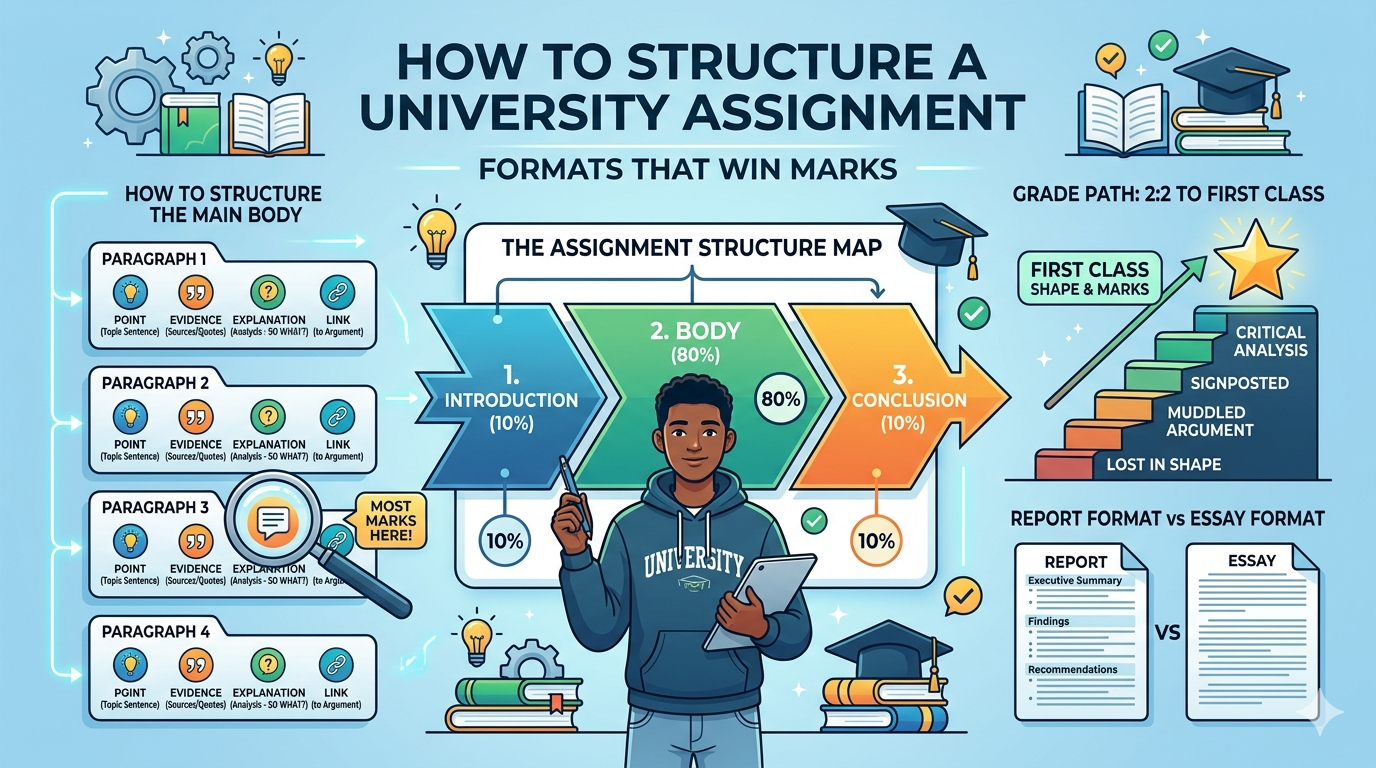
How to Structure a University Assignment: Formats That Win Marks
June 23, 2026
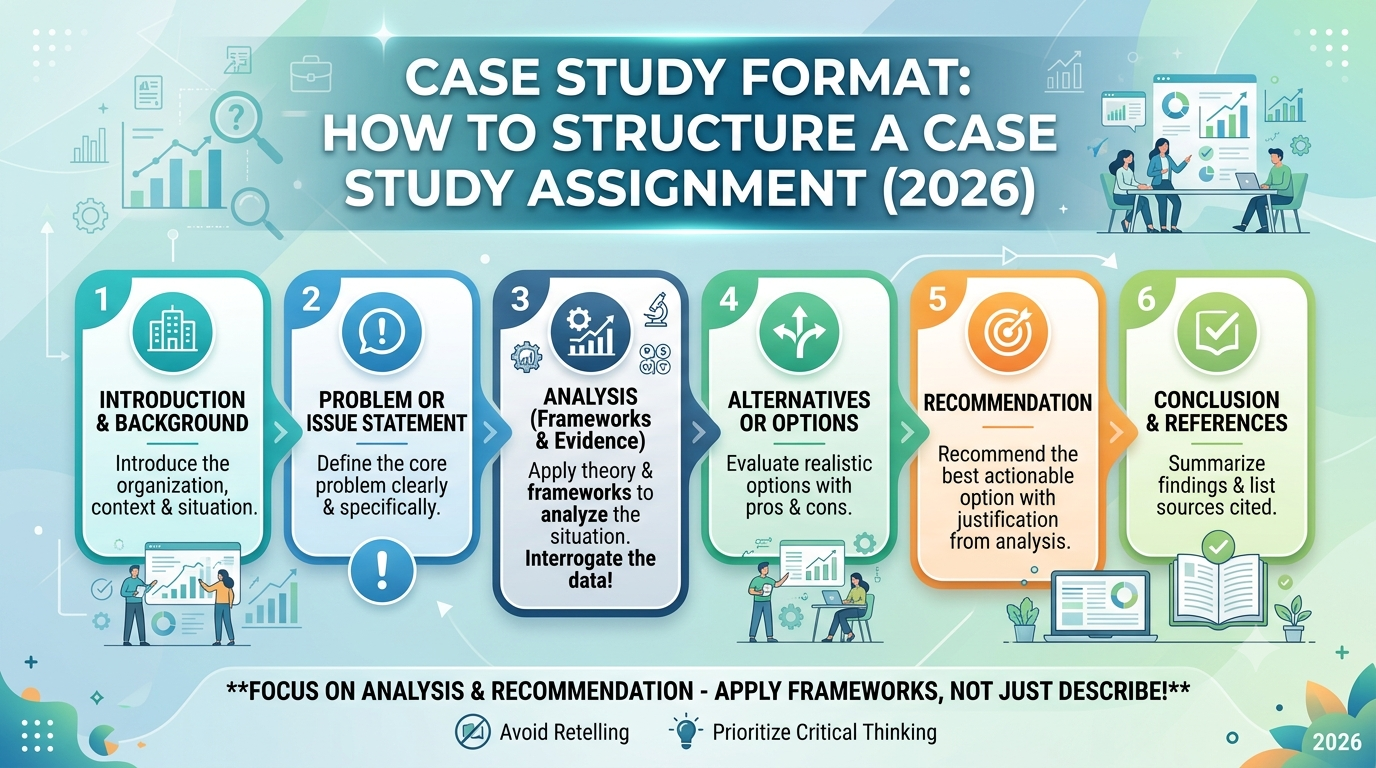
Case Study Format: How to Structure a Case Study Assignment (2026)
August 25, 2026
Want more tips & great deals? Get them sent to your inbox
Please enter a valid E-mail
By clicking "Subscribe" you agree to be contacted via e-mail. You can always unsubscribe from the newsletter


