
Ready by 9:46am Oct 23, 2026
MLA Referencing and Format: A Full Guide with Examples (2026)
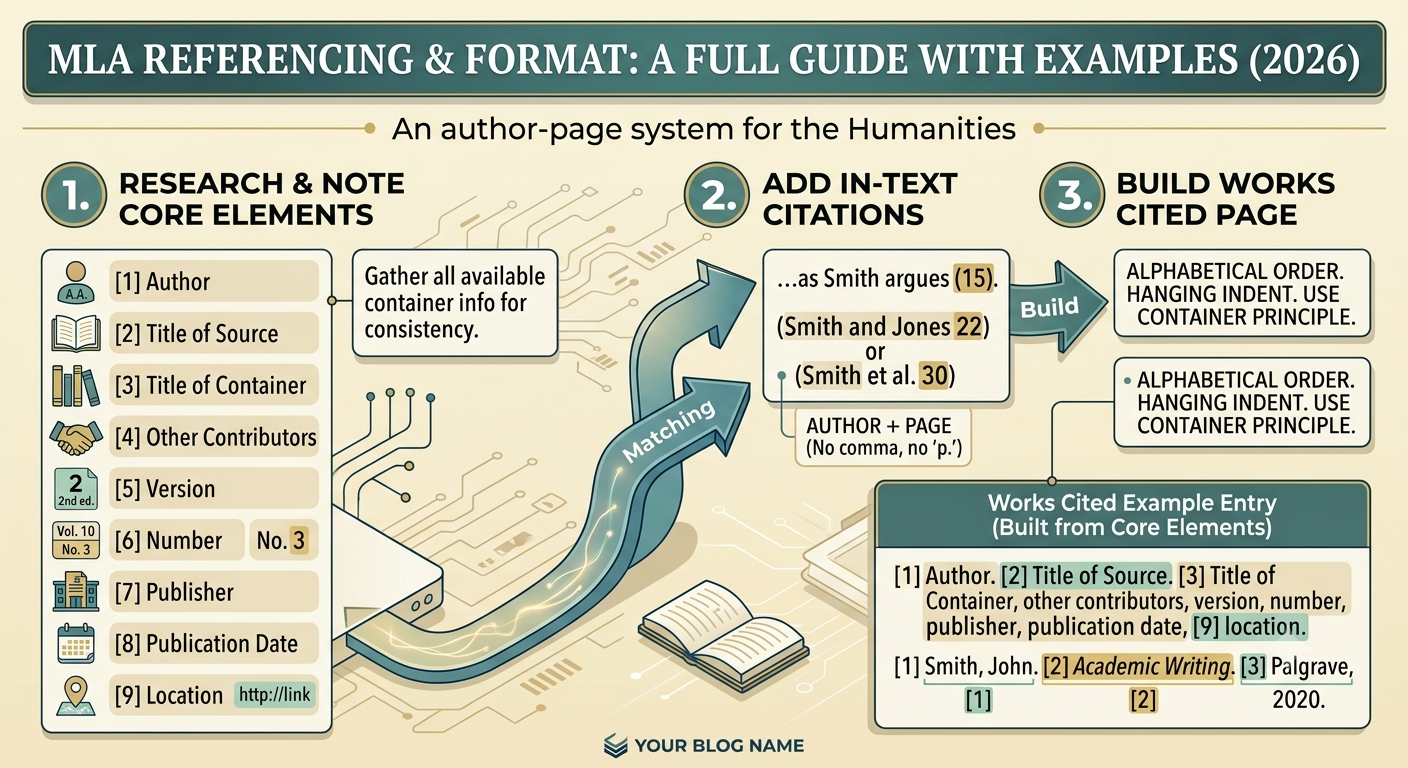
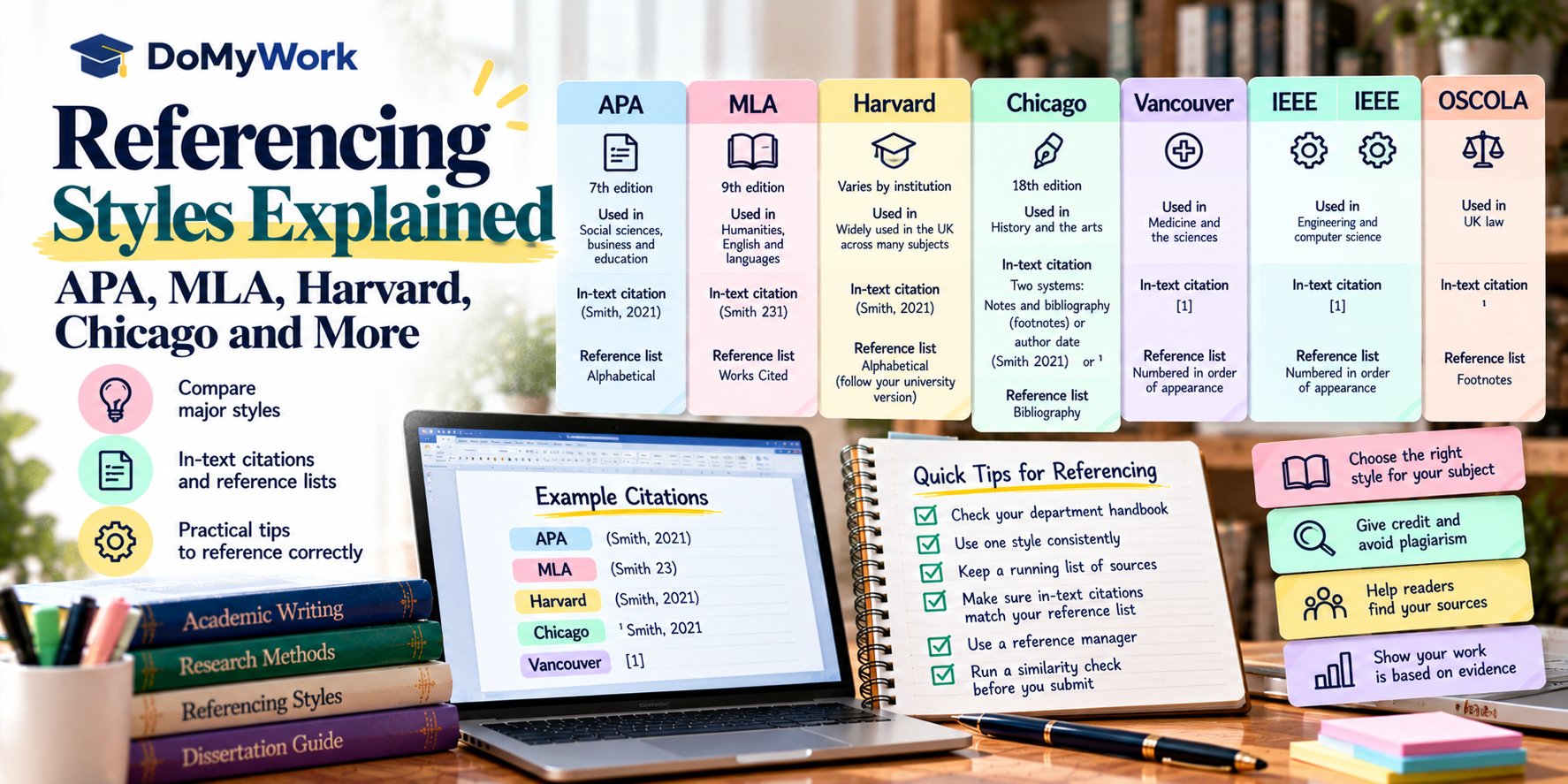
MLA is an author-page referencing style used mainly in the humanities. You cite the author’s surname and a page number in the text, such as (Smith 15), and list full details in a Works Cited page at the end. This guide covers MLA format: in-text citations, the Works Cited entry for common sources, and the core-elements template.
MLA style, from the Modern Language Association, is the standard in English, languages and many humanities subjects. It is an author-page system: a brief citation in the text points to a full entry on a Works Cited page. This guide explains MLA format in its current 9th edition, with in-text rules and Works Cited examples for the sources you use most, so you can reference cleanly and keep the presentation marks. Confirm any details against the official MLA Handbook or your department’s guidance.
What is MLA format?
MLA format is the referencing and document style of the Modern Language Association. It has two linked parts: an in-text citation giving the author surname and a page number, and a Works Cited list at the end giving full details of every source, ordered alphabetically. MLA also sets document conventions, such as double spacing, a readable font, and a header with your surname and page number, though the exact requirements can vary, so check your brief.
How do MLA in-text citations work?
An MLA in-text citation gives the author surname and the page number, with no comma between them and no ‘p.’, for example (Smith 15). If you name the author in your sentence, put only the page number in brackets, for example Smith argues this point clearly (15). For a source with no page numbers, such as many websites, use just the author surname.
- Two authors: name both, for example (Smith and Jones 22).
- Three or more authors: use the first author followed by et al., for example (Smith et al. 30).
- No author: use a shortened version of the title in quotation marks.
How do you format an MLA Works Cited entry?
MLA 9th edition builds each entry from a template of core elements: Author. Title of Source. Title of Container, other contributors, version, number, publisher, publication date, and location. The table shows the format and an example for common sources.
| Source | MLA format and example |
|---|---|
| Book | Author. Title of Book. Publisher, Year. -> Smith, John. Academic Writing. Palgrave, 2020. |
| Journal article | Author. “Title of Article.” Journal Name, vol. X, no. Y, Year, pp. 10-25. |
| Chapter in an edited book | Author. “Title of Chapter.” Title of Book, edited by Editor, Publisher, Year, pp. 10-25. |
| Website | Author. “Title of Page.” Website Name, Publisher, Date, URL. |
What are MLA core elements?
Rather than a different template for every source type, MLA 9th uses one list of nine core elements that you fill in as far as they apply, in order, each followed by the punctuation shown in the handbook. The key idea is the container: the larger work a source sits in, such as the journal that holds an article or the website that holds a page. Getting the container right is what makes MLA entries consistent across source types.
How do you reference in MLA step by step?
- Record the full details of each source as you research, including the container.
- Add an author-page in-text citation each time you quote, paraphrase or use an idea.
- Build each Works Cited entry from the core elements that apply, in order.
- Order the Works Cited list alphabetically by author surname, with a hanging indent.
- Check that every in-text citation matches a Works Cited entry and vice versa.
MLA is one style among several. For the general principles, see our how to cite sources guide; for other styles, our APA referencing guide and Harvard referencing guide. If you are compiling sources with commentary, our annotated bibliography guide uses the same entry formats.
Common MLA mistakes to avoid
- Adding a comma or ‘p.’ in the in-text citation; MLA uses (Smith 15), not (Smith, p. 15).
- Titling the list ‘References’ or ‘Bibliography’ instead of ‘Works Cited’.
- Missing the container, such as the website or journal a source sits in.
- A Works Cited entry with no matching in-text citation, or the reverse.
Accurate referencing protects easy presentation marks. For help checking your work, our assignment writing help and essay writing help services can review it.
Frequently asked questions
What is MLA format?
MLA is an author-page referencing style used mainly in the humanities. You cite the author surname and page number in the text, such as (Smith 15), and list full details on a Works Cited page.
How do you write an MLA in-text citation?
Give the author surname and page number with no comma and no ‘p.’, for example (Smith 15). If you name the author in the sentence, put only the page number in brackets.
What is the difference between MLA and APA?
MLA uses author-page citations, such as (Smith 15), and a Works Cited page, and is common in the humanities. APA uses author-date citations, such as (Smith, 2020), and a reference list, and is common in the sciences.
What is a Works Cited page?
It is the MLA list of all the sources you cited, at the end of your work, ordered alphabetically by author surname with a hanging indent, built from MLA’s core elements.
Popular posts

Best AI Content Detectors in 2026
July 11, 2026

140 Communication Research Topics (2026)
September 16, 2026

Education Dissertation Topics: 110+ Ideas with Research Aims (2026)
September 14, 2026
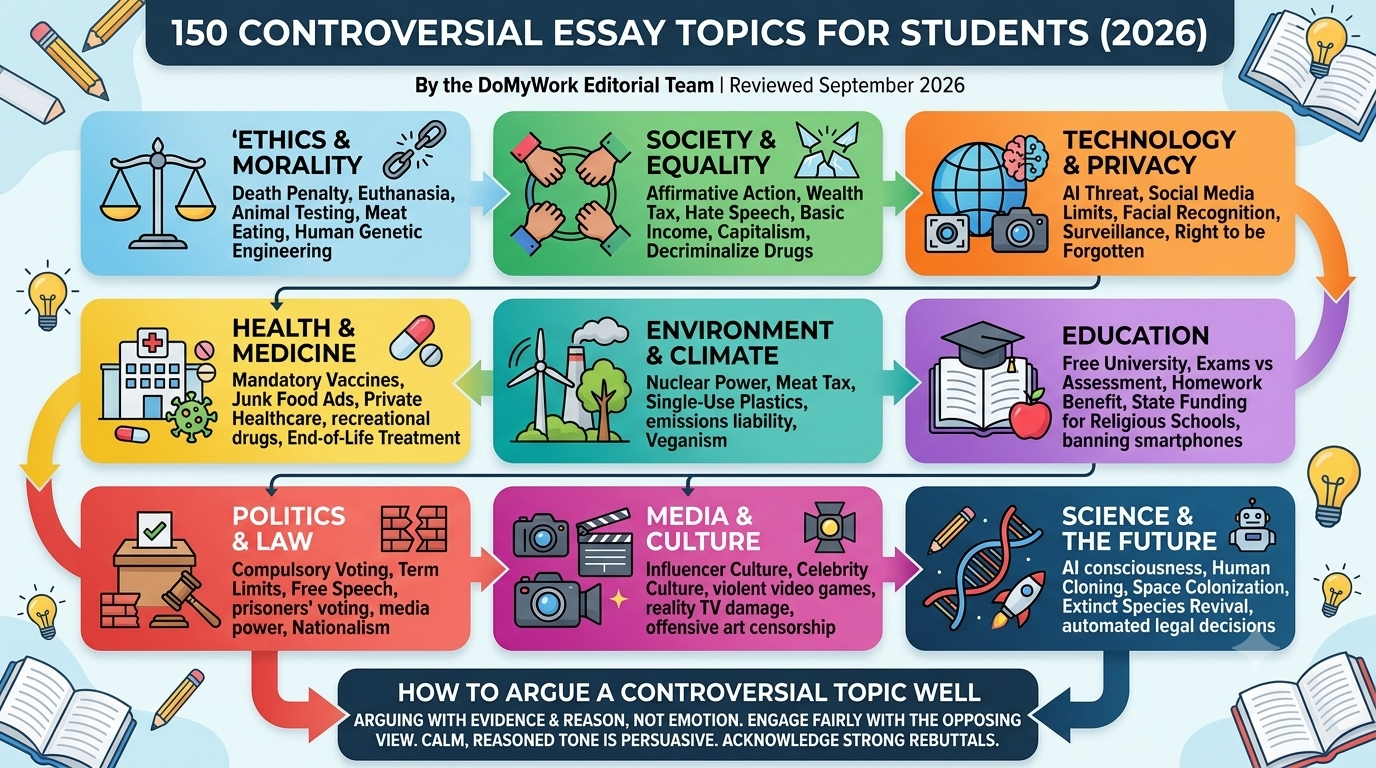
150 Controversial Essay Topics for Students (2026)
September 28, 2026
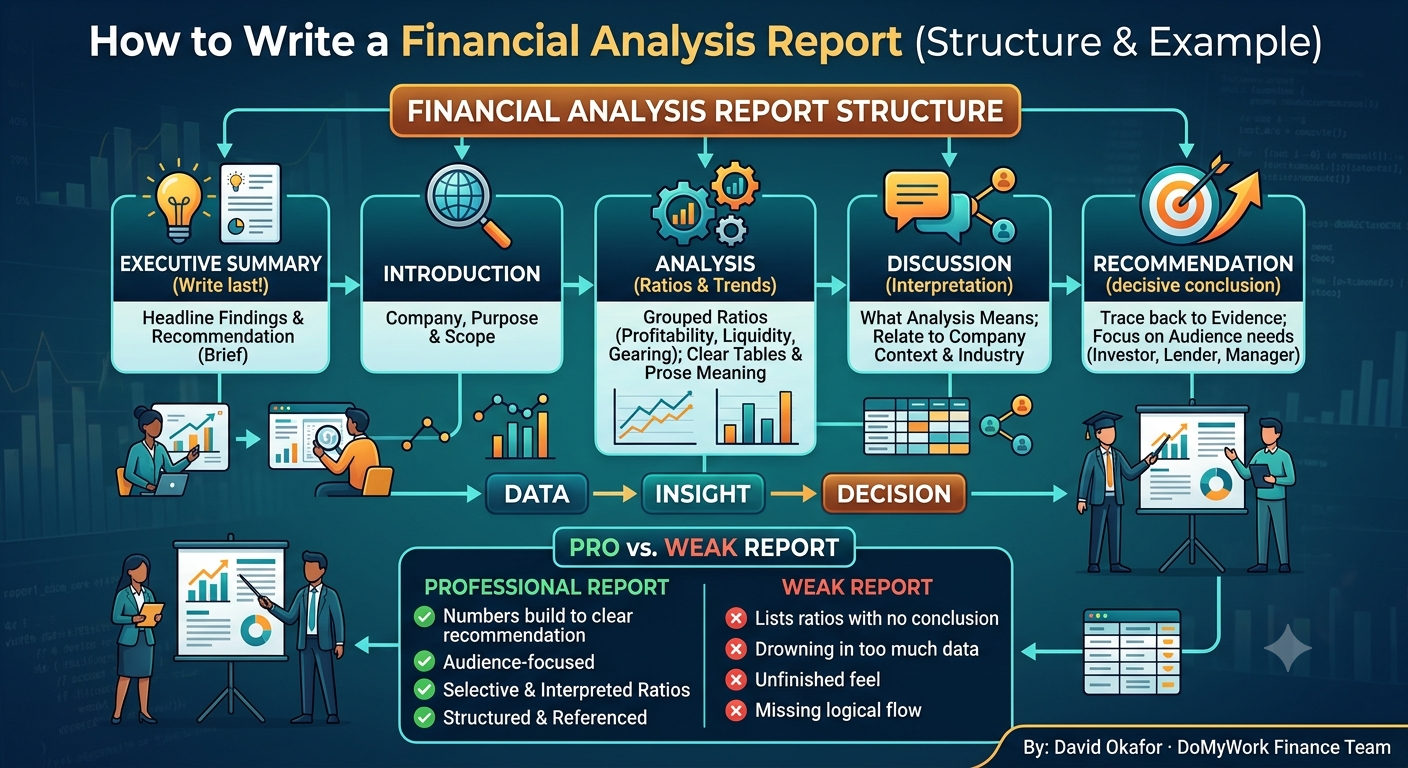
How to Write a Financial Analysis Report (Structure and Example)
July 13, 2026
Want more tips & great deals? Get them sent to your inbox
Please enter a valid E-mail
By clicking "Subscribe" you agree to be contacted via e-mail. You can always unsubscribe from the newsletter


