
Ready by 3:17pm Oct 9, 2026
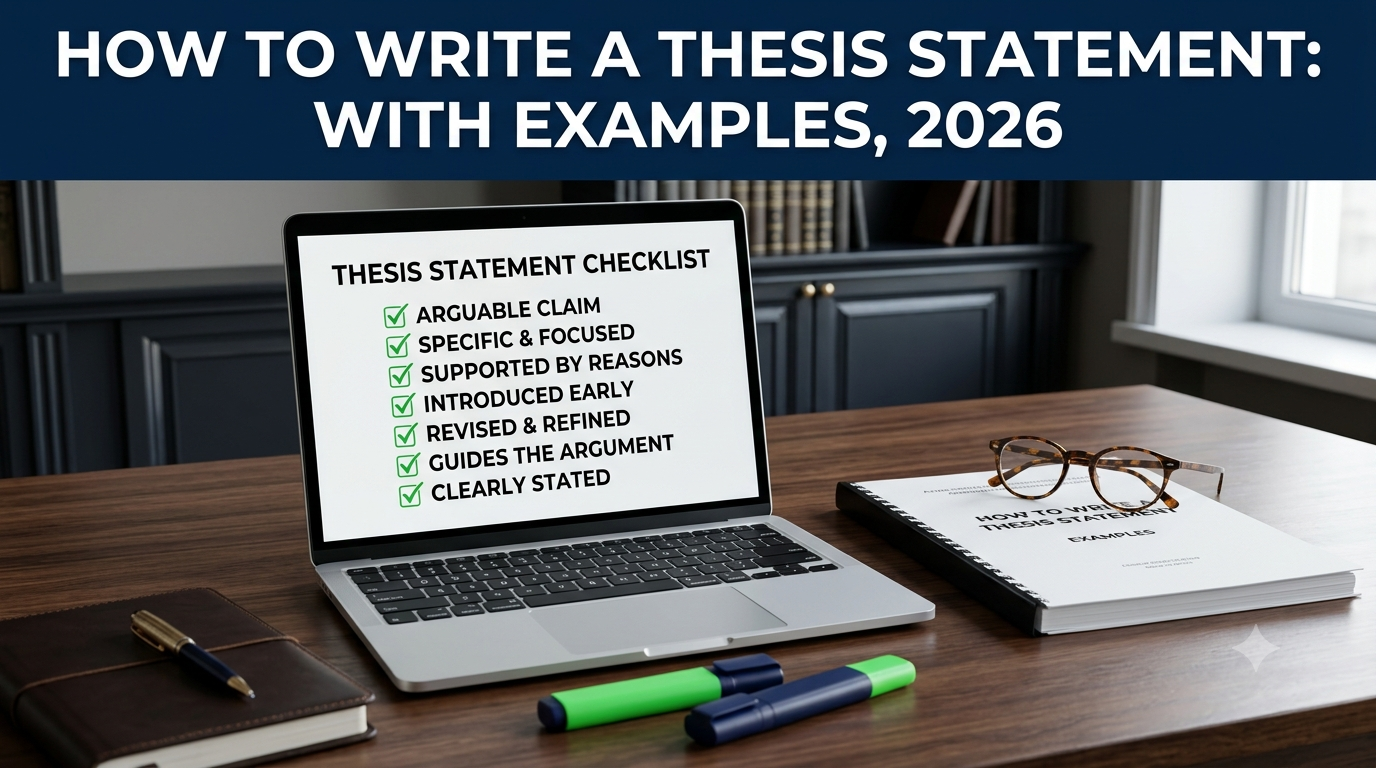
How to Write a Thesis Statement (with Examples, 2026)
A thesis statement is one or two sentences, usually at the end of your introduction, that state the main argument of your essay and how you will support it. A strong thesis is specific, arguable and focused: it makes a clear claim that the rest of the essay proves, rather than just stating a topic or a fact.
The thesis statement is the most important sentence in an essay. It tells the reader exactly what you are arguing and sets up everything that follows, and markers often judge the whole essay by how clear and arguable it is. Yet it is where many students go wrong, stating a topic instead of an argument. This guide explains what a thesis statement is, what makes a strong one, and how to write and refine yours, with examples of weak and strong versions.
What is a thesis statement?
A thesis statement is a short statement, usually one or two sentences, that expresses the central argument of your essay. It appears near the end of your introduction and acts as a promise to the reader: this is my position, and here is broadly how I will defend it. Everything in the essay should connect back to it. A thesis is not the same as a topic or a research question: the topic is what you are writing about, the question is what you are investigating, and the thesis is your answer, the claim you will argue.
What makes a strong thesis statement?
A strong thesis has three qualities. The table below sets them out against the weak versions to avoid.
| A strong thesis is… | Rather than… |
| Arguable: makes a claim someone could disagree with | A statement of fact that nobody would dispute |
| Specific: focused on a narrow, defined position | A broad, vague generalisation |
| Supported: signals the reasons or evidence behind it | A bare opinion with no indication of why |
The single most common weakness is a thesis that is not arguable. If nobody could reasonably disagree with your statement, it is a fact, not a thesis, and the essay has nothing to prove. A good test: could a sensible person argue the opposite? If yes, you have a thesis.
Weak vs strong thesis examples
The examples below show how to turn a weak thesis into a strong one.
| Weak | Strong |
| Social media affects teenagers. | Because it reshapes how teenagers compare themselves to others, social media is a leading driver of anxiety among under-eighteens and should be regulated like other harmful products. |
| This essay is about renewable energy. | Although renewable energy has high upfront costs, its falling long-term price and climate benefits make it a better investment than gas for the UK over the next decade. |
| Shakespeare uses imagery in Macbeth. | In Macbeth, Shakespeare uses blood imagery to trace Macbeth’s descent from guilt into moral numbness, showing how ambition corrodes conscience. |
Notice the strong versions each make a specific, arguable claim and hint at the reasoning. That is what the rest of the essay then proves.
How do you write a thesis statement?
Build your thesis in steps rather than trying to write it perfectly first time.
- Start from your essay question or topic, and turn it into a direct question you can answer.
- Draft a one-sentence answer to that question. This is your working thesis.
- Sharpen it: make it more specific, ensure it is arguable, and add a hint of your reasoning.
- Check it covers the whole essay, so every main point connects back to it.
- Revise it at the end, since your argument often shifts as you write, and the thesis must match the finished essay.
A useful structure is a claim plus a because, for example this policy is effective because of X and Y. That because forces you to signal your reasons, which lifts a bare opinion into an arguable thesis, the analytical move our how to write critically guide explains in more depth.
Where does the thesis statement go?
The thesis statement usually sits at the end of your introduction, after you have introduced the topic and given the reader some context, so it lands as the natural conclusion of the opening. In a longer piece such as a dissertation, the equivalent is your central argument or research aim, set out in the introduction. Our how to structure an assignment guide shows how the introduction leads into it, and our how to write a first-class essay guide shows how a sharp thesis raises your grade.
Does a thesis statement change by essay type?
Slightly. An argumentative essay has the clearest thesis, a single contestable claim. An analytical essay’s thesis states what your analysis reveals rather than a position to defend. An expository essay’s thesis explains what the essay will set out, with less of an arguable edge. Whatever the type, the thesis should still be specific and tell the reader what to expect, and in most academic writing an arguable thesis scores best.
Common thesis statement mistakes
- Stating a fact or a topic instead of an arguable claim.
- Being too broad, so the essay cannot cover it properly.
- Making a claim the essay does not actually support.
- Hiding the thesis in the middle of the essay instead of the introduction.
- Forgetting to revise it after the argument has developed.
A clear thesis lifts the whole essay. For expert feedback on your argument, our essay writing help and assignment writing help services can review your work.
Frequently asked questions
What is a thesis statement?
A thesis statement is one or two sentences, usually at the end of the introduction, that state the main argument of your essay and signal how you will support it.
What makes a good thesis statement?
A good thesis is arguable (someone could disagree), specific (a narrow, defined claim), and supported (it signals the reasoning behind it), rather than a broad fact or a bare opinion.
Where does the thesis statement go?
Usually at the end of the introduction, after you have introduced the topic and given context, so it reads as the natural conclusion of your opening paragraph.
What is the difference between a topic and a thesis?
The topic is what you are writing about; the thesis is your specific, arguable claim about that topic, the position the essay sets out to prove.
Popular posts
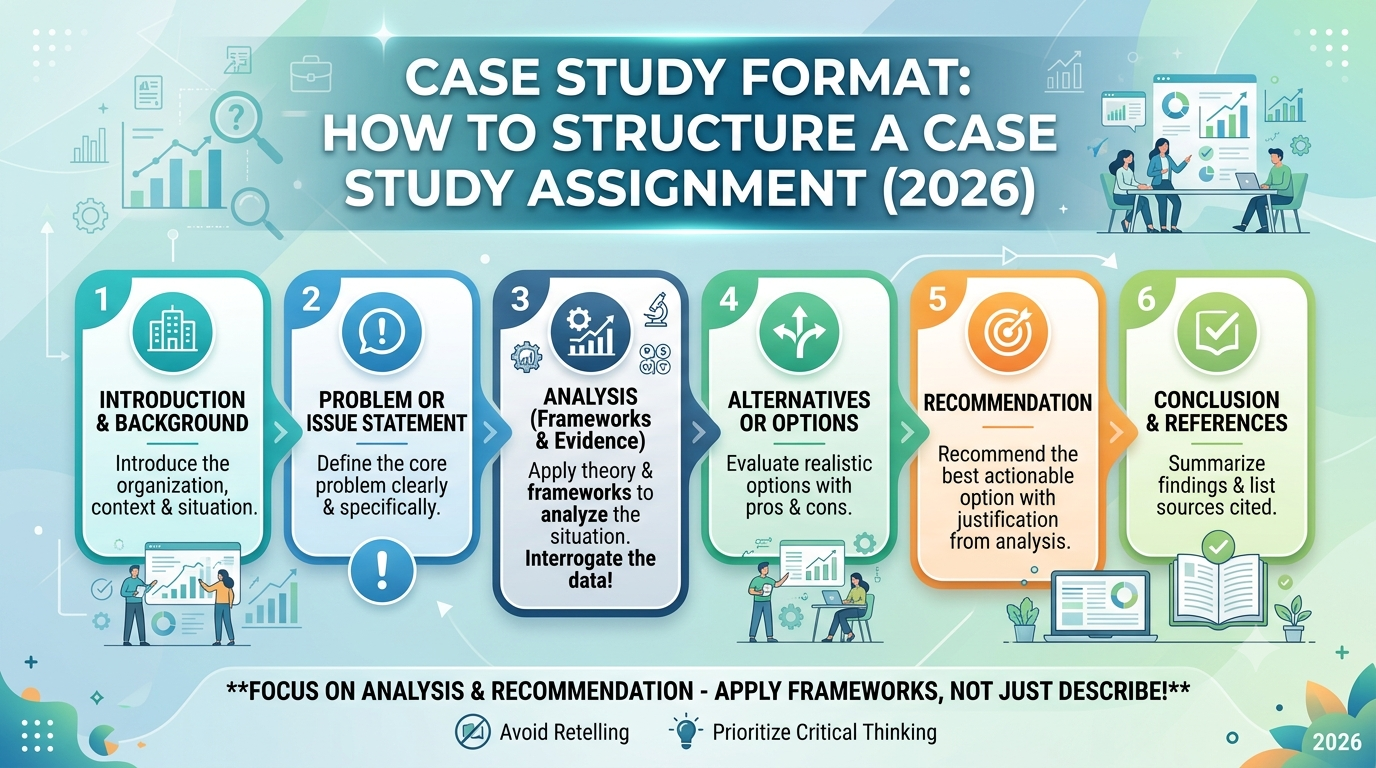
Case Study Format: How to Structure a Case Study Assignment (2026)
August 25, 2026

120+ Business Dissertation Topics and Ideas for 2026
March 2, 2026

How to Write an Annotated Bibliography (with Example, 2026)
September 1, 2026

Personal Statement Examples and How to Write Your Own (2026)
September 9, 2026

How to Write a First Class Essay at a UK University: A Complete Guide for Students
May 11, 2026

Want more tips & great deals? Get them sent to your inbox
Please enter a valid E-mail
By clicking "Subscribe" you agree to be contacted via e-mail. You can always unsubscribe from the newsletter


