
Ready by 6:45pm Oct 21, 2026
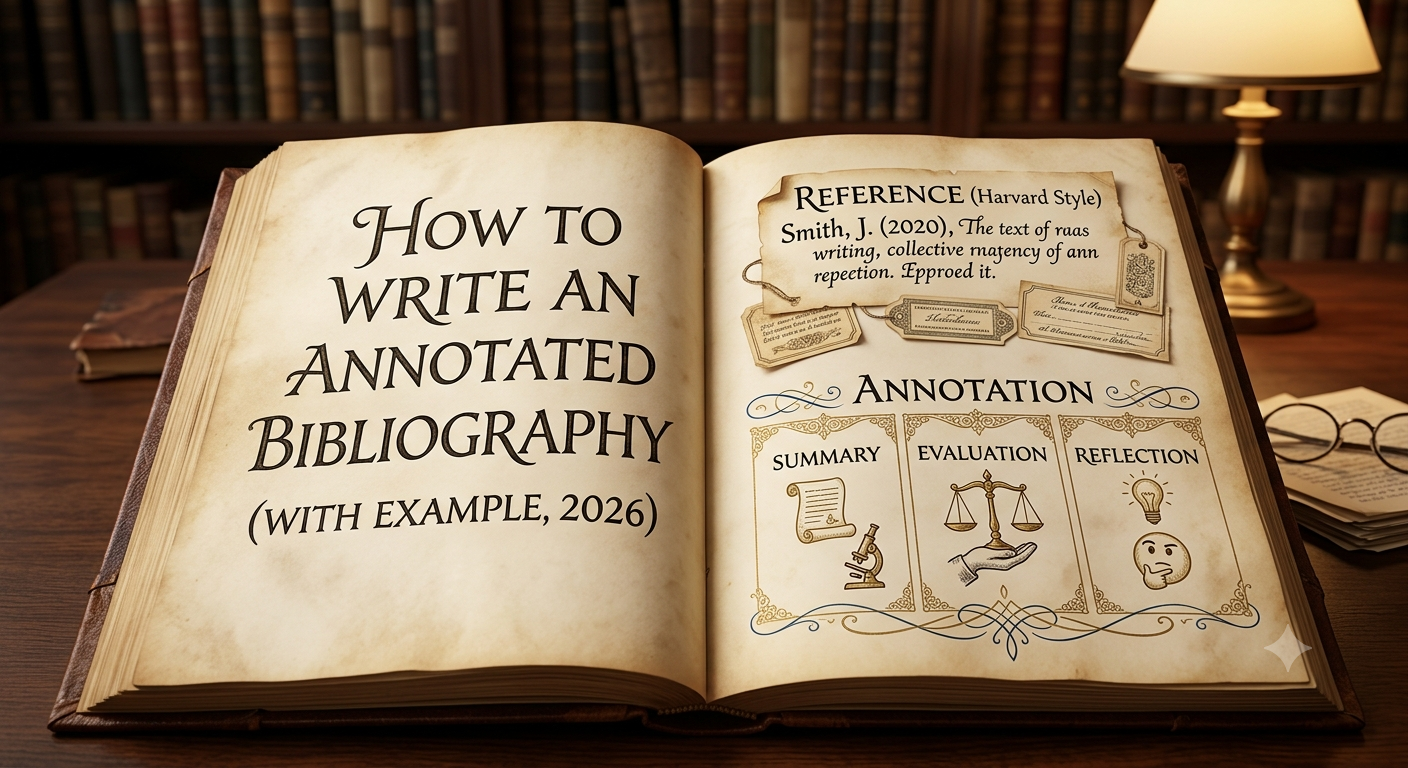
How to Write an Annotated Bibliography (with Example, 2026)
An annotated bibliography is a list of sources where each reference is followed by a short paragraph, the annotation, that summarises the source, evaluates it, and reflects on how it fits your research. To write one, format each reference in the required style, then write an annotation of roughly 100 to 200 words covering those three elements.
An annotated bibliography looks like a reference list with extra text, but the extra text is the whole point, and it is where most of the marks sit. Where an ordinary reference list simply records the sources you used, an annotated bibliography asks you to show that you have read, understood and judged each one. That makes it a test of critical engagement as much as of referencing, and it is why a strong annotation does far more than restate what a source is about. This guide explains what an annotated bibliography is, what belongs in each annotation, how to write one step by step, and gives a worked example in Harvard style you can model your own on.
What is an annotated bibliography?
An annotated bibliography is a list of citations to sources, books, journal articles, reports and so on, where each citation is followed by a short descriptive and evaluative paragraph called an annotation. It serves several purposes at once. It shows your tutor that you have engaged critically with your reading rather than simply collected sources; it helps you organise and remember what each source offers as you plan a larger piece of work; and it demonstrates the quality and relevance of the research base you are building an argument on. Tutors set it partly as a task in its own right and partly as a stepping stone towards a literature review or dissertation, because the thinking it forces, judging each source on its merits, is exactly what those larger tasks demand.
The key thing to understand is that an annotation is not a neutral summary. A summary tells the reader what the source says; an annotation also tells them how good it is and why it matters to you. That evaluative layer is what separates a strong annotated bibliography from a list of paragraphs that merely paraphrase abstracts, and it is the same critical move that lifts marks throughout academic writing.
What goes in an annotation?
A strong annotation usually blends three elements. Not every annotation needs all three in equal measure, your tutor’s brief decides the emphasis, but knowing them keeps your writing purposeful rather than vague. The table sets them out.
| Element | What it does | What to write |
|---|---|---|
| Summary | Describes the source | The main argument, purpose, scope and key findings |
| Evaluation | Judges the source | Its credibility, strengths, limitations and bias |
| Reflection | Links it to your work | How and why it is relevant to your research question |
The most common weakness is an annotation that is all summary and no evaluation or reflection. If your annotations only ever describe what each source says, you are writing an extended reference list, not an annotated bibliography. Aim to give at least as much space to judging and connecting the source as you give to summarising it, because that is where the critical thinking, and the marks, are demonstrated.
How do you write an annotated bibliography?
The process is straightforward once you break it into steps, and following them in order keeps the quality consistent across every entry.
- Choose sources that are relevant and credible, prioritising peer-reviewed and academic material over general web pages.
- Read each source critically, noting its argument, its evidence, its strengths and its weaknesses as you go, so the annotation almost writes itself.
- Write the reference in the required style, such as Harvard, APA or MLA, formatted exactly as it would appear in a reference list.
- Write the annotation beneath it, usually 100 to 200 words, blending summary, evaluation and reflection as the brief requires.
- Order the entries as instructed, most often alphabetically by author, and keep the formatting consistent throughout.
Reading critically is the step that makes the biggest difference, because the evaluation and reflection in your annotation come directly from it. If you find yourself able to summarise a source but not to judge it, that is a signal to read more actively, which is exactly the skill our how to write critically guide develops. The referencing itself must be precise too, since accuracy in the citation is part of what is being assessed.
Annotated bibliography example (Harvard)
Here is a single worked entry in Harvard style, showing the reference followed by an annotation that moves through summary, evaluation and reflection.
| Reference and annotation |
|---|
| Smith, J. (2020) The future of remote work. London: Academic Press. |
| Smith examines how remote working affects productivity and wellbeing, drawing on survey data from office-based employees across several industries. The book’s main strength is its breadth of data, which gives a broad picture of post-pandemic trends. However, it relies heavily on self-reported measures, which may overstate productivity gains, and it focuses on office roles, limiting how far the findings apply to other sectors. It is relevant to my research because it provides recent evidence on remote-work productivity, though I will treat its conclusions cautiously and set them against studies using objective measures. |
Notice how the annotation moves deliberately through the three elements: the first sentence summarises, the middle sentences evaluate the strengths and the key limitation, and the final sentence reflects on relevance and on how the source will be used. That structure is a reliable template you can apply to every entry, adjusting the balance to suit the source and the brief.
How is an annotated bibliography different from a literature review?
The two are closely related and often confused, but they do different jobs. An annotated bibliography treats each source separately, with its own reference and annotation, and does not connect the sources to one another. A literature review, by contrast, synthesises sources: it groups them by theme, compares their findings, and weaves them into a continuous argument about the state of knowledge on a topic. An annotated bibliography is frequently the preparation for a literature review, because once you have judged each source individually, you are ready to draw them together. If your next task is the review itself, our how to write a literature review guide covers that synthesis step.
Common mistakes to avoid
- Writing summary only, with no evaluation of quality or reflection on relevance.
- Making annotations too long, so they become mini-essays, or too short to say anything useful.
- Formatting the references inconsistently or in the wrong citation style.
- Including sources that are not credible or not relevant to the research question.
- Treating the entries as unconnected when the brief actually asks for some synthesis.
Getting this right builds the research foundation for larger tasks, so it is time well spent. For accurate references, see our Harvard referencing guide and our how to cite sources guide. For expert help, our assignment writing help and essay writing help services can support you.
Frequently asked questions
What is an annotated bibliography?
An annotated bibliography is a list of sources where each reference is followed by a short paragraph, the annotation, that summarises the source, evaluates it, and reflects on how it fits your research.
How long should an annotation be?
Most annotations are around 100 to 200 words, long enough to summarise, evaluate and reflect on the source without becoming a mini-essay. Always follow your tutor’s specific word guidance.
What should an annotation include?
Usually three elements: a summary of the source’s argument and findings, an evaluation of its credibility and limitations, and a reflection on how it is relevant to your research. Emphasis depends on the brief.
What is the difference between an annotated bibliography and a literature review?
An annotated bibliography treats each source separately with its own annotation, while a literature review synthesises sources into a connected argument grouped by theme. The bibliography often prepares for the review.
Popular posts

How to Write a PESTLE Analysis for an Assignment (with Example, 2026)
August 23, 2026

Can Students Access Turnitin Without Their University? Here Is the Truth
April 15, 2026

How to Write a SWOT Analysis for an Assignment (with Example, 2026)
August 24, 2026
Scribbr vs Turnitin: Which Plagiarism Checker Is Better? (2026)
June 5, 2026
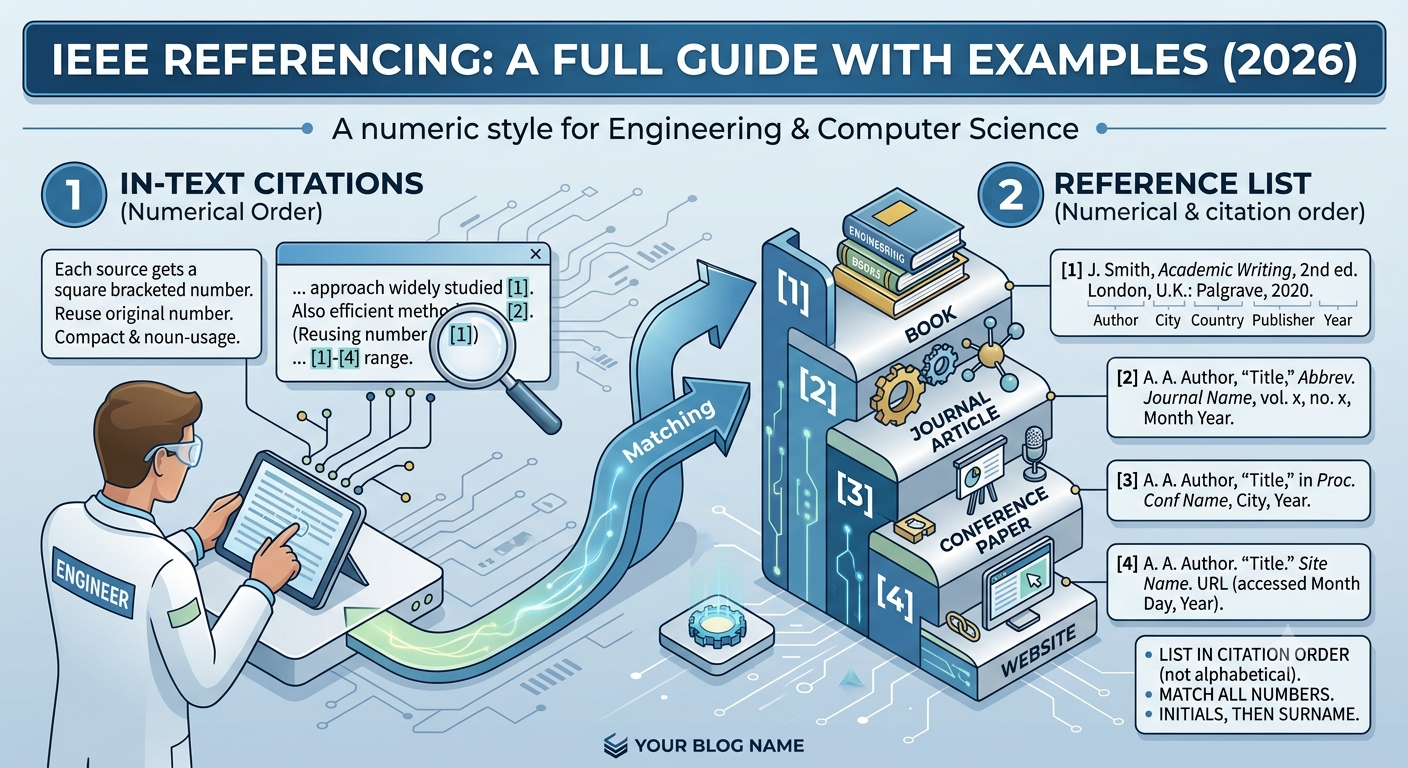
IEEE Referencing: A Full Guide with Examples (2026)
September 6, 2026
Want more tips & great deals? Get them sent to your inbox
Please enter a valid E-mail
By clicking "Subscribe" you agree to be contacted via e-mail. You can always unsubscribe from the newsletter


