
Ready by 1:27pm Oct 8, 2026
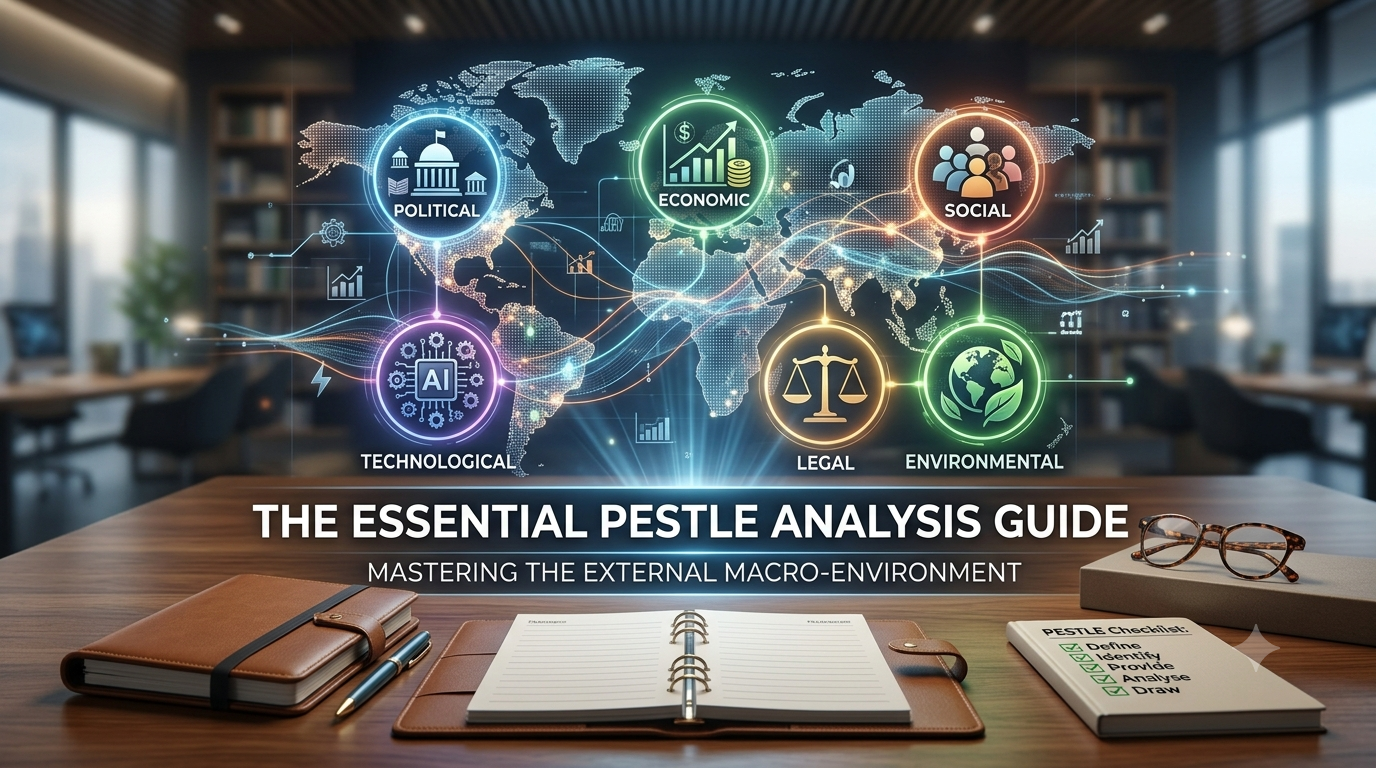
How to Write a PESTLE Analysis for an Assignment (with Example, 2026)
A PESTLE analysis examines the external macro-environment affecting an organisation across six factors: Political, Economic, Social, Technological, Legal and Environmental. To write one for an assignment, identify the relevant factors in each category with evidence, then analyse how each affects the organisation and what it should do, rather than just listing them.
PESTLE is one of the most widely set frameworks in business, marketing and management assignments, used to analyse the outside forces shaping an organisation. Like SWOT, it is easy to list and hard to analyse well, and the marks lie in the analysis. This guide explains what each letter covers, how to build a PESTLE, and how to turn it into evidence-based analysis, with a worked example. It pairs with our SWOT analysis guide, since the two are often used together.
What is a PESTLE analysis?
A PESTLE analysis is a strategic framework that maps the external macro-environmental factors influencing an organisation. Unlike SWOT, which covers both internal and external factors, PESTLE looks only outward, at the broad forces an organisation cannot control but must respond to. It helps you understand the context an organisation operates in, spot risks and opportunities, and support strategic recommendations with evidence about the wider environment.
What do the six PESTLE factors mean?
The table below explains each factor and gives examples of what to consider.
| Factor | What it covers | Examples to consider |
| Political | Government and policy influences | Tax policy, trade rules, political stability, government support |
| Economic | The economic environment | Inflation, interest rates, growth, unemployment, exchange rates |
| Social | Society and culture | Demographics, lifestyle, attitudes, consumer trends |
| Technological | Technology and innovation | New technology, automation, research and development, digital change |
| Legal | Laws and regulation | Employment law, health and safety, consumer and data protection |
| Environmental | Ecological and sustainability factors | Climate, sustainability expectations, waste rules, energy |
Legal and Political can overlap, so keep Political for government direction and policy, and Legal for specific laws and regulations the organisation must comply with.
How do you write a PESTLE analysis for an assignment?
Turn the framework into analysis with these steps.
- Define the organisation and market clearly, since PESTLE factors differ by industry and country.
- Identify the most relevant factors in each category, not every possible one. Focus on what matters for this organisation.
- Support each factor with evidence, such as a statistic, trend or source.
- Analyse the impact: for each factor, say how it affects the organisation and whether it is an opportunity or a threat.
- Draw conclusions and recommendations from the overall picture.
Steps four and five are where the marks are. Listing factors is descriptive; explaining their impact and significance is the analysis markers reward, the same distinction our how to write critically guide covers.
PESTLE analysis example
Here is a short worked example for a fictional UK electric-vehicle company, showing evidenced, analysed points.
- Political: government incentives for electric vehicles support demand, though a change of policy is a risk to plan for.
- Economic: high interest rates raise the cost of big purchases, which may slow sales in the short term.
- Social: growing environmental awareness increases demand for cleaner transport, a clear opportunity.
- Technological: fast-improving battery technology lowers costs but also raises the risk of a product becoming outdated.
- Legal: tightening emissions regulation favours electric vehicles over petrol competitors.
- Environmental: pressure to prove sustainable supply chains adds cost but strengthens the brand.
The analysis then connects these: strong social and legal tailwinds point to growth, but economic pressure and fast-moving technology mean the company should prioritise cost control and continuous product updates. That linking judgement is the analytical payoff.
How does PESTLE fit with other frameworks?
PESTLE is most powerful when combined with other tools. Feed its findings into the Opportunities and Threats of a SWOT analysis, since PESTLE factors are largely external. Many strong assignments run a PESTLE to map the environment, then a SWOT to bring in internal factors, then use both to justify a strategy. Our SWOT analysis guide shows how to build that half of the picture.
Common PESTLE mistakes to avoid
- Listing factors with no evidence or no link to the organisation.
- Including internal factors, which belong in a SWOT, not a PESTLE.
- Covering every possible factor instead of the ones that actually matter.
- Stopping at description, with no analysis of impact or recommendations.
PESTLE underpins many business tasks, so doing it well lifts the whole assignment. For structure, see our how to structure an assignment guide, and for expert support, our MBA assignment help guide and our assignment writing help and MBA assignment writing services can help.
Frequently asked questions
What is a PESTLE analysis?
A PESTLE analysis examines the external macro-environment affecting an organisation across six factors: Political, Economic, Social, Technological, Legal and Environmental.
What do the letters in PESTLE stand for?
Political, Economic, Social, Technological, Legal and Environmental, the six categories of external factors that influence an organisation.
How do you write a PESTLE analysis in an assignment?
Define the organisation, identify the most relevant factors in each category with evidence, analyse how each affects the organisation, and draw conclusions, rather than only listing factors.
What is the difference between PESTLE and SWOT?
PESTLE analyses only the external macro-environment, while SWOT covers both internal (strengths and weaknesses) and external (opportunities and threats) factors for one organisation. They are often used together.
Popular posts
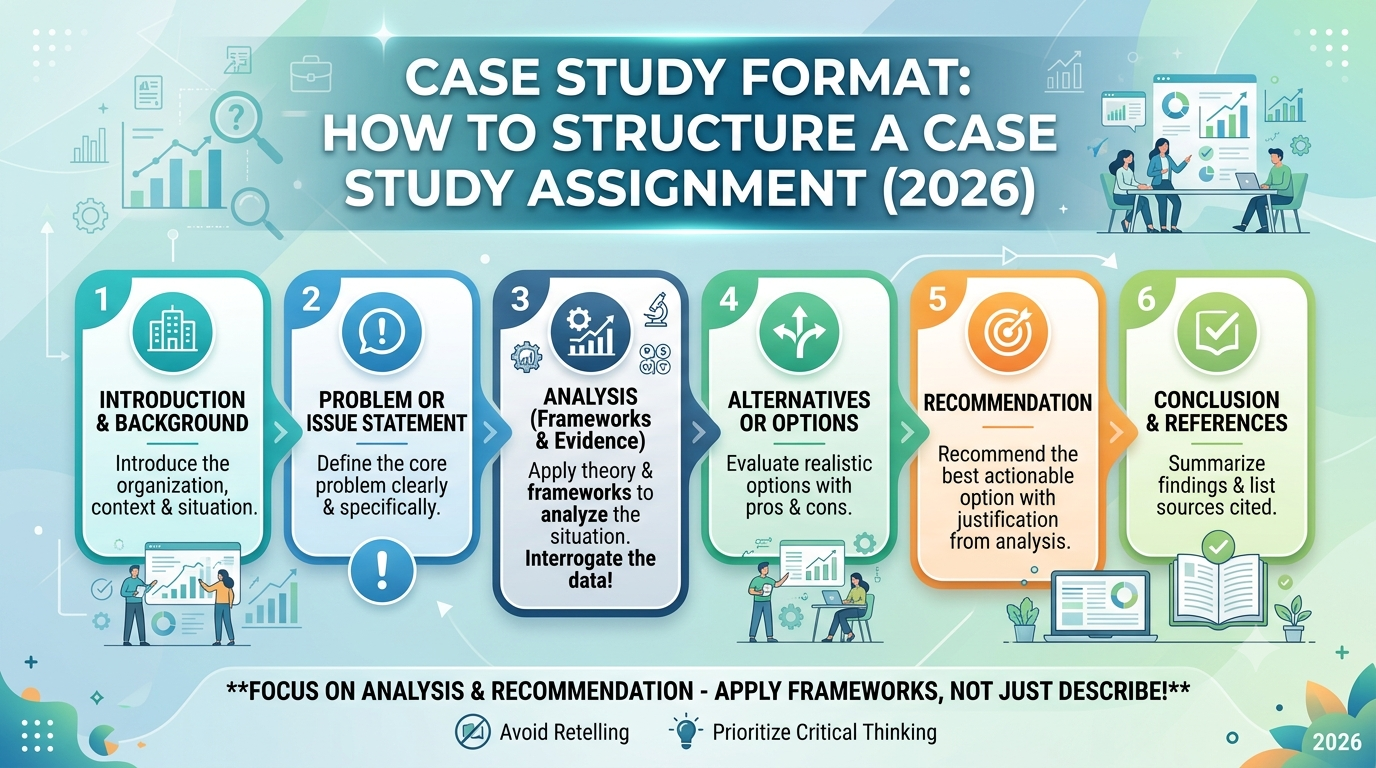
Case Study Format: How to Structure a Case Study Assignment (2026)
August 25, 2026

120+ Business Dissertation Topics and Ideas for 2026
March 2, 2026

How to Write an Annotated Bibliography (with Example, 2026)
September 1, 2026

Personal Statement Examples and How to Write Your Own (2026)
September 9, 2026

How to Write a First Class Essay at a UK University: A Complete Guide for Students
May 11, 2026
Want more tips & great deals? Get them sent to your inbox
Please enter a valid E-mail
By clicking "Subscribe" you agree to be contacted via e-mail. You can always unsubscribe from the newsletter


