
Ready by 6:46pm Oct 21, 2026
Turnitin Similarity Checker: How It Works and What Your Score Means
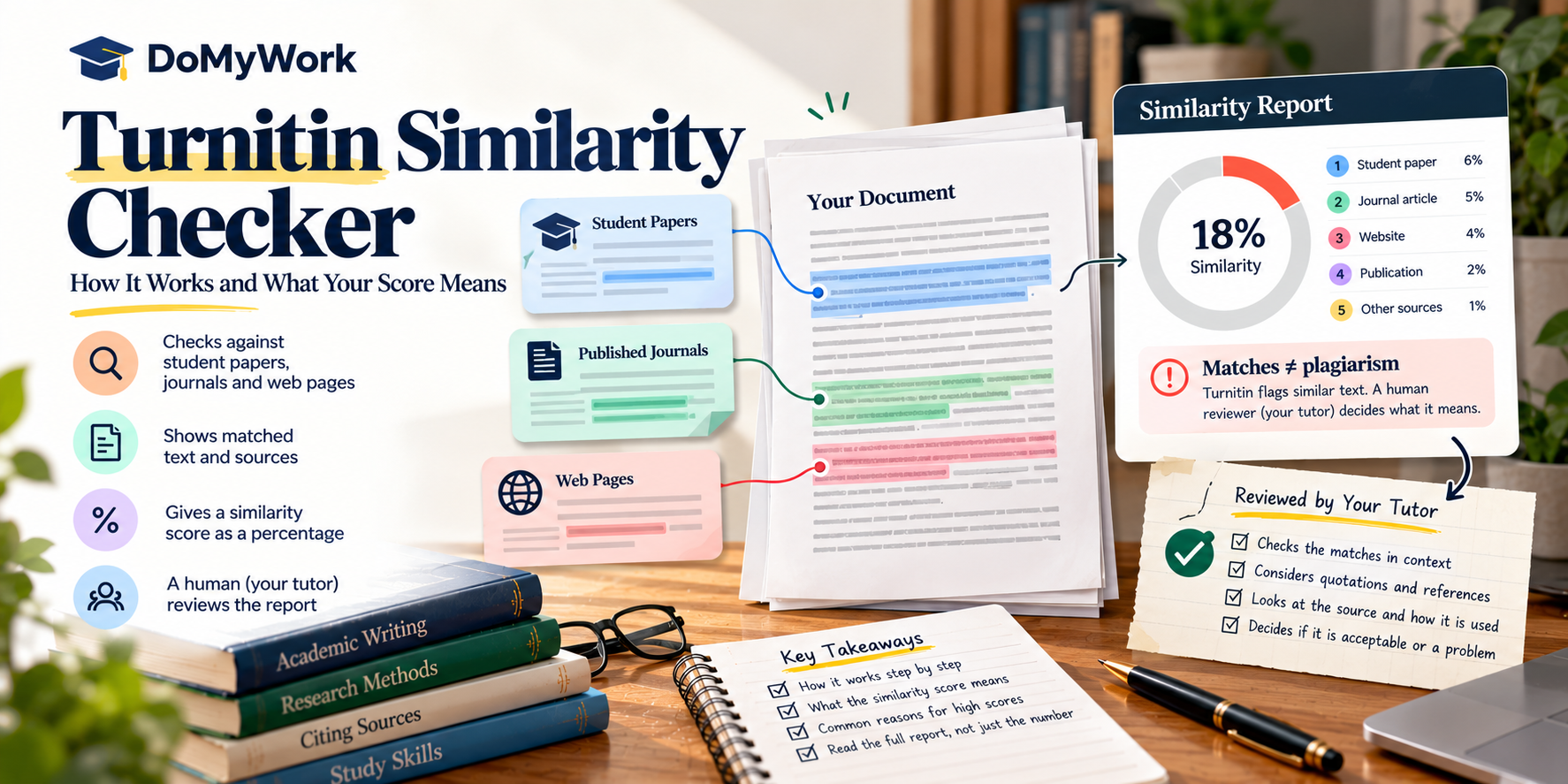
Turnitin is a text matching tool, not a plagiarism judge. It compares your writing against student papers, journals and web pages, then shows a similarity score as a percentage. The score flags overlap so a person can review it. A high number is not proof of cheating, and a low number is not a free pass.
If your university uses Turnitin, your work passes through it the moment you submit, and for a lot of students that is a nervous moment. The score feels like a verdict, and a number you did not expect can ruin your week. The good news is that Turnitin is far less mysterious than it looks. Once you understand what it actually measures, the fear fades and the report becomes a tool you can use rather than a result you dread. This guide walks through what Turnitin is, how it works step by step, what the similarity score really means, how it catches copying between students, and how to read your report with a clear head.
What is Turnitin?
Turnitin is the similarity checking service that most universities and colleges use to review submitted work. When people say their essay was checked for plagiarism, Turnitin is usually the tool behind that statement. It has been around for more than two decades, and over that time it has built one of the largest databases of academic writing in the world, made up of student submissions, published articles and pages from across the open web.
The single most important thing to understand is that Turnitin does not decide whether you cheated. It is not an examiner and it has no opinion. All it does is find passages in your writing that match text it has seen before, then present those matches to your tutor. The judgment about whether a match is acceptable, accidental or a problem belongs to a human being who reads the report and knows the context of your assignment. Turnitin simply points at the overlaps and says, look here.
This distinction matters because it changes how you should react to a score. A high number does not mean your tutor has caught you doing something wrong. It means there is more matched text to look at, and the reasons for that could be completely innocent, such as a long quotation or a detailed reference list. Keeping this in mind takes the panic out of the process.
How does Turnitin work, step by step?
The process is more mechanical than most people imagine. Here is what happens from the moment you hand in your work to the moment your tutor sees a report.
- You submit your file, or your tutor uploads it on your behalf, through your university system.
- Turnitin converts the document into plain text and breaks it into small overlapping strings of words, similar to how a search engine indexes a page rather than reading it for meaning.
- It compares each string against its databases of student papers, published sources and web pages, looking for exact or near-exact matches rather than matching ideas.
- Where a string matches a source closely enough, Turnitin records the match, notes where it came from, and stitches adjoining matched strings into a single highlighted passage.
- It builds a similarity report that highlights every matched passage in colour and links each one to its source.
- It calculates an overall similarity score, which is the share of your document that matched something.
- Your tutor opens the report, reads the matches in context, and decides what they mean.
Notice that the only automated part is the matching. The interpretation is human. That is why two students can have the same score and very different outcomes, because what counts is not the number but the nature of the matches behind it. For a closer look at how to make sense of the colours and source list, see our guide on Turnitin report colours explained.
What does the similarity score mean?
The similarity score is the percentage of your writing that matches other sources in the database. If your score is 18%, that means roughly eighteen out of every hundred words sit inside a passage that matches something else. It does not mean eighteen per cent of your work is plagiarised. It means eighteen per cent overlapped with text Turnitin recognised, and some of that overlap is almost always legitimate.
The calculation itself is simple arithmetic, and knowing it demystifies the whole process: Similarity Score = (Matched Words ÷ Total Words) × 100. If your assignment is 2,000 words and Turnitin finds 300 words that match its database, your score is (300 ÷ 2,000) × 100, which comes out at 15%. Every quoted sentence, every reference list entry, and every stretch of uncited copying all feed into the same “matched words” count on the top of that fraction, which is exactly why the single percentage cannot tell you, on its own, whether those 300 words are a problem.
There is no universal pass mark, because every institution sets its own expectations, and many do not publish a hard figure at all. As a rough guide, a score under 15% is usually fine, a score between 15% and 25% is worth a closer look, and a score above 25% needs careful review before you submit. Even these bands are only a starting point. What matters far more than the headline number is the spread of the matches, and two real patterns illustrate this better than any band ever could. A 30% score can be entirely unremarkable when it is background theory, standard definitions and correctly cited quotes, spread across a literature review that is supposed to engage heavily with existing work. A 2% score, on the other hand, can be a genuine problem if that tiny sliver is one sentence of someone else’s original argument, presented with no citation at all, sitting inside an otherwise clean paper. The size of the number and the seriousness of the issue are simply not the same axis, and treating them as if they are is the single most common mistake students make when reading a report.
| Score | What it usually signals |
| Under 15% | Normally fine, especially when matches are small and scattered |
| 15% to 25% | Review the largest single matches before submitting |
| Above 25% | Needs careful checking, though it may still be explainable |
To see why the spread matters, picture two essays that both score 20%. In the first, the matches are spread across thirty different sources, none more than two per cent each, which is the natural result of citing widely and quoting a little. In the second, a single source accounts for eighteen of the twenty per cent, which suggests one passage was leaned on far too heavily. The first is healthy. The second needs work. The number is identical, but the story is completely different. We unpack this fully in what counts as a good Turnitin score.
What does Turnitin compare your work against?
Turnitin checks your text against three broad pools of content. The first is its archive of previously submitted student papers, which is enormous and grows every time a student anywhere submits work with archiving switched on. The second is a large collection of published material, including journal articles, books and periodicals that Turnitin licenses. The third is the open web, the pages a search engine could reach.
What it does not do is check everything. It cannot see inside paywalled content it has not licensed, it cannot read text trapped in images, and it does not understand meaning, so it will not catch an idea you borrowed and reworded heavily unless the wording itself matches. This is the reason a low score is never a guarantee of originality. You can score zero and still have an uncredited idea sitting in your argument. For the detail on the databases and the gaps, read what Turnitin actually checks against.
It is worth being clear that zero is not the natural resting point for honest writing, either. A document with no sources at all, written entirely from a student’s own head with nothing quoted and nothing referenced, still tends to register a small non-zero score in practice, usually in the low single digits. Your name, module code and assignment title on the cover page, common connecting phrases that appear in millions of other documents, and the odd technical term shared with your subject all create small incidental matches even when you have copied nothing from anyone. That is why a genuine 0% on a substantial piece of research writing is sometimes treated as slightly unusual rather than automatically reassuring, since it can suggest the tool failed to process the file properly rather than that the writing is flawless.
How does Turnitin catch collusion between students?
Alongside checking your work against published sources and the open web, Turnitin also compares it against the student paper repository, which is exactly what makes it possible to catch two students copying from each other rather than from a published source. Collusion is typically identified when one student’s work matches another student’s submission on the same assignment, and Turnitin runs a final comparison pass across every submission in an assignment once the deadline has passed, so this check applies equally to everyone regardless of when they actually submitted.
A worked example makes this concrete. Say a student called Eric acquires a copy of his classmate Jane’s finished paper and submits it as his own with a few words changed, ahead of the deadline. His report might come back with a similarity score of 25%, since he made just enough changes that it is not a full duplicate. Jane, who genuinely wrote the paper herself, submits a few days later and her report comes back with a 100% similarity score, because her own original text now matches an already-submitted copy sitting in the repository. Once both papers exist in the system, the final post-deadline check flags the overlap between them for review, regardless of who submitted first. It is a useful reminder that a high score is not always the giveaway of who copied whom; it is the pattern and the source, not the raw number, that a marker actually investigates.
Does Turnitin detect AI writing?
Yes, but through a separate feature. Alongside the similarity report, Turnitin offers an AI writing indicator that estimates how much of your text reads as if it were generated by a tool like ChatGPT. This is a different measurement from the similarity score and it answers a different question. The similarity score asks whether your words match other sources. The AI indicator asks whether your words read like machine writing.
The AI indicator is not perfect. It can flag genuine human writing, particularly from students who write in a very even, structured style or who are writing in a second language, and it can miss AI text that has been edited heavily. Treat any AI flag as a reason to review a section, not as proof of anything. We cover the whole topic in Does Turnitin detect AI and ChatGPT, and the related question of where the rules sit is using ChatGPT plagiarism.
Can I check my work in Turnitin before I submit?
Usually not on your own. Turnitin sits behind your university login, and access is controlled by your institution, so most students cannot run their own work through it whenever they like. Some tutors set up a draft submission point that lets you check once or twice before the real deadline, but this is not guaranteed and varies from course to course.
That gap is exactly why students look for a way to check independently. You can run a private similarity check on your own with our plagiarism checker to catch the obvious problems while you draft, and when you want the exact result your examiner will see, you can get the official Turnitin report for $5 without needing your university to enable anything. Checking your own work before submission is not a trick. It is good academic practice, and it is allowed everywhere. It is also the only reliable way to catch accidental overlap with a coursemate before both of you submit into the shared repository.
How do I read my Turnitin report?
When you open a report, start with the source list rather than the headline percentage. Sort the matches by size and look at the largest one first, because a single big match tells you far more than a long tail of tiny ones. For each large match, ask a simple question. Is this a quotation I have marked and cited? Is it part of my reference list? Is the source another student’s submission rather than a website or journal? Or is it a passage I wrote that stayed too close to its source?
Quotations and references are usually fine, and many institutions let you exclude them from the score so you can see your own writing more clearly. A match against another student’s paper is the one to take most seriously, since it points to collusion rather than ordinary source plagiarism. A passage that is too close to a published source is the next priority, fixed by rewriting it fully in your own words while keeping the citation. If your score is higher than you want, work through the matches in order of size and deal with the real overlaps. Our guide on how to lower your Turnitin score sets out the method, and once you have made your edits you can confirm the result with a fresh check.
Common myths about Turnitin, cleared up
A lot of the fear around Turnitin comes from myths that pass between students and get repeated until they sound true. Clearing them up makes the whole process less stressful.
The first myth is that Turnitin decides whether you cheated. It does not. It reports matches and leaves the judgment to a human, every time. The second myth is that there is a magic safe percentage that guarantees you are fine. There is not, because a low score can hide a problem and a high score can be entirely innocent, depending on the matches behind it. The third myth is that you can beat the system with clever tricks, such as swapping characters for lookalikes or hiding text in white font. These tricks are caught by Turnitin’s Integrity Flags feature and are well known to tutors, they are treated as deliberate misconduct, and they usually make things far worse than the original similarity ever would have.
A fourth myth is that quoting will automatically get you in trouble. It will not. A properly marked and cited quotation is honest work, even though it shows as a match, and many institutions exclude quotes from the score anyway. The fifth myth is that sharing your finished essay with a friend “just to compare structure” is harmless. It is not, because the moment both papers exist in the repository, any overlap between them is flagged for review regardless of who intended to copy them. The sixth myth is that Turnitin checks the entire internet and every book ever written. It checks a very large but finite set of sources, and there are real gaps, which is why a clean report is reassuring rather than absolute proof. Once you stop believing the myths, the report becomes what it actually is, a map of where your text overlaps with other writing, nothing more and nothing less.
Frequently asked questions
Is Turnitin always accurate?
It is accurate at finding matching text, but it cannot read intent. Quotes, references and standard phrases in your field all create matches that are not plagiarism, which is exactly why the report needs a human to interpret it rather than being treated as a final verdict.
Does Turnitin keep a copy of my paper?
It can add your submission to its database, depending on the settings your institution uses. If you want a check that is never stored, run your work through a tool that deletes your file after the report is made. See Does Turnitin store my paper for the full picture.
Can two students be flagged for the same source?
Yes, and it is normal. If two people quote or cite the same well known text, both reports will show that match. On its own this is not misconduct, it simply reflects two students using the same source correctly. It only becomes a collusion concern when the match is against each other’s submission rather than a shared external source.
Will a quote raise my similarity score?
It can, because a quotation is matching text by definition. Many institutions allow quoted material to be excluded from the score, which removes this effect. Either way, a properly marked and cited quote is not a problem, even if it shows up as a match.
How long does a Turnitin check take?
A standard check usually completes within a few minutes, though the first submission of a large document, or a busy period at your institution, can take longer. Resubmissions sometimes have a built in delay of around twenty four hours, which is set by Turnitin to stop students checking endlessly in quick succession.
Can I resubmit after I see my report?
It depends on how your tutor sets up the submission. Some assignment points allow resubmission up to the deadline, with the report refreshing each time, while others lock after a single submission. If you want to check freely while you edit, run your own checks first rather than relying on a single institutional attempt.
Want to see your similarity result before your tutor does? Get the exact Turnitin report for $5.
Popular posts
How to Write a PESTLE Analysis for an Assignment (with Example, 2026)
August 23, 2026

Can Students Access Turnitin Without Their University? Here Is the Truth
April 15, 2026

How to Write a SWOT Analysis for an Assignment (with Example, 2026)
August 24, 2026
Scribbr vs Turnitin: Which Plagiarism Checker Is Better? (2026)
June 5, 2026
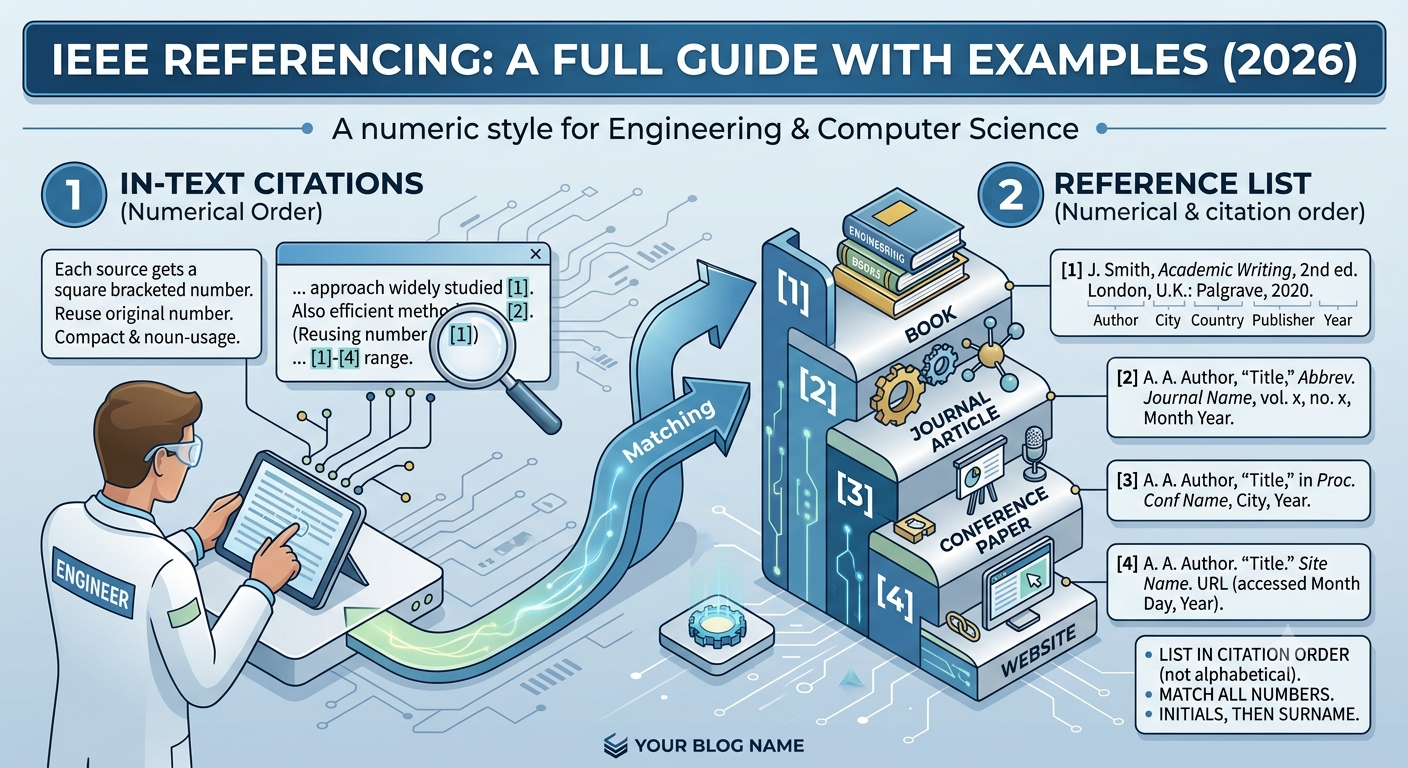
IEEE Referencing: A Full Guide with Examples (2026)
September 6, 2026
Want more tips & great deals? Get them sent to your inbox
Please enter a valid E-mail
By clicking "Subscribe" you agree to be contacted via e-mail. You can always unsubscribe from the newsletter


