
Ready by 12:45am Sep 17, 2026
What Counts as Plagiarism? Types and Examples
Plagiarism is the act of using someone else’s words, ideas, research, or creative work without giving proper credit and presenting it as your own. It can happen intentionally or by mistake, but both forms can lead to serious academic and professional consequences. This guide explains the different types of plagiarism, why it matters, how universities detect it, and the best practices to ensure your work remains original and properly referenced.
Most plagiarism at university is not a student copying a whole essay from the internet. It is far quieter than that. A missing citation here, a paraphrase that stayed too close to the original there, a sentence pasted from your notes that you forgot was not your own. These small slips are easy to make and easy to avoid once you know what to look for.
What is plagiarism?
Plagiarism is using another person’s words, ideas, data or structure as if they were your own, without crediting where they came from. Credit normally means a citation in the text and a full entry in your reference list, and when you keep someone’s exact wording it also means quotation marks. Leave any of those out and you risk presenting borrowed material as original, which is the heart of the offence.
It helps to see plagiarism as a question of honesty rather than a question of similarity. The point is not whether your words happen to match a source. The point is whether you have been straight about what is yours and what you took from elsewhere. A heavily quoted essay with perfect citations is honest even though much of it is other people’s words. A lightly reworded passage with no citation is dishonest even though the words look original. The credit is what separates the two.
What are the main types of plagiarism?
Plagiarism comes in several recognised forms, and most students only worry about the most obvious one. Knowing the full set makes them far easier to spot in your own writing.
| Type | What it is | Example |
|---|---|---|
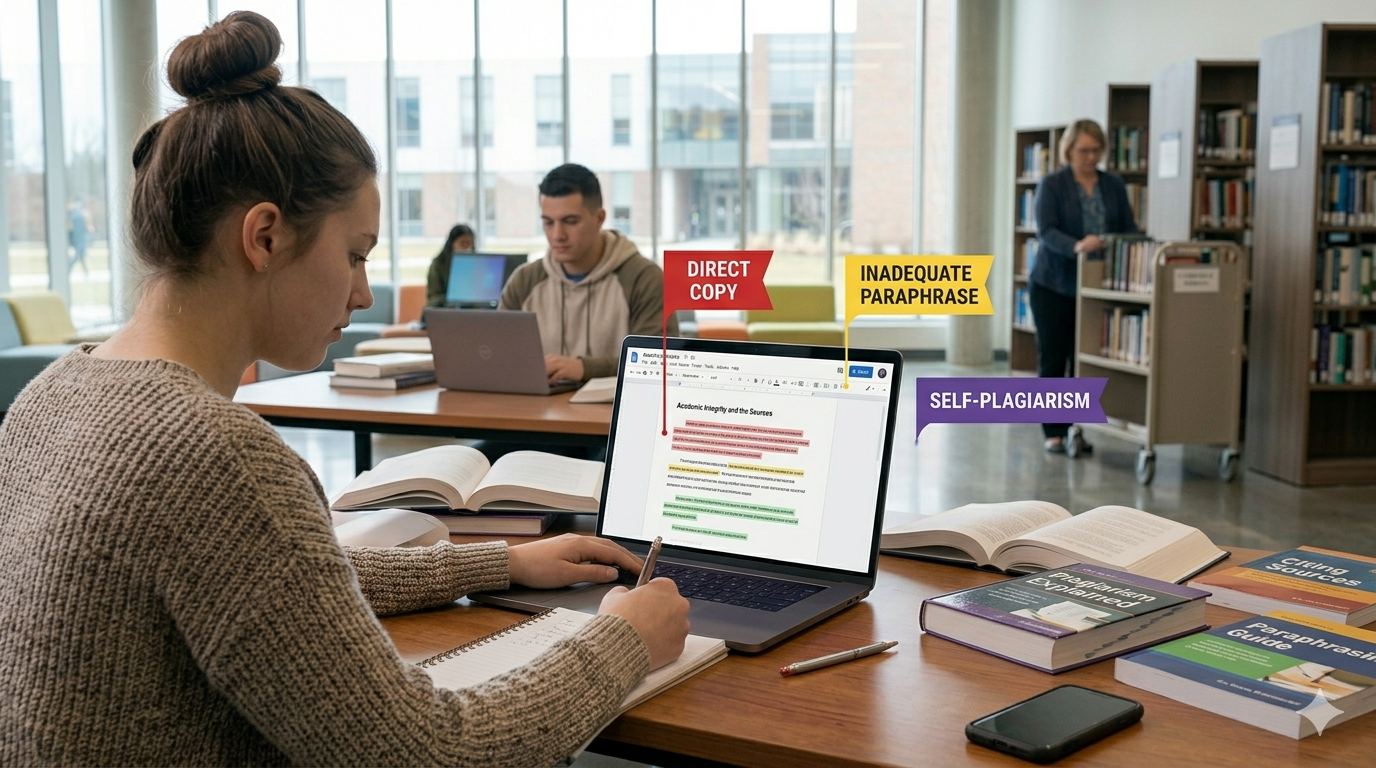
| Direct copying | Lifting text word for word with no quotation marks or citation | Pasting a paragraph from a journal article straight into your essay |
| Mosaic or patchwork | Mixing copied phrases with your own words around them | Keeping a source sentence and swapping only a few words |
| Inadequate paraphrasing | Rewording a source but keeping its structure and ideas, with no credit | Same argument in the same order, just synonyms changed |
| Self plagiarism | Reusing your own earlier work without disclosing it | Submitting part of a previous assignment as new work |
| Accidental | Forgetting a citation or losing track of which notes were copied | A quote you saved that ended up unmarked in the final draft |
| Source based | Citing a source you did not read, or inventing one | Listing a reference you found in another author’s bibliography but never opened |
The two that trip students up most often are inadequate paraphrasing and accidental plagiarism, because both can happen even when you are trying to do the right thing. We look at each in detail in paraphrasing versus plagiarism and accidental plagiarism and how to avoid it.
Is paraphrasing plagiarism?
Not when you do it properly. Real paraphrasing means taking an idea and expressing it fully in your own words and your own sentence structure, then crediting the source it came from. It shows you understood the material well enough to rebuild it, which is exactly what your tutor wants to see.
It becomes plagiarism in two situations. The first is when the wording stays too close to the original, so you have really just performed a thesaurus swap while keeping the author’s structure and phrasing. The second is when you reword perfectly but leave out the citation, so the idea reads as your own. Good paraphrasing needs both halves, genuinely new wording and a clear credit. To see the line drawn with side by side examples, read paraphrasing versus plagiarism.
What about reusing your own work?
Submitting work you have handed in before, even partly, counts as self plagiarism at many institutions, and it surprises a lot of students who assume their own writing is theirs to reuse freely. The reasoning is that each assessment is meant to be original work produced for that task, so recycling an old essay claims credit twice for the same effort. It also shows up clearly in similarity tools, since your earlier submission may sit in the database.
This matters most for postgraduate and research students, who often build on their own earlier papers and can recycle text without realising. If that is you, read self plagiarism, and how to avoid it, which explains how to reuse your own ideas legitimately by citing yourself and being open about it.
Can you plagiarise by accident?
Yes, and accidental plagiarism is probably the most common kind at university. It rarely comes from bad intent. It comes from messy note taking, copying a passage into a draft to come back to later and then forgetting, losing track of which ideas came from which source, or running out of time and skipping the careful citation work at the end. The penalty for accidental plagiarism is often lighter than for deliberate copying, but it can still cost you marks, so it is worth preventing.
The fixes are mostly about process. Keep your own writing and your copied notes in clearly separate places. Record the source the moment you note something down. Leave enough time at the end to check your citations properly rather than rushing. We cover the causes and the prevention in accidental plagiarism and how to avoid it.
How do you avoid plagiarism?
Avoiding plagiarism is mostly a set of small habits that become automatic with practice. None of them is difficult on its own.
- Cite every source you draw on, whether you quote it, paraphrase it or just take an idea from it.
- Put quotation marks around any wording you keep, and cite it.
- Keep careful notes so you always know what came from where.
- Paraphrase by understanding an idea and rebuilding it in your own words, not by swapping synonyms.
- Leave time to check your references before you submit.
- Run a similarity check on your draft so you can catch anything you missed.
For the referencing side, read how to cite sources correctly, and when your draft is ready, run it through our plagiarism checker to see where you stand before it counts.
Worked examples: how plagiarism happens and how to fix it
The types make more sense with concrete situations, so here are three common ones and the fix for each.
The first is the close paraphrase. A student reads a clear sentence in a textbook, likes how it puts the point, and rewrites it by changing a few words while keeping the same structure and order. They cite the source, so they feel safe, but the wording still mirrors the original too closely, which counts as inadequate paraphrasing. The fix is to set the source aside, write the idea from memory in your own words and your own sentence shape, then check it against the original to confirm it reads differently, and keep the citation. If you understood the point, you can rebuild it without leaning on the author’s phrasing.
The second is the lost note. While researching, the student copies a useful passage into a working document, meaning to rewrite it later, then runs short of time and the passage survives into the final draft unmarked and uncited. There was no intent to cheat, but the result is direct copying. The fix is a process fix. Keep copied text in a separate, clearly labelled place from your own writing, record the source the moment you paste anything, and never draft directly on top of copied material.
The third is the recycled paragraph. A postgraduate student reuses a strong paragraph from their own earlier assignment, assuming their own work is theirs to reuse. At many institutions this is self plagiarism, and it can match against the earlier submission in the database. The fix is to rewrite the passage for the new context and cite your earlier work where it is appropriate, treating your past self like any other source.
Why do students plagiarise without meaning to?
Understanding the causes helps you design them out of your own habits, because most accidental plagiarism is a predictable result of how people work under pressure rather than a moral failing.
Time is the biggest factor. When a deadline is close, the careful work of paraphrasing, checking citations and separating your notes from your draft is the first thing to get squeezed, and that is exactly the work that prevents plagiarism. Poor note taking is the second factor, because if you cannot tell weeks later which lines in your notes were copied and which were your own summary, you will eventually merge the two by mistake. A third factor is misunderstanding what paraphrasing requires, so a student genuinely believes that changing some words is enough, when the structure and ideas still belong to someone else.
A fourth, increasingly common factor is over reliance on tools, including AI, where text arrives in your draft that you did not really write and did not really process. The defence against all of these is the same. Start earlier than feels necessary, keep your sources organised from the first day, paraphrase by understanding rather than by substituting words, and run a check before you submit so anything you missed surfaces while you can still fix it. For the referencing habits that prevent most of this, read how to cite sources correctly.
Frequently asked questions
Is plagiarism illegal?
It is usually an academic offence rather than a crime, handled by your university rather than a court. The penalties can still be serious, ranging from a capped mark to failing the module, and in severe cases removal from the course.
Does citing a source fix everything?
Citing covers the idea, but if you keep the original wording you also need quotation marks. Citation and quoting do different jobs, and you often need both. A citation alone does not license copying exact phrasing.
Is using AI to write plagiarism?
It is a separate issue that most universities now treat as misconduct when it is undisclosed. The question is less about matching text and more about whether the work is genuinely yours. See is using ChatGPT plagiarism.
How much similarity counts as plagiarism?
There is no fixed percentage, because a high score can be innocent and a low one can still hide an uncredited idea. Tutors judge the matches, not the number. See what counts as a good Turnitin score.
What is the difference between plagiarism and copyright?
They are related but separate. Plagiarism is an academic and ethical issue about failing to credit a source, handled by your institution. Copyright is a legal issue about reproducing protected material without permission, handled by law. You can plagiarise something that is not under copyright, such as an old text, and you can breach copyright even while crediting the author. At university, plagiarism is the one that affects your marks.
Does Turnitin detect paraphrased plagiarism?
Only partly. Turnitin matches wording, so a close paraphrase that keeps much of the original phrasing can still be caught, but a thorough rewrite that genuinely changes the words may not show as a match even if the idea was borrowed without credit. This is exactly why citing ideas matters as much as avoiding copied wording.
Can group work count as plagiarism?
It can, if you submit shared work as individual work when the assignment was meant to be your own. Collaborating where it is allowed is fine, but handing in text that you wrote with others, or that others wrote, as solely yours can breach the rules. Always check whether an assessment is meant to be individual or collaborative.
Not sure if a passage is too close to its source? Check your draft before you hand it in.
Popular posts

Best Student Side Hustles in the UK That Actually Pay in 2026
May 18, 2026

How Student Content Creators Can Get Paid Brand Deals in 2026
March 23, 2026
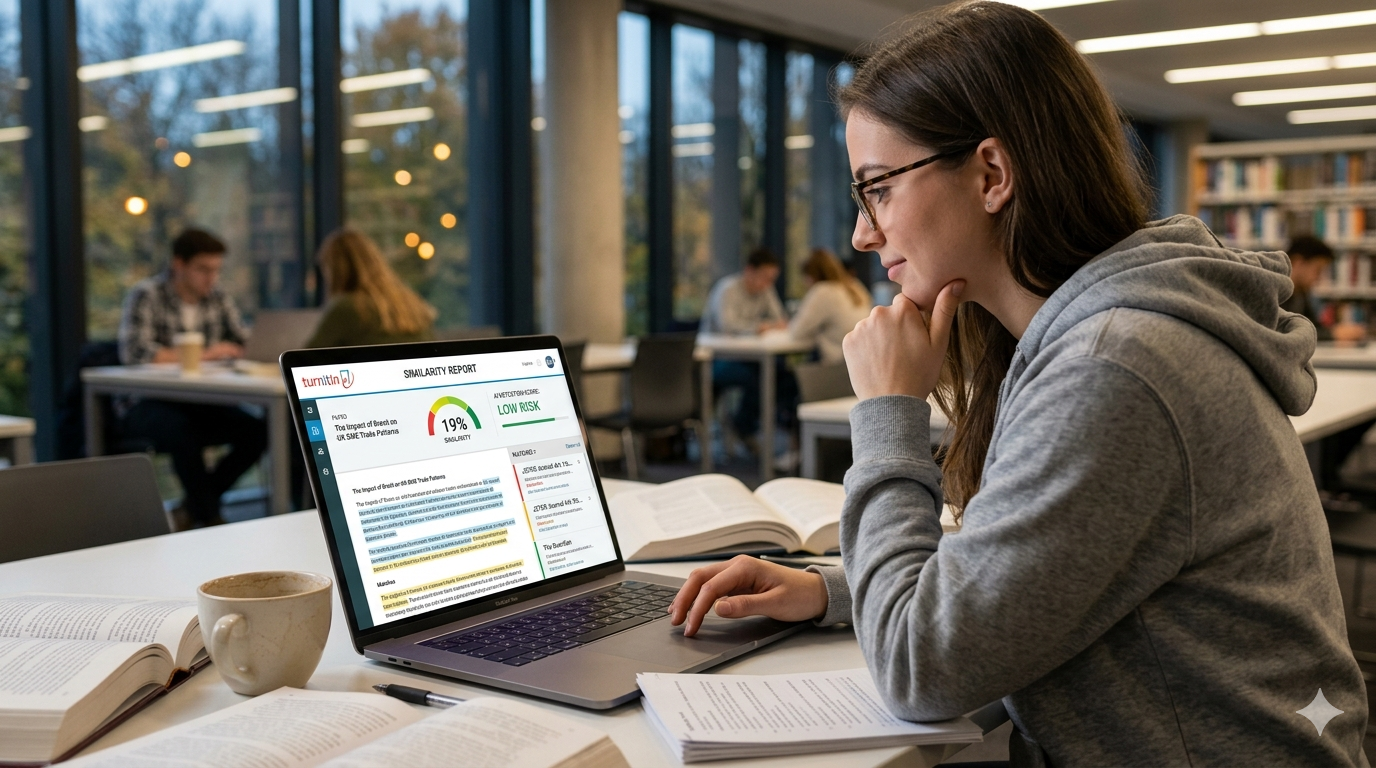
How to Check Your Turnitin Score Before Submitting
April 7, 2026
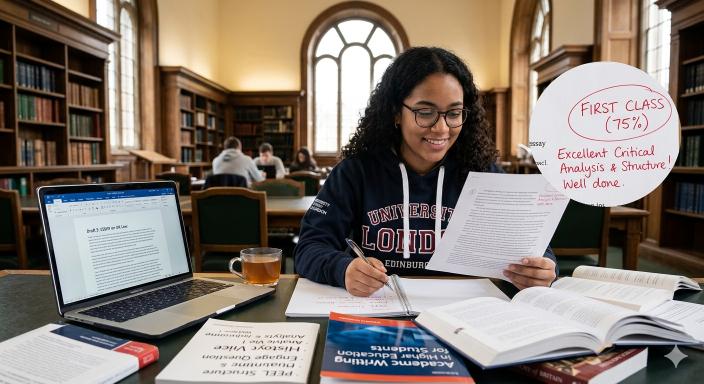
How to Write a First Class Essay at a UK University: A Complete Guide for Students
May 11, 2026
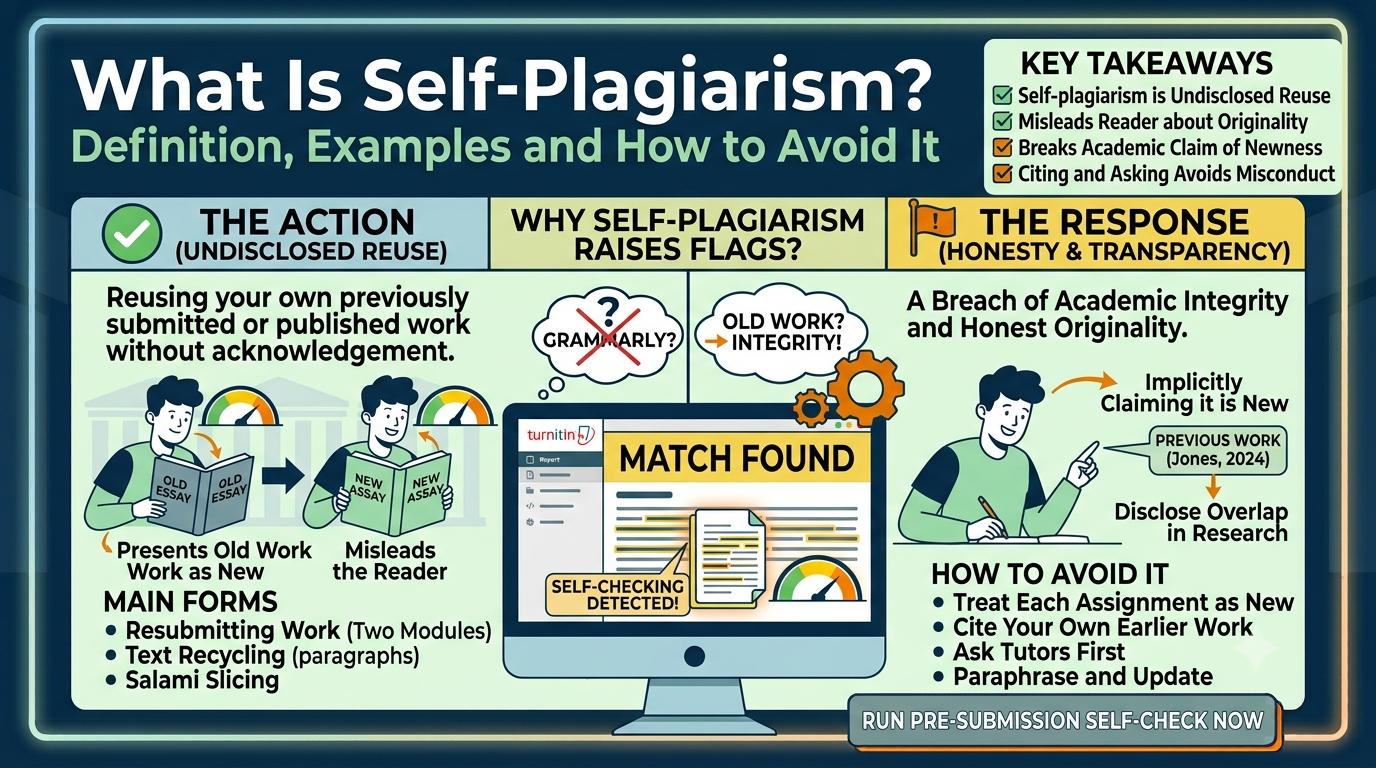
What Is Self-Plagiarism? Definition, Examples and How to Avoid It
July 23, 2026
Want more tips & great deals? Get them sent to your inbox
Please enter a valid E-mail
By clicking "Subscribe" you agree to be contacted via e-mail. You can always unsubscribe from the newsletter


