
Ready by 9:33pm Sep 15, 2026
How to Write a Dissertation Introduction That Sets Up Your Whole Project
A dissertation introduction introduces the topic, explains why it matters, states the research question and aims, and signposts the structure. It should move from the broad context to your specific question, and leave the reader knowing exactly what you will investigate and why. Write it early in rough form, then finish it last.
The introduction is the first thing your marker reads, so it shapes their whole impression of your dissertation. A sharp introduction signals a controlled, well planned project. A vague one raises doubt before the reader reaches your research. The good news is that a strong introduction follows a clear pattern you can learn.
What is the introduction for?
It has one main job: to make the reader understand what you are investigating and why it is worth investigating, before they reach any of your research. By the end of the introduction, they should know your topic, your question, your aims, and how the dissertation is organised.
It is not a place for findings or detailed literature. It sets the stage. Detail belongs in the chapters that follow, and cluttering the introduction with it blurs the one thing it needs to do clearly, which is frame the project.
What should a dissertation introduction include?
Most strong introductions contain the same elements, in roughly this order.
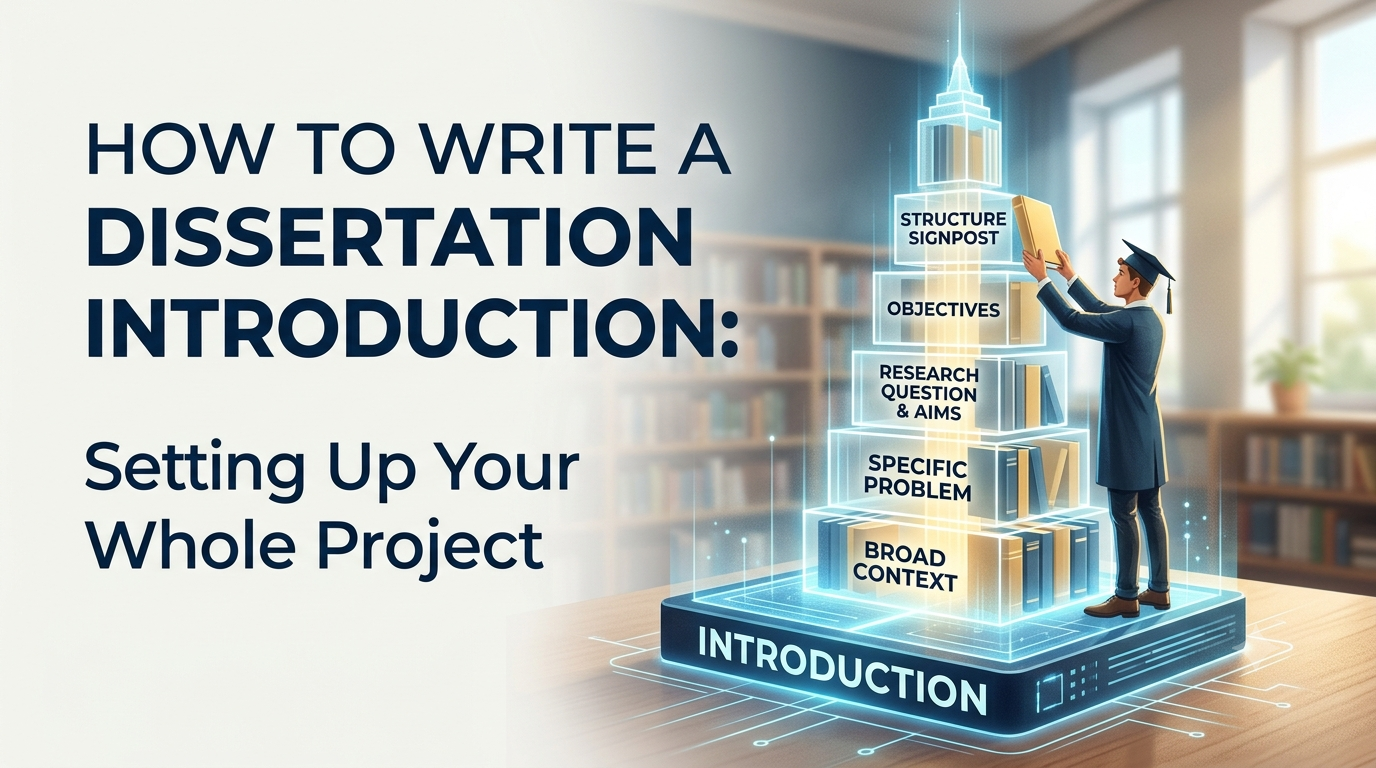
- The broad context. The wider topic and why it matters now.
- The specific problem. Narrowing from the broad area to the particular issue you address.
- The research question and aims. Exactly what you set out to find, stated precisely.
- The objectives. The steps you will take to answer the question.
- The significance. Why answering this matters, and to whom.
- The structure. A short signpost of what each chapter does.
Not every dissertation needs all six as separate sections, but a good introduction covers all of them in some form.
How do you start an introduction?
Start broad, then narrow. Open with the wider context that any educated reader would recognise, then funnel down to your specific question. This is often called the funnel approach, and it works because it takes the reader from familiar ground to your precise focus without a jump.
Avoid two common openings. Do not start so broadly that the first paragraph could belong to any dissertation in your field. And do not open with a dictionary definition, which reads as filler. Begin with something specific enough to signal your actual topic, then narrow from there.
How do you write the research question and aims?
This is the heart of the introduction. Your research question should be specific, answerable, and clearly stated, so the reader knows exactly what the dissertation delivers. Narrow it by group, setting, and focus until a method suggests itself. If you are still shaping it, our guide to choosing a dissertation topic helps you get from a broad area to a sharp question.
Keep the aim and the objectives distinct. The aim is your overall goal, phrased as what you want to achieve. The objectives are the specific steps that get you there, and they often map onto your chapters. Markers notice when students blur the two, so keep them separate and clear.
How long should the introduction be?
Around ten per cent of your total, so roughly 1,500 words in a 15,000 word dissertation. It should feel focused rather than exhaustive. If your introduction is running much longer, it is probably straying into literature review or methodology territory, which belongs in those chapters. The full breakdown is in our dissertation word count guide.
How do you signpost the structure?
Near the end of your introduction, include a short paragraph that tells the reader what each chapter does. This is signposting, and it helps the reader navigate a long document by knowing what is coming. It does not need to be long, just a sentence or two mapping the journey.
For example, you might say that the next chapter reviews the existing research and identifies the gap, the following one explains the method, and so on. This small paragraph does real work, because it frames the whole dissertation as a planned argument rather than a series of chapters the reader discovers one by one. Markers read it as a sign of a controlled project.
How does the introduction relate to the conclusion?
They are a matched pair, and the strongest dissertations treat them that way. The introduction poses the research question and explains why it matters. The conclusion returns to that exact question and answers it. Read one straight after the other, with the middle removed, and they should still make sense as a short, complete argument.
This is a genuinely useful check at the end of your project. If the question you raised in the introduction is not the question you answered in the conclusion, something drifted during the writing, and it is worth fixing before you submit. Writing the final versions of both together is the easiest way to keep them aligned.
When should you write it?
Write a rough version early, to give yourself direction, then finish it last. This sounds contradictory but it is the approach that works. An early draft forces you to state your question and aims, which guides the whole project. But you only know exactly what your dissertation says once the other chapters exist, so the final polish comes at the end, alongside the conclusion.
Writing the final introduction and conclusion together is a useful habit, because they mirror each other. The introduction poses the question the conclusion answers, and reading them back to back is a strong test of whether your project stayed on track.
How do you make the introduction engaging?
An introduction can be clear and still be dull, and a dull opening sets a flat tone for the whole dissertation. You do not need drama, but you do need to make the reader care. The way to do this is to show why your question matters in the real world, not just in the academic literature. A real problem, a current issue, or a genuine gap that has practical consequences gives the reader a reason to keep going. Establish that stake early, then let the precision of your question do the rest. Markers read a lot of dissertations, and one that opens with a clear sense of why it matters stands out immediately.
What are the common mistakes?
- Starting so broadly the opening could belong to any dissertation.
- Opening with a dictionary definition.
- Never stating the research question clearly.
- Blurring the aim and the objectives.
- Including findings or detailed literature that belong in later chapters.
- Writing it once early and never updating it, so it no longer matches the finished dissertation. This is one of the things markers spot quickly.
Ready to take your dissertation further? Get specialist support.
From refining your research question and literature review to methodology, analysis and final structure, dissertation work requires careful planning at every stage. Explore our dissertation writing support for your research project.
Explore dissertation writing support
Frequently asked questions
What should a dissertation introduction include?
The broad context, the specific problem, your research question and aims, your objectives, the significance of the work, and a short signpost of the dissertation structure. It moves from broad context to your precise focus.
How long should a dissertation introduction be?
Around ten per cent of your total, so roughly 1,500 words in a 15,000 word dissertation. If it runs much longer, it is probably straying into literature review or methodology material.
How do I start a dissertation introduction?
Start broad and narrow down, using the funnel approach. Open with the wider context, then funnel to your specific question. Avoid opening with a dictionary definition or a paragraph so general it fits any dissertation.
Should I write the introduction first or last?
Both, in a sense. Write a rough version early to guide your project, then finish it last, once you know exactly what your dissertation says. Writing the final version alongside the conclusion works well.
What is the difference between the aim and the objectives?
The aim is your overall goal, what you want to achieve. The objectives are the specific steps that get you there, and they often map onto your chapters. Keep them clearly separate.
Popular posts
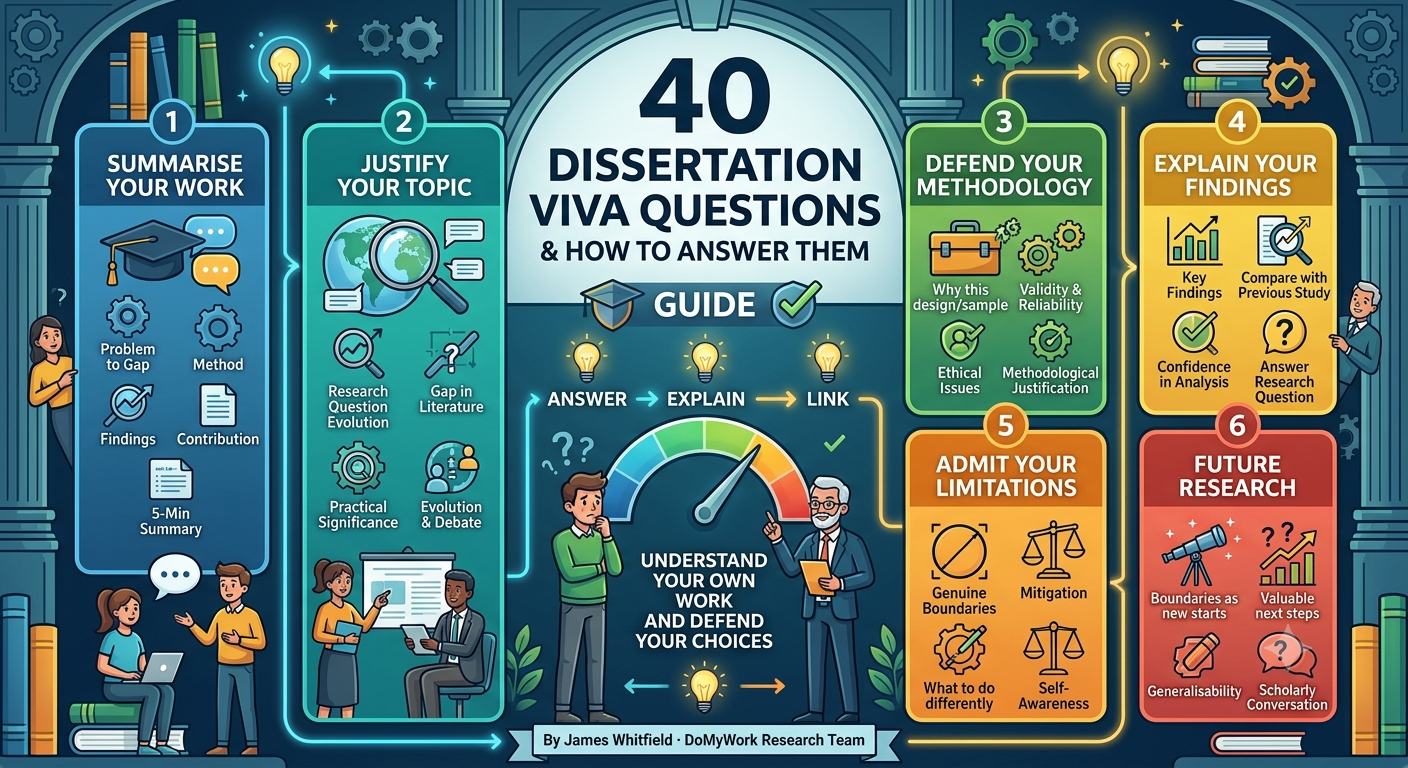
40 Dissertation Viva Questions and How to Answer Them
July 9, 2026
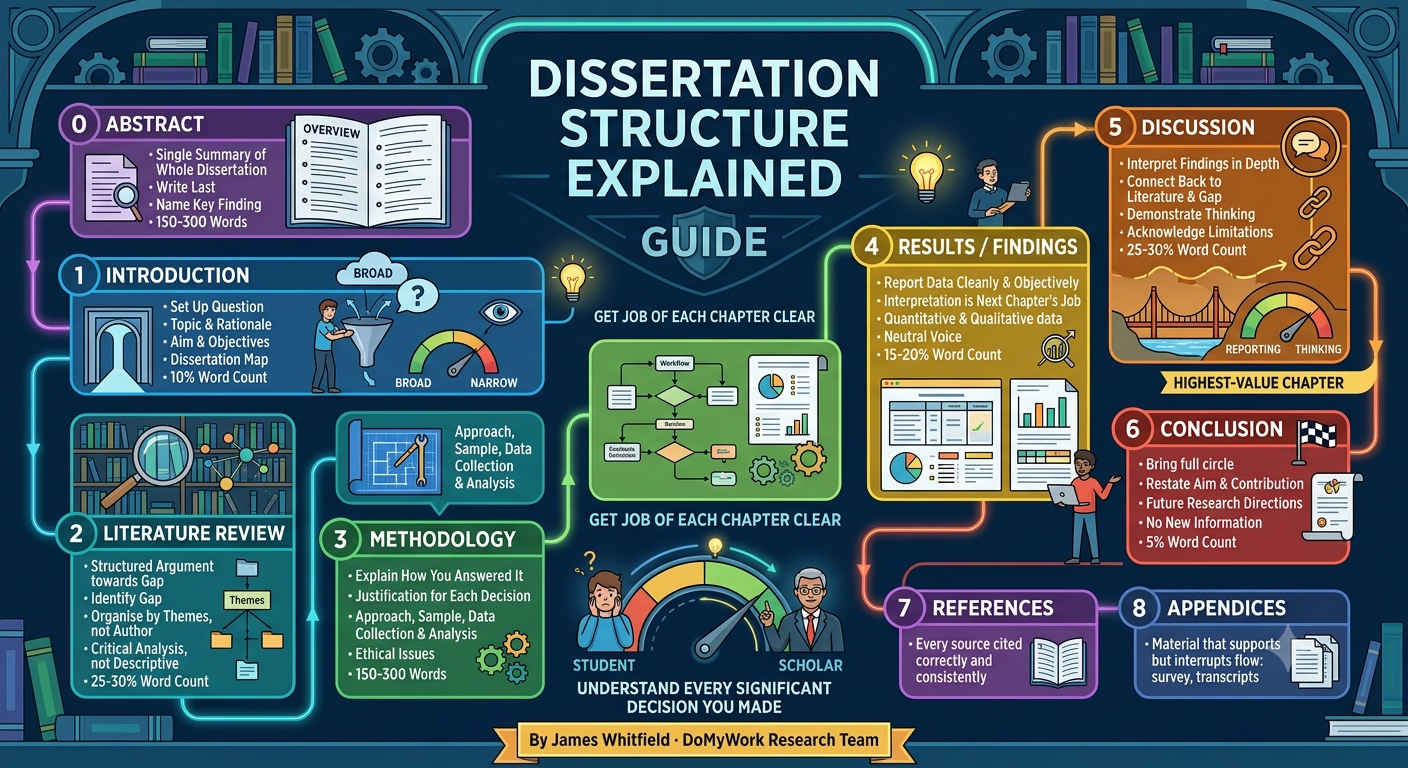
Dissertation Structure Explained Chapter by Chapter
July 11, 2026

Best Student Side Hustles in the UK That Actually Pay in 2026
May 18, 2026
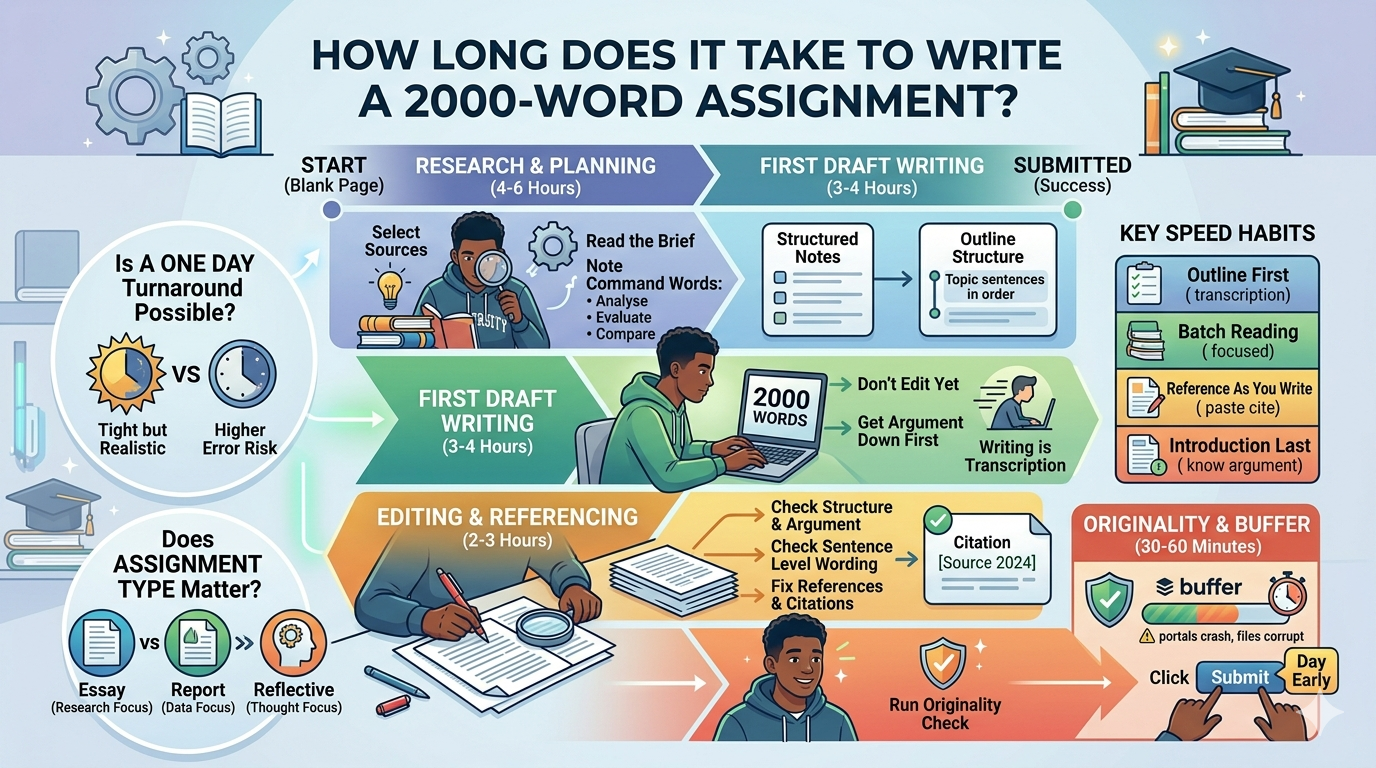
How Long Does It Take to Write a 2000 Word Assignment?
June 24, 2026

How to Write a Reflective Commentary for Culinary Coursework
July 6, 2026

Want more tips & great deals? Get them sent to your inbox
Please enter a valid E-mail
By clicking "Subscribe" you agree to be contacted via e-mail. You can always unsubscribe from the newsletter


