
Ready by 1:15pm Oct 4, 2026
Quetext vs Turnitin: Honest Comparison
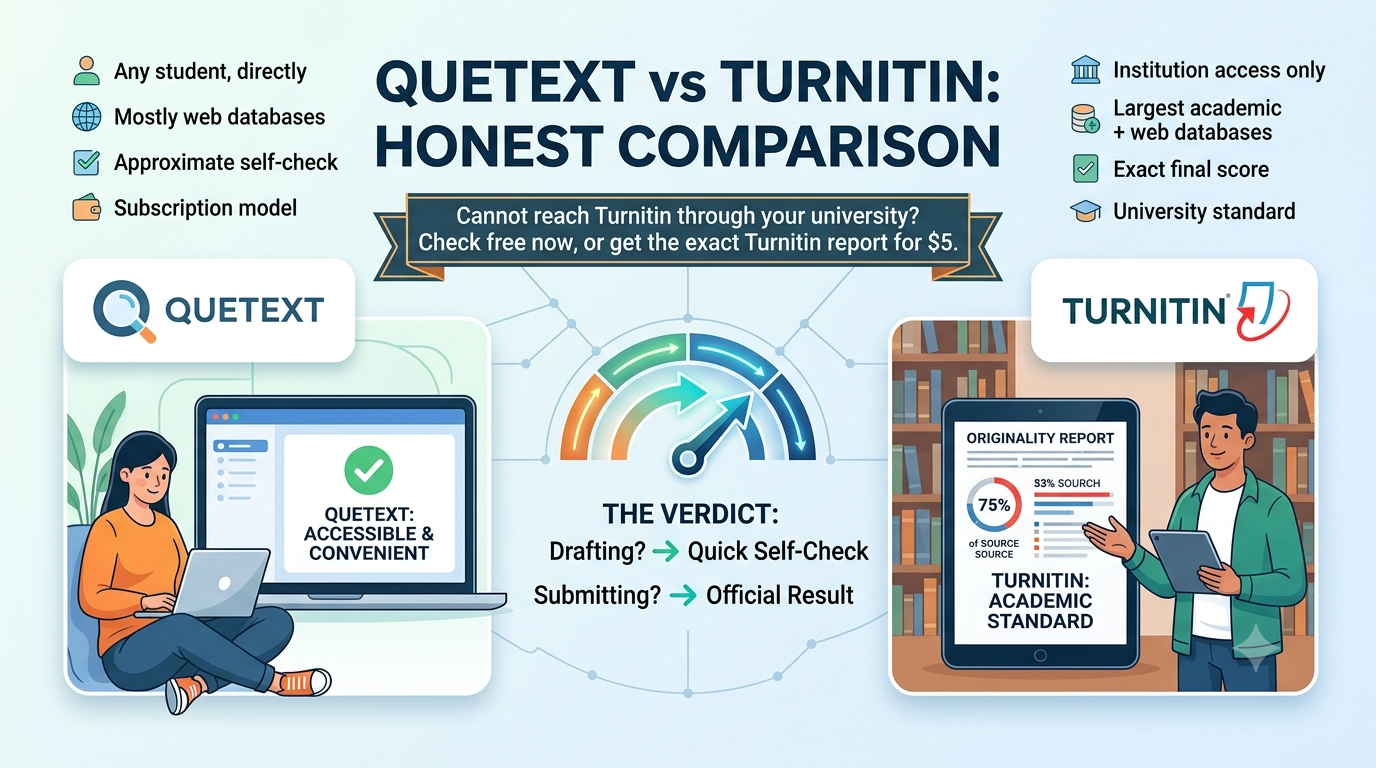
Quetext is an accessible checker you can use directly, with a clean interface and a subscription model, but it leans on web sources. Turnitin is the academic standard with the largest database, though you usually cannot run it yourself. For a quick self check Quetext is convenient. For the result your university grades on, Turnitin is the one that counts.
Quetext comes up a lot when students look for a checker they can actually log into, and the natural question is how it stacks up against Turnitin. The two are built for different situations, so the honest answer is that one is convenient and one is authoritative, and which you want depends on whether you are drafting or submitting.
Quetext vs Turnitin at a glance
| Turnitin | Quetext | |
|---|---|---|
| Who can use it | Usually only via your university | Any student, directly |
| Database | Largest academic, plus web | Mostly web, some published sources |
| Matches the grade view | Exact, same as your examiner | Approximate |
| AI detection | Yes, separate indicator | Available as an add on |
| Price | Set by institution | Subscription |
| Best for | The final official score | Quick self checks |
How accurate is each?
Turnitin is more accurate for academic work, simply because it checks against a far larger pool of student papers and published research, and because it is the exact system your work is measured against. Quetext does a reasonable job of catching obvious copying and web based matches, but a lighter database means it can miss academic sources that Turnitin would catch. For spotting clear problems while you draft, Quetext is fine. For a precise final figure, Turnitin is the reference.
Which is better for students?
For day to day checking that you control yourself, Quetext is genuinely useful, because you can run it whenever you like without waiting for a tutor to open a submission point. For the check that decides your grade, Turnitin wins by default, since that is what your university uses. Many students get the best of both by self checking with an accessible tool and then confirming the final figure with an official Turnitin report. For more accessible options, see Turnitin alternatives.
Which is better value?
Value depends on how often you check. Quetext uses a subscription, which is worth it only if you check regularly enough to justify the recurring cost. If you check a handful of times a term, a subscription can mean paying for months you barely use. A pay per use model, where you only pay when you need a report, often works out cheaper for the typical student, and a free plagiarism checker covers the routine drafting passes at no cost at all.
Privacy and storage
Check how each handles your file, especially for unpublished work. The thing that matters is whether your document is stored somewhere it could later be matched against your own writing. For a thesis or a paper heading to a journal, a check that deletes your file after the report is the safer choice, so read the policy before you upload rather than assuming.
The verdict, by use case
- For the final official score, use Turnitin, through your institution or an official report.
- For quick self checks you control, Quetext is convenient if a subscription suits you.
- For occasional checking on a budget, a free check plus a pay per use report is usually cheaper.
- For unpublished research, prioritise a tool that does not store your file.
What does each tool actually check?
This is where the two genuinely differ. Turnitin checks against an enormous pool of previously submitted student papers, licensed journals and books, and the open web, which is why it catches academic sources that lighter tools miss. Quetext leans more heavily on web based content, with some published sources, which makes it good at spotting material that exists online but less thorough on academic literature locked behind subscriptions. For a web heavy topic the gap is small. For a literature heavy academic piece, Turnitin sees more.
How easy is each to use?
Here Quetext has the clear edge for a student, simply because you can use it yourself. You sign up, paste or upload your work, and get a report, with no need to wait for a tutor to open a submission point. Turnitin, by contrast, is only as accessible as your university makes it, which often means a single submission at the deadline. So in pure convenience terms Quetext wins, while Turnitin wins on authority. That trade between convenience and authority is really the whole comparison.
Can I get the Turnitin result without a subscription?
Yes, which is worth knowing if your real goal is the figure your university grades on. Rather than paying for a recurring Quetext subscription or settling for an approximate result, you can buy a single official Turnitin report that runs your work through Turnitin directly. For a one off dissertation check or a final pass before submission, that often makes more sense than a subscription you would barely use. For more accessible options to check alongside it, see Turnitin alternatives.
A simple way to decide
Ask yourself one question. Do you need convenience or certainty? If you want to check freely and often while you write, and you are happy with an approximate read, Quetext or a free checker does the job. If you need to know the exact figure your examiner will see on an important piece, get an official Turnitin result. Many students use both, the convenient tool for drafting and the official report for the final check, which removes the need to choose at all. For the cheapest routine option, a free plagiarism checker covers your drafting passes at no cost.
When is Quetext the better choice?
Quetext makes sense when convenience matters more than the exact figure. If you want to check your own work repeatedly while drafting, without waiting for a tutor to open a submission point, an accessible tool you control is genuinely useful, and Quetext does that job. It is also fine for spotting obvious copying and web based matches, which catch out a lot of students. If your work is web heavy rather than deeply academic, the database gap matters less, and the ease of using it yourself counts for a lot.
When is Turnitin the better choice?
Turnitin wins whenever the exact result matters, which means any high stakes academic piece graded by your institution. Because it checks the largest academic database and is the system your examiner uses, its figure is the one that counts. For a dissertation, a final year project, or anything where a surprise at submission would be costly, the certainty of an official Turnitin result is worth more than the convenience of a self service tool. The practical answer for most students is to use both, the convenient tool while drafting and an official check at the end.
Frequently asked questions
Is Quetext as good as Turnitin?
For catching obvious copying it is useful, but Turnitin checks a larger academic database and is the system your university grades on, so for a precise final figure Turnitin is more reliable.
Can I use Quetext for free?
Quetext offers limited free use, with fuller checking behind a subscription. For routine drafting, a free checker may cover what you need without a recurring cost.
Does Quetext detect AI?
It offers AI detection as an add on. As with any detector, treat the result as a prompt to review rather than proof, since false positives happen.
Which should I use for my dissertation?
Self check while drafting with whichever tool you find convenient, then confirm with an official Turnitin report, since a thesis is high stakes and deserves the exact figure.
Does Quetext store my work?
Check the current policy before uploading, especially for unpublished work. For a thesis, prefer a tool that deletes your file after the report.
Is a subscription worth it for one essay?
Rarely. For a single piece, a free check or a one off official report is usually cheaper than committing to a subscription.
Is Quetext accurate enough for university work?
It is fine for catching obvious copying while you draft, but for the exact figure your university grades on, an official Turnitin result is more reliable because it checks a far larger academic database.
Can I use both Quetext and Turnitin?
Yes, and many students do. Use an accessible tool for frequent drafting checks, then confirm the final figure with an official Turnitin report on important work.
Does Quetext check academic sources?
It leans more on web content with some published sources, so it can miss academic papers that Turnitin would catch. For academic work, confirm important matches with a check against academic databases.
Which is cheaper overall?
It depends on how often you check. A subscription only pays off with frequent use, while a free check plus an occasional official report is usually cheaper for the typical student.
Want the exact figure your university sees? Get the Turnitin report for $5.
Popular posts
Harvard Referencing Made Simple: The Only Guide You Will Need in 2026
May 12, 2026

How to Complete a Commercial Cookery Logbook (SITHCCC Units Guide)
July 4, 2026
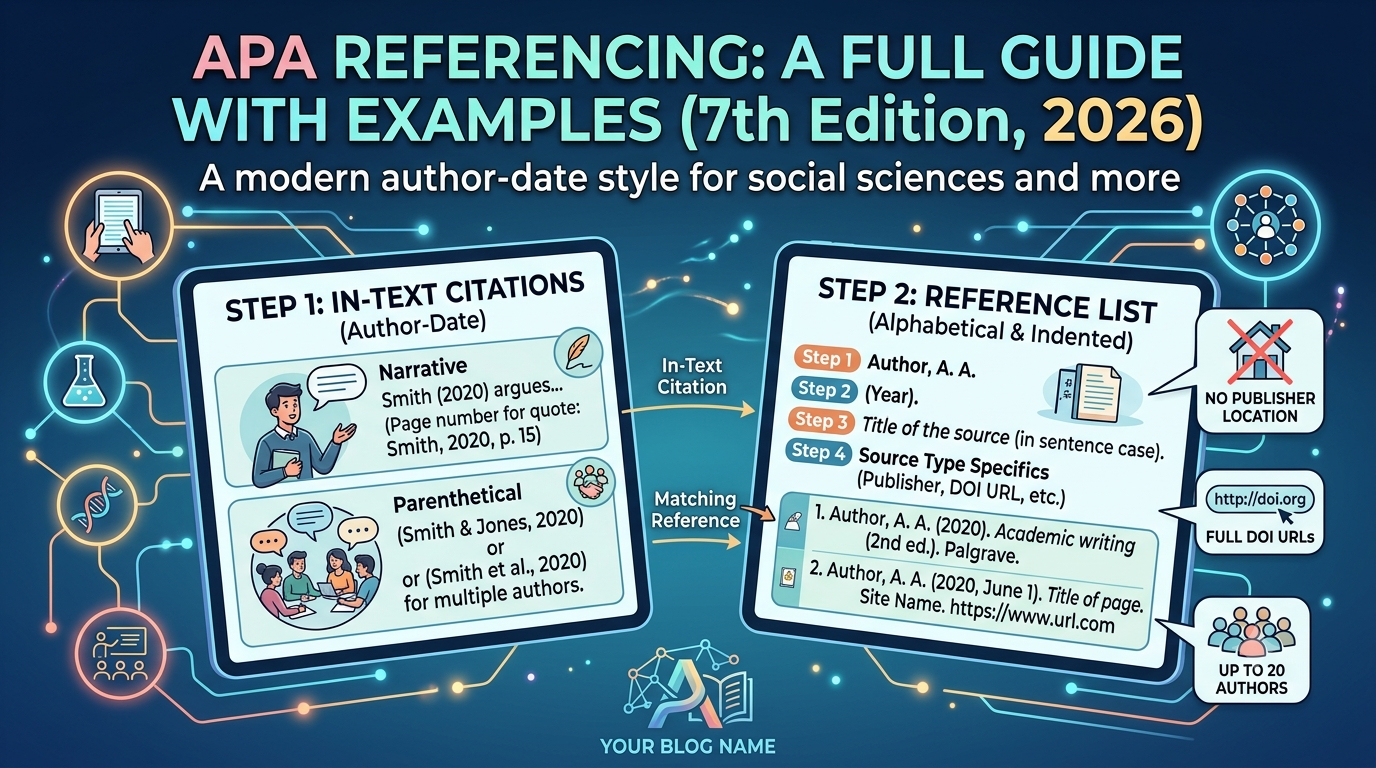
APA Referencing: A Full Guide with Examples (7th Edition, 2026)
September 2, 2026
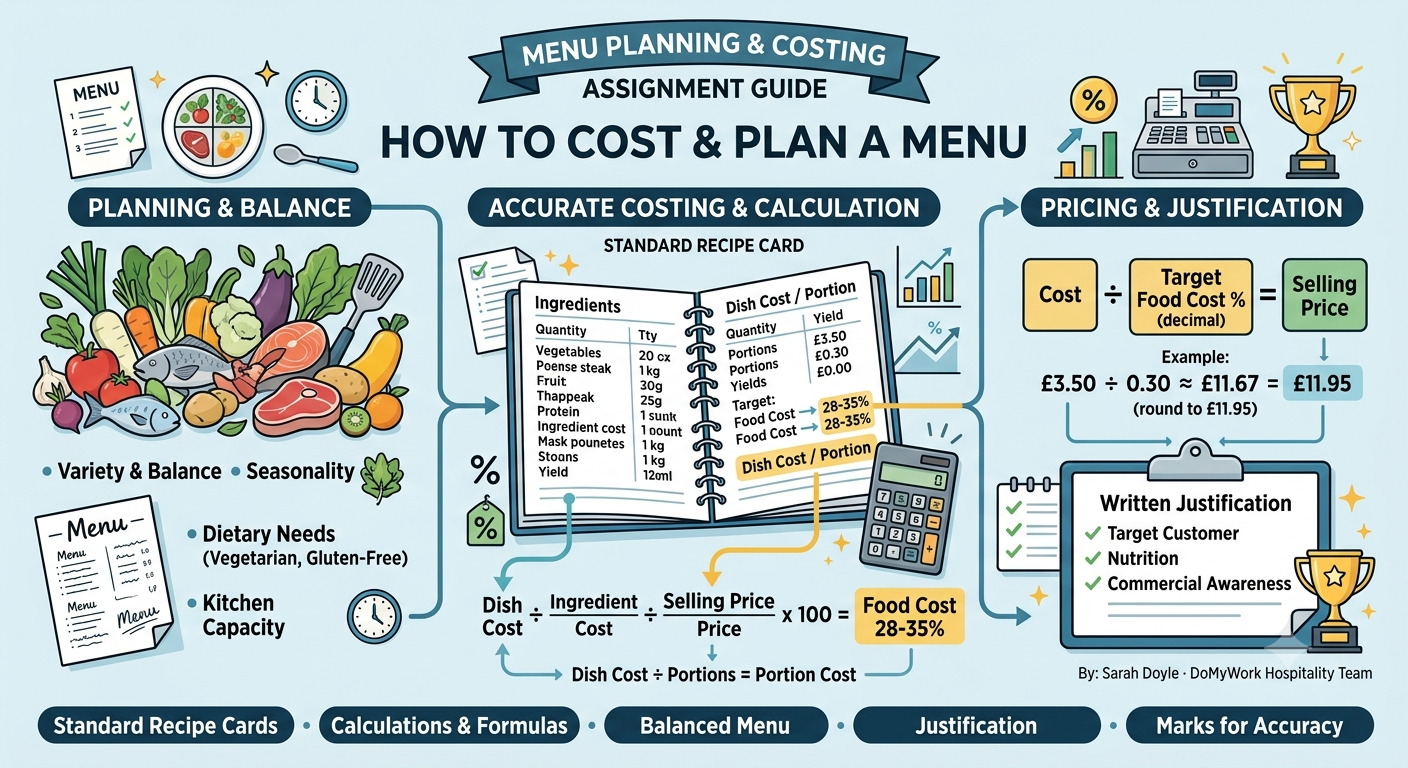
How to Cost and Plan a Menu for a Cookery Assignment
July 7, 2026

150 History Research Paper Topics (2026)
September 12, 2026
Want more tips & great deals? Get them sent to your inbox
Please enter a valid E-mail
By clicking "Subscribe" you agree to be contacted via e-mail. You can always unsubscribe from the newsletter


