

Ready by 10:40am Sep 19, 2026
How to Write Management Assignments That Apply Theory to Practice
Strong management assignments apply theory to real organisations rather than just explaining it. Use a recognised management model, support your analysis with examples and evidence, and connect it to practical implications. What sets management writing apart is showing how a concept works, or fails, in a real organisational setting.
Management is a broad subject, and its assignments reward a specific skill: taking a theory and showing what it means in practice. Students who only explain theories score in the middle. Students who apply them to real situations, with evidence, reach the top. Here is how to do that consistently.
What makes management writing different?
The core skill is application to organisations. A management assignment is not a summary of theories, it is an analysis of how those theories play out in real workplaces. Markers want to see that you can connect an academic concept to organisational reality.
This is why description alone falls short. Explaining a leadership theory accurately shows knowledge, but it is only the setup. The marks come from applying it: showing how it works in a real organisation, where it succeeds, and where it runs into limits.
How do you apply theory to practice?
The method is to pair every theory with a real example. Introduce the concept, then show it in action in a named organisation or a realistic scenario, then analyse how well it fits.
- State the management theory or model clearly, with its source.
- Apply it to a real organisation or situation.
- Analyse how well it explains what happened.
- Note its limits, since no model fits perfectly.
That final step matters. A strong management answer does not treat a theory as gospel. It shows where the theory helps and where it breaks down, which demonstrates genuine critical thinking.
Which management theories come up most?
Management assignments draw on a wide body of theory. You do not need all of it, just the models that fit your question.
| Area | Common theories and models |
| Leadership | Transformational, transactional, situational leadership |
| Motivation | Maslow, Herzberg, expectancy theory |
| Organisational culture | Handy, Schein, Hofstede |
| Change management | Lewin, Kotter |
Use one or two that fit your question well rather than listing many. These overlap with the frameworks in our MBA assignment guide, applied here to organisational analysis.
How do you use examples and evidence?
Examples are what make a management assignment convincing, but they have to be specific. A vague reference to some companies is weak. A named organisation, with detail about what it did and what happened, is strong.
Support your examples with evidence rather than assertion. Use case studies, company reports, and academic research to back your analysis. An argument that a leadership style improved performance is far stronger when evidence supports it than when it rests on your opinion. This is the same evidence based habit that lifts work across every subject.
Working on a nursing paper or assignment? Get subject-specific support.
Nursing coursework often requires clinical reasoning, evidence-based research and accurate academic referencing. Explore our nursing paper writing support for university-level nursing work.
How do you choose the right theory?
With so many management theories available, choosing the right one is a skill in itself. The wrong choice makes even good writing feel forced, while the right one makes your analysis flow.
Start from the question, not the theory. Ask what the assignment is really about, whether that is leadership, motivation, culture, or change, then choose the model that most directly addresses it. Avoid picking a theory just because you know it well, if it does not fit. And resist using several at once to look thorough, because a single model applied deeply beats three mentioned briefly. The test is whether the theory helps you explain the situation better. If it does not add insight, it is the wrong choice.
What is the difference between describing and analysing a theory?
This distinction decides most management grades. Describing a theory explains what it says. Analysing it shows what it means in a real situation and how well it holds up.
For example, explaining the stages of a change management model is description. Applying it to a real company that went through change, showing where the model matched what happened and where it did not, is analysis. The first shows you read the textbook. The second shows you can think with the theory. A strong management assignment is mostly the second kind of writing, using description only as the setup for analysis.
How should a management assignment be structured?
- An introduction setting out the focus and why it matters.
- The relevant theory, explained concisely.
- Application to a real organisation or scenario, with evidence.
- Critical analysis, including the limits of the theory.
- A conclusion drawing out practical implications, and a reference list.
How do you use real organisations as examples?
Named organisations make management writing convincing, but they have to be used well. Choose organisations you can find real information about, so your analysis rests on evidence rather than assumption. Well known companies work because there is plenty written about them, but a smaller organisation you know well can work just as well if you can support your points. Give enough detail that the example actually illustrates the theory, rather than just naming a company in passing. And be accurate, because a marker who knows the organisation will notice if you misrepresent it. A specific, well evidenced example is one of the fastest ways to lift a management assignment from description into analysis.
How do you show critical analysis in management writing?
Critical analysis in management means weighing theories rather than accepting them. Where two models explain the same situation differently, discuss which fits better and why. Where a popular theory has been criticised, engage with that criticism. Where a model worked in one context but not another, ask what explains the difference.
This is the same skill that separates the top grade bands across academic writing: not describing what theories say, but judging how well they hold up against real evidence.
How do you write a strong introduction and conclusion?
In a management assignment, the introduction should set up the organisational problem or question and signal the theory you will use, so the reader knows where the analysis is heading. Avoid spending it on general background about the subject. Get to the specific focus quickly.
The conclusion should draw out practical implications, not just summarise. Management markers want to know what your analysis means for practice: what an organisation should learn, do, or avoid based on what you found. A conclusion that restates the theory adds nothing, while one that says what the analysis implies for real management decisions shows you understand why the theory mattered in the first place.
What are the common mistakes in management assignments?
- Explaining theories without applying them to real situations.
- Using vague examples instead of named, detailed ones.
- Treating a theory as always correct, ignoring its limits.
- Relying on opinion where evidence is needed.
- Listing many models superficially instead of applying a few well.
- Weak structure, so the argument does not follow one clear line.
Frequently asked questions
What makes management assignments different?
They reward applying theory to real organisations, not just explaining it. Markers want to see how a concept works, or fails, in a real workplace, supported by evidence and specific examples.
How do I apply management theory to practice?
State the theory, apply it to a real organisation or scenario, analyse how well it fits, and note its limits. Pairing every theory with a specific, evidenced example is what earns the marks.
Which management theories should I use?
Only those that fit your question, applied well rather than many applied superficially. Common areas include leadership, motivation, culture, and change management, each with recognised models.
How do I show critical analysis?
Weigh theories rather than accepting them. Compare models that explain a situation differently, engage with criticism of popular theories, and ask why a model worked in one context but not another.
How important are examples?
Very. Specific, named examples with detail are far stronger than vague references. Support them with evidence such as case studies and company reports rather than relying on assertion.
Popular posts

What Is Self-Plagiarism? Definition, Examples and How to Avoid It
July 23, 2026

iThenticate vs Turnitin: What Is the Difference?
July 18, 2026

How to Cite Sources: A UK Student’s Guide to Referencing
July 21, 2026

How to Structure a University Assignment: Formats That Win Marks
June 23, 2026
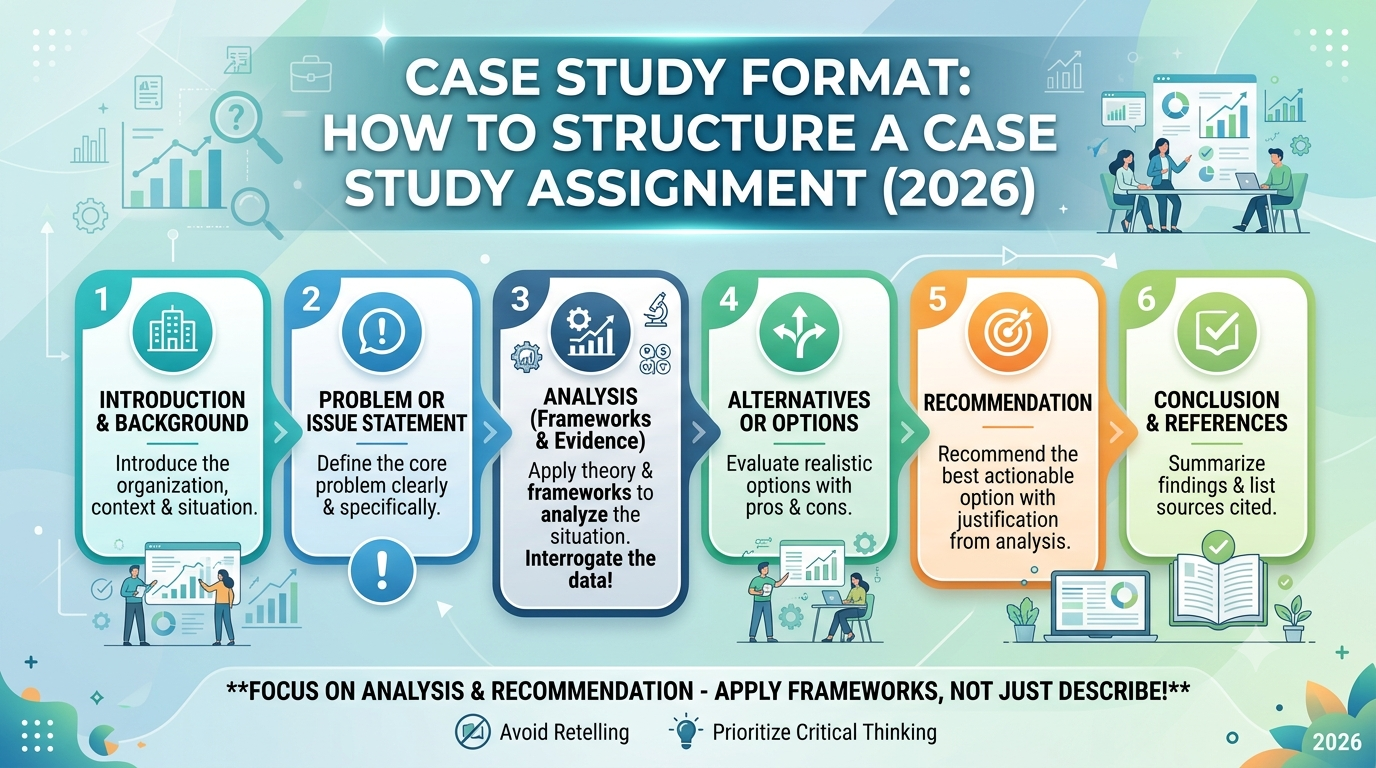
Case Study Format: How to Structure a Case Study Assignment (2026)
August 25, 2026

Want more tips & great deals? Get them sent to your inbox
Please enter a valid E-mail
By clicking "Subscribe" you agree to be contacted via e-mail. You can always unsubscribe from the newsletter


