
Ready by 5:56am Oct 14, 2026
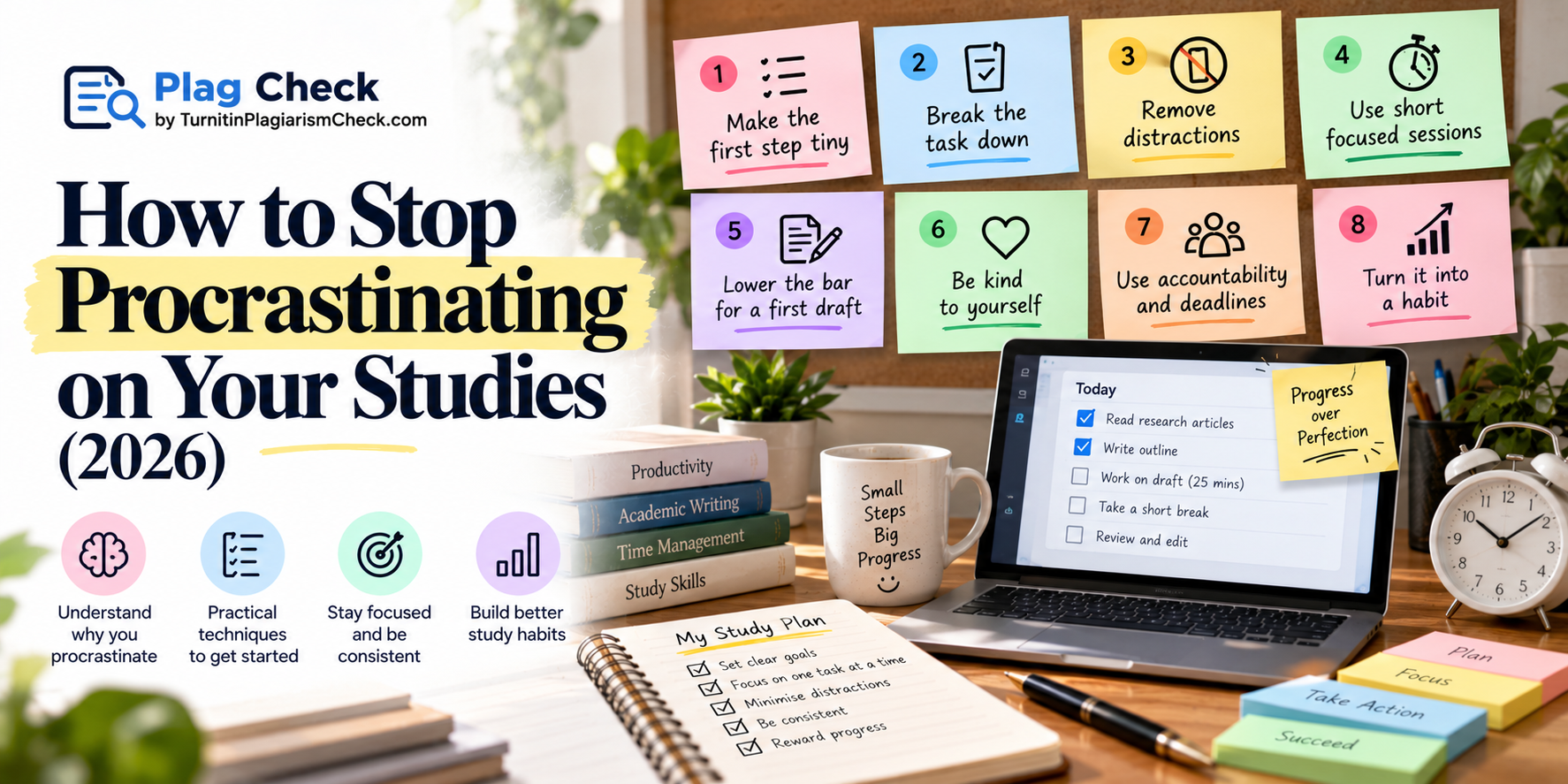
How to Stop Procrastinating on Your Studies (2026)
You procrastinate mostly because a task feels too big, unclear or unpleasant, so your brain avoids it. The fixes are practical: break the task into a tiny first step, remove distractions, use short focused work sessions, and lower the bar for starting. Starting, not motivation, is the thing to solve, because action usually creates the motivation.
Almost every student procrastinates, and almost every student blames themselves for it, as if it were a failure of willpower. It usually is not. Procrastination is a predictable response to tasks that feel overwhelming, unclear or unpleasant, and once you understand why it happens, you can tackle it with practical techniques rather than guilt. This guide explains why you put work off and gives you concrete ways to start, stay focused, and finish, so a habit that quietly wrecks deadlines becomes something you can manage rather than something you dread.
Why do you procrastinate?
Procrastination is less about laziness than about avoidance. When a task feels too big, too vague, too difficult, or simply unpleasant, your brain seeks relief by turning to something easier and more immediately rewarding, like your phone. It is an emotional response to how the task makes you feel, not a rational decision about your time, which is why willpower alone rarely fixes it. Understanding this changes the approach: instead of trying to force yourself through guilt, you make the task feel smaller and less aversive, so there is less to avoid. Solve the feeling that triggers avoidance, and the procrastination largely dissolves.
Make the first step tiny
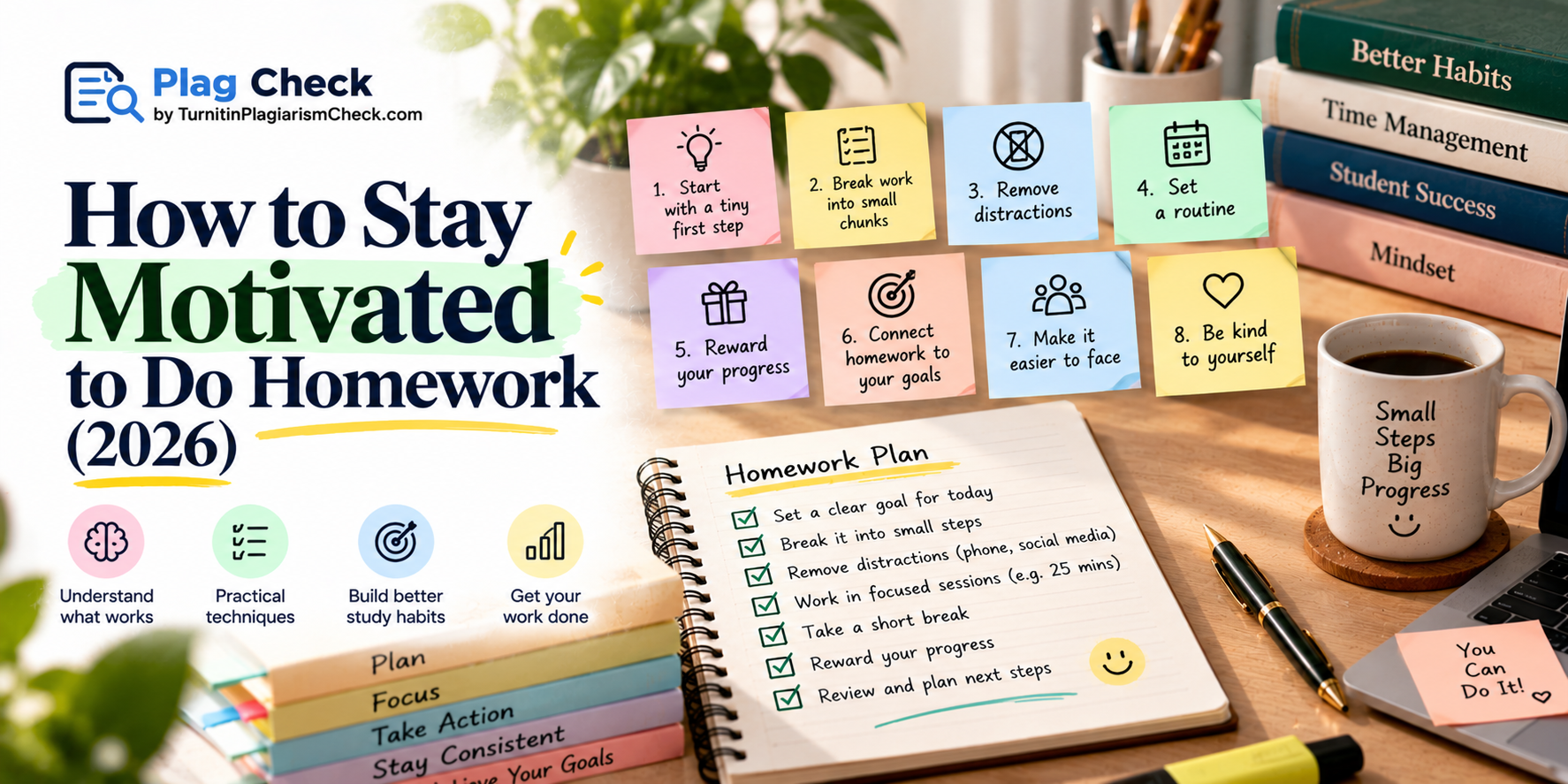
The hardest part of any task is starting, so the most powerful technique is to shrink the first step until it feels trivial. Instead of writing the essay, the step becomes open the document and write one sentence, or read the first source. A tiny first step slips under the brain’s resistance, and once you have started, continuing is far easier than beginning was, because action builds momentum. This is the key insight about procrastination: you do not need to feel motivated to start; you need to start, and the motivation usually follows. Making the entry point small enough that you cannot reasonably avoid it is the reliable way in.
Break the task down
Large, vague tasks are procrastination magnets, so break them into small, specific steps you can see the end of. A dissertation becomes choose a topic, find five sources, draft the introduction, and each of those becomes a concrete, doable action rather than a looming project. Working from a clear list of small steps removes the paralysis of not knowing where to begin, and it lets you make progress in short windows rather than waiting for a long free stretch. Our how to structure an assignment guide helps you break a piece of writing into its parts, which turns an overwhelming task into a sequence you can actually start.
Remove distractions
You cannot rely on resisting distraction through willpower, so remove it instead. Put your phone in another room, close unrelated tabs, and use website blockers during study time if you need to, so the easy escape routes are not there. Procrastination thrives on the friction being lower for the distraction than for the work, so your job is to reverse that: make the distraction harder to reach and the work easier to start. A tidy, distraction-free space where the only easy thing to do is your work removes much of the temptation before it arises, which is far more effective than fighting temptation in the moment.
Use short, focused sessions
Committing to a long stretch of work is daunting and invites delay, whereas committing to a short, focused burst feels manageable. Techniques like working for twenty-five minutes then taking a short break make starting easier, because you are only ever committing to a small block, not the whole task. These short sessions also protect your concentration and prevent burnout, and they add up quickly. The psychological trick is that a twenty-five-minute commitment is small enough to say yes to even when you do not feel like working, and once the timer is running, you are past the hardest part, which is beginning.
Lower the bar for a first draft
Perfectionism is a hidden driver of procrastination: if you feel the work must be excellent from the first word, starting becomes terrifying, so you avoid it. The fix is to lower the bar for the first attempt, giving yourself permission to write a rough, imperfect draft that you will improve later. A bad first draft is infinitely more useful than a perfect one that does not exist, and it is far easier to edit something into shape than to produce it perfectly at once. Separating drafting from polishing removes the pressure that keeps you from starting, which is often the real block behind procrastination on writing tasks.
Be kind to yourself about it
It may sound counterintuitive, but harsh self-criticism makes procrastination worse, not better. Beating yourself up for putting work off adds guilt and anxiety, which are exactly the unpleasant feelings that trigger more avoidance, creating a spiral. Treating a lapse matter-of-factly, acknowledging it and simply starting the next tiny step, breaks that cycle far more effectively than self-blame. Procrastination is a common, human response to difficult tasks, not a character flaw, so the productive response is practical rather than punitive: notice it, shrink the task, remove the distraction, and begin. Self-compassion, oddly, gets more work done than self-criticism.
Use accountability and deadlines
External accountability can succeed where willpower alone fails, because a commitment to someone else is harder to break than a promise to yourself. Telling a friend you will finish a task by a certain time, studying alongside others, or joining a study group all add a gentle social pressure that makes starting and finishing more likely. Setting your own interim deadlines, earlier than the real one, works similarly, turning a distant due date into a nearer commitment that prompts action now. Some students use body doubling, simply working in the presence of someone else who is also working, which quietly discourages drifting off task. Building in accountability, whether through people or self-imposed deadlines, gives you a reason to act today rather than relying on future motivation that may not arrive.
Turn anti-procrastination into a habit
The lasting solution is to build these techniques into a routine so you rely less on willpower in the moment. A regular study time, a familiar distraction-free space, a habit of breaking tasks down and starting small, together they make beginning the default rather than a daily battle. Pairing study with an existing routine, such as always working at the same time after a particular part of your day, helps it become automatic. Over time, the aim is not to defeat procrastination through effort each time, but to arrange your habits and environment so that starting is easy, which our time management for students guide supports with a workable weekly structure.
Popular posts
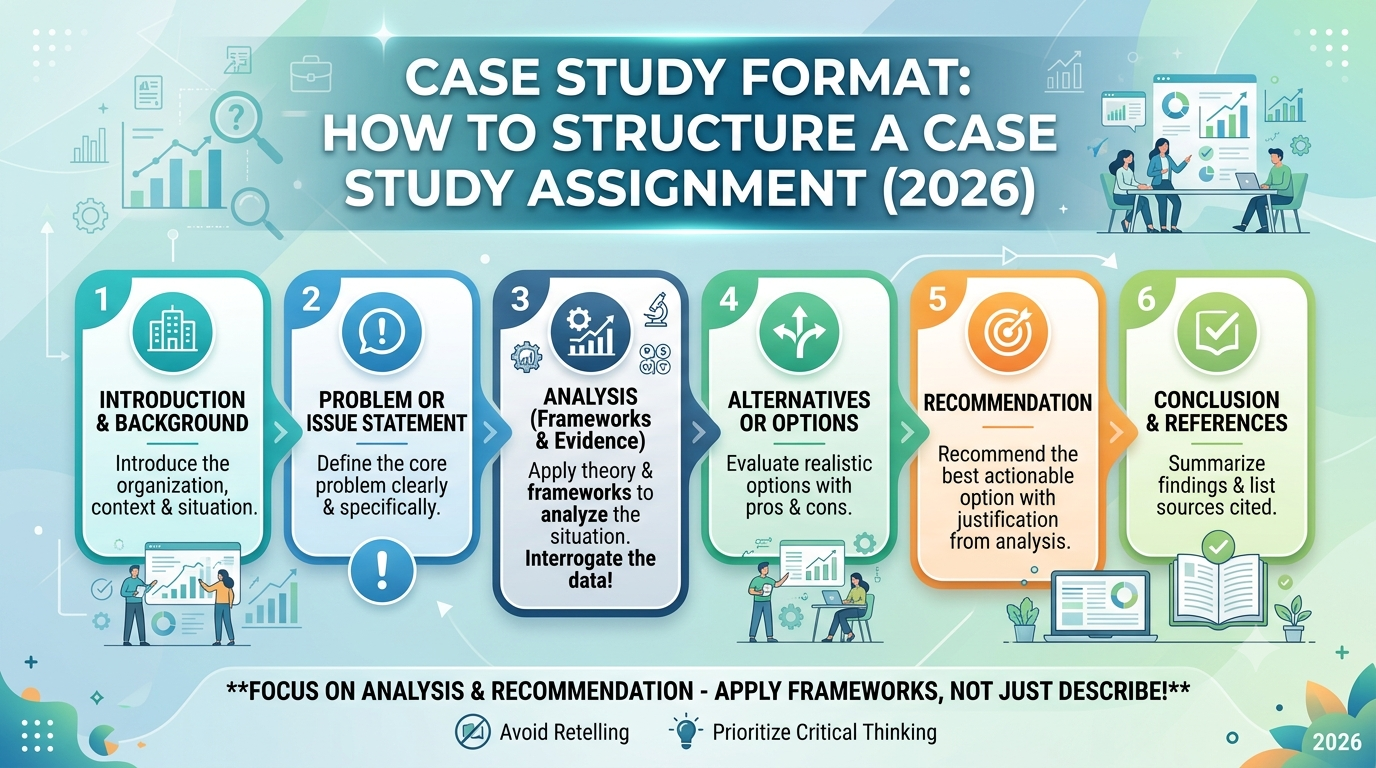
Case Study Format: How to Structure a Case Study Assignment (2026)
August 25, 2026

150 History Research Paper Topics (2026)
September 12, 2026
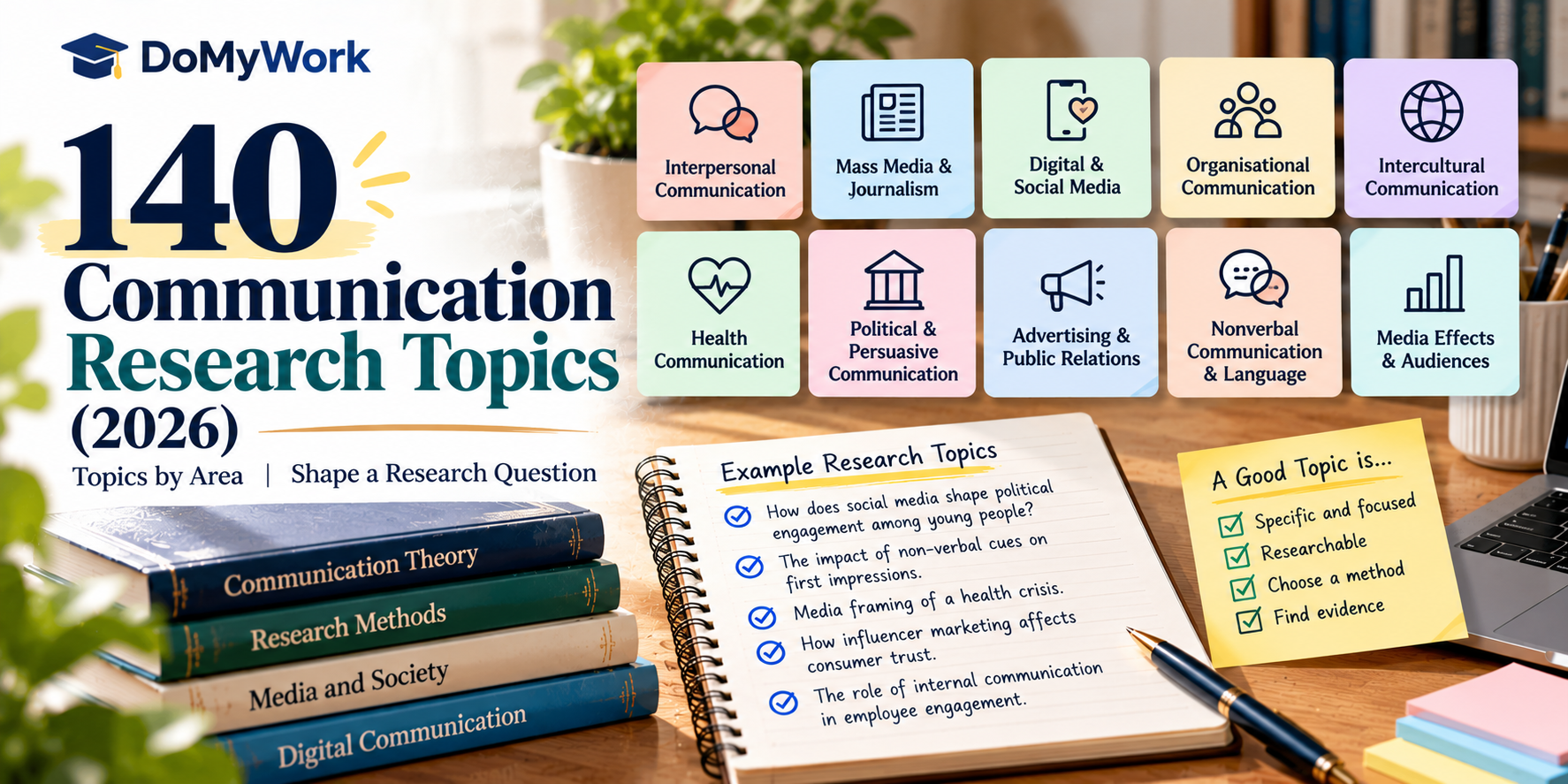
140 Communication Research Topics (2026)
September 16, 2026

Can Students Access Turnitin Without Their University? Here Is the Truth
April 15, 2026
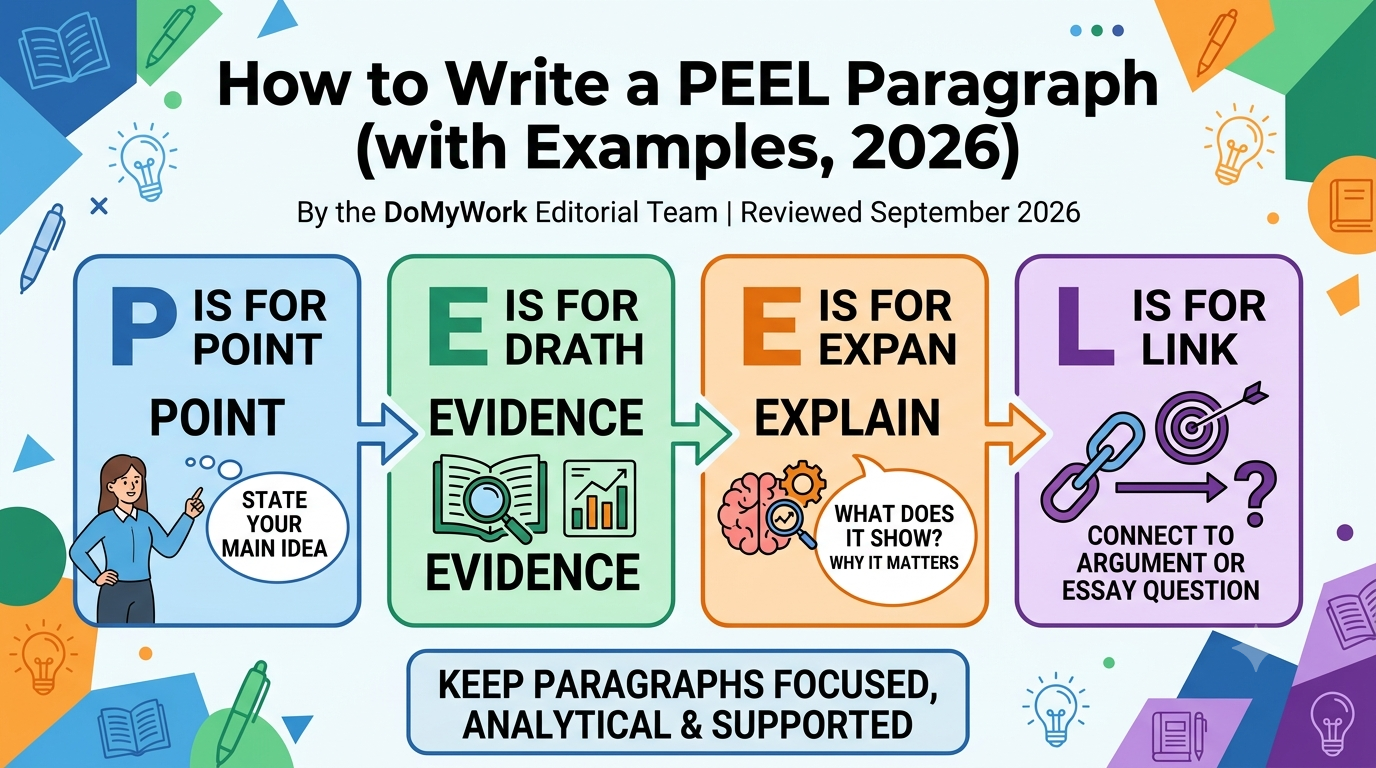
How to Write a PEEL Paragraph (with Examples, 2026)
September 26, 2026
Want more tips & great deals? Get them sent to your inbox
Please enter a valid E-mail
By clicking "Subscribe" you agree to be contacted via e-mail. You can always unsubscribe from the newsletter


