
Ready by 8:07pm Oct 5, 2026
How Accurate Are AI Detectors? False Positives Explained
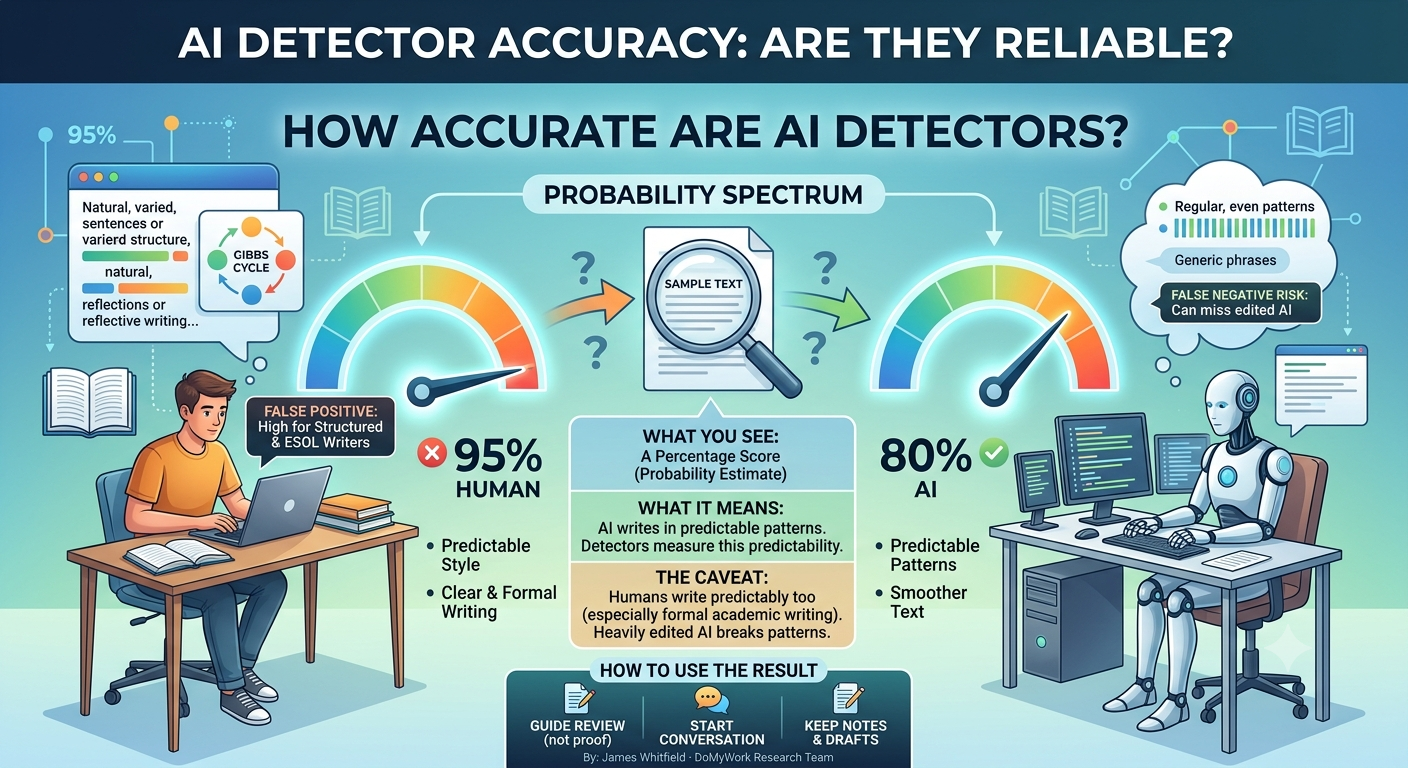
AI detectors are useful but not reliable enough to be treated as proof. They estimate how a machine like your writing reads, which means they produce false positives, flagging human work, and false negatives, missing edited AI text. Use the result to guide a review, not to decide guilt, and be aware some writers are flagged unfairly more often.
Whenever AI detection comes up, the same anxious question follows. Can these tools actually tell, and can they be wrong about me? The honest answer is that they are helpful but far from certain, and understanding exactly how and why they fail is the best protection against being treated unfairly by one, or relying on one too heavily. Here is the realistic picture.
How accurate are AI detectors?
Accuracy varies a lot by tool, by the model that wrote the text, and by the writing itself, so any single accuracy figure should be treated with suspicion. Detectors do reasonably well at spotting unedited output from common tools, and much worse on text that has been edited, translated or mixed with human writing. They are estimating, not measuring. The result is a probability dressed up as a percentage, and the confidence the number projects is often higher than the underlying reliability deserves.
What is a false positive and why does it happen?
A false positive is when a detector flags genuine human writing as AI generated. It happens because detectors work by measuring how predictable your text is, on the theory that machine writing is smoother and more even than human writing. The problem is that plenty of humans write in a smooth, even, predictable way, especially when they have been taught to write clearly and formally. So the very qualities that make academic writing good can be read as machine-like to a detector, producing a false flag on honest work.
Can AI detectors flag human writing?
Yes, and this is the core risk for students. Because the signal is style rather than substance, anyone whose natural writing happens to look even and regular is more likely to be flagged, regardless of how the text was actually produced. This is not a rare glitch, it is a built-in consequence of how the tools work, which is why responsible institutions treat a flag as a prompt to look closer rather than as proof. If your honest work is flagged, the score is wrong, not your writing.
Can they miss edited AI text?
Equally, yes. If someone takes AI output and edits it heavily, rewording sentences and varying the rhythm, they break the predictable pattern the detector relies on, and the text can slip through as human. So a clean AI score does not prove writing is human any more than a flag proves it is machine. Detectors catch the obvious and lazy cases best, and the careful and edited cases least, which is the opposite of what you might assume.
Who is most at risk of a false flag?
- Students writing in a second language, whose careful, regular phrasing can read as machine-like.
- Highly structured writers who plan tightly and edit heavily, smoothing out natural variation.
- Writers in technical or scientific fields, where consistent, standard phrasing is the norm.
- Anyone writing a short, formal piece where there is little room for individual style to show.
If you fall into one of these groups, it is worth keeping your drafts and notes as evidence of your process, and checking your own work first so you are never surprised. For how this plays out with the Turnitin indicator specifically, see Does Turnitin detect AI.
How should you use the result?
Treat any AI score as one signal to investigate, never as a conclusion. If you are a student, run your work through an AI content detector before submitting, review the flagged sections, and rework anything that reads as generic in your own voice, even if you wrote it. If you are an educator, use a flag to start a conversation, look at the student’s drafting history, and weigh how they usually write. The tool informs a human judgment, it does not replace one. For the wider field of detectors and how they compare, see the best AI content detectors.
Why a single accuracy figure is misleading
Detector makers love to quote a high accuracy percentage, but the number means little on its own. Accuracy depends on which model produced the text, how much it was edited, the length of the sample, and the writing style of the human involved. A detector that scores well on unedited output from one tool may do poorly on edited text from another. So when you see a bold accuracy claim, treat it as a best case from a controlled test, not a promise about your particular piece of writing. The honest summary is that detectors are useful signals with real and uneven error rates.
False positives, the risk that matters most
Of the two ways a detector can be wrong, the false positive is the one that can harm an honest student, because it flags genuine human writing as machine generated. It happens because the detector reads predictability as a sign of AI, and many capable human writers are naturally predictable, having been taught to write clearly and formally. The result is that good, honest academic writing can trigger a flag, through no fault of the writer. This is not a rare edge case, it is a structural feature of how the tools work, and it is why a flag must never be treated as proof on its own.
Why some students are flagged more often
The risk is not evenly spread, which makes it doubly unfair. Students writing in a second language often learn careful, regular sentence patterns that read as even to a detector. Highly organised writers who plan and edit heavily smooth out the natural variation the tool treats as human. Technical and scientific writing, which prizes consistency, can look machine-like for the same reason. If you fall into one of these groups, the sensible response is not to write worse, but to keep evidence of your process and to check your own work first so you are never caught off guard.
- Second language writers, whose phrasing is careful and regular.
- Very structured writers who plan tightly and edit heavily.
- Technical and scientific writers, where standard phrasing is expected.
- Anyone writing short, formal pieces with little room for personal style.
How to protect yourself from a false flag
The best protection is evidence that the work developed over time, which is easy to build if you do it as you go. Keep your drafts, your version history, your notes and your reading, because a trail showing the work taking shape is far stronger than any detector score. Check your own work with an AI content detector before submitting, and rework any section that reads as generic even though you wrote it. If you are ever questioned, stay calm and talk through your process and your choices, since a genuine author can discuss their work in a way that someone who generated it cannot.
The right way to read any AI score
Treat the number as a prompt to look closer, never as a conclusion. A high score means review this, not this AI. A low score means nothing obviously flagged, not this is definitely human. The judgment always belongs to a person who can weigh the score against context, writing history and a conversation. For students that means using a detector to improve and protect your own honest work. For educators it means using it as one input among several. For the field of detectors and how they compare, see the best AI content detectors, and for the Turnitin indicator specifically, does Turnitin detect AI.
Will AI detection get better over time?
It will keep improving, but it is unlikely to ever become a perfect verdict, because the core challenge is hard. As AI writing becomes more varied and more human-like, the patterns detectors rely on get harder to spot, and editing easily breaks them. At the same time, the false positive problem is tied to how the tools work, not just to how good they are, so better models reduce errors without eliminating them. The sensible expectation is that detectors stay useful signals that need human interpretation, rather than becoming machines that can prove authorship on their own.
Frequently asked questions
Can AI detectors be trusted?
They are useful as a signal but not reliable enough to be proof. They produce false positives and false negatives, so the result needs human interpretation.
How common are false positives?
Common enough to matter, especially for second language writers and very structured writers. This is why a flag should prompt review rather than decide an outcome.
Can I prove I did not use AI?
Keeping drafts, version history and notes is strong evidence of your process, and being able to discuss your work in detail is convincing in a way generated work cannot match.
Does editing AI text fool detectors?
Heavy editing can, because it breaks the predictable pattern. This is also why a clean score does not prove writing is human.
Can an AI detector be used as proof I cheated?
It should not be, on its own. Detectors estimate likelihood from writing style and produce false positives, so a responsible institution treats a flag as a reason to investigate, not as proof.
What should I do if I am falsely flagged?
Stay calm and show your process. Drafts, version history and the ability to discuss your work in detail are strong evidence of genuine authorship that a score cannot override.
Is it safe to rely on a clean AI score?
Not entirely. A clean score means nothing obvious was flagged, not that the writing is definitely human, since edited AI text can slip past. Use it as reassurance, not proof.
Worried an honest piece might be flagged? Check it first and rework anything that reads as machine written.
Popular posts

How to Write a Dissertation Proposal: Step by Step With an Example
April 17, 2026
How to Write a Dissertation Literature Review
August 1, 2026
How Do You Write a Dissertation Methodology Chapter?
June 25, 2026
Capstone Project vs Dissertation vs Thesis: Key Differences
June 29, 2026
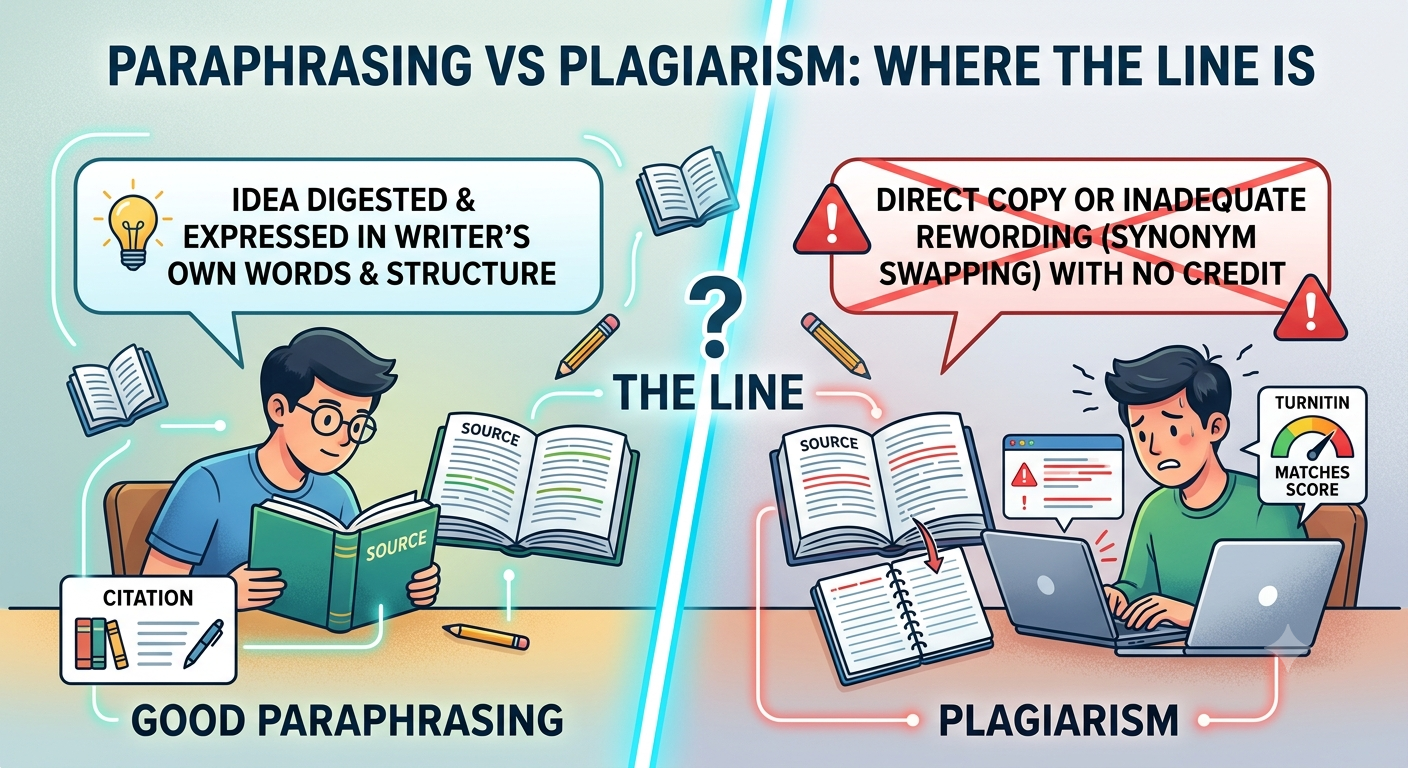
Paraphrasing vs Plagiarism: Where the Line Is
July 9, 2026
Want more tips & great deals? Get them sent to your inbox
Please enter a valid E-mail
By clicking "Subscribe" you agree to be contacted via e-mail. You can always unsubscribe from the newsletter


