The DoMyWork blog

Study guides that get straight to the point.

Plain-English guides on referencing, grades, plagiarism and university life. Short answers first, detail after.

Featured guide / Referencing

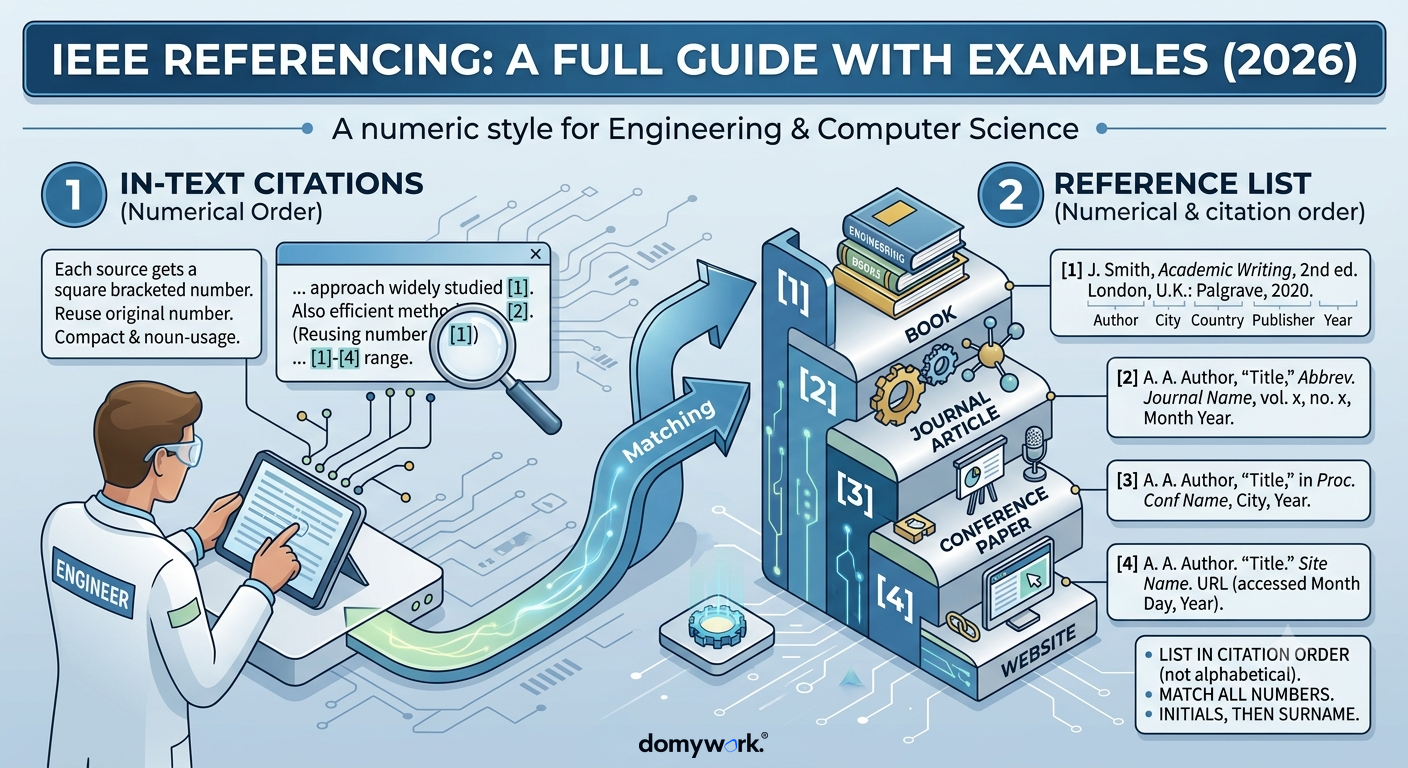
IEEE Referencing: A Full Guide with Examples (2026)

IEEE referencing is a numeric style used in engineering and computer science. You number sources in the order they appear and cite them with a number in square brackets on the line, such as [1], then list them in that numerical order in the reference list. The same source keeps the same number throughout. IEEE…

6 Sep 2026 · 4 min readRead the guide
Read the guide. Then check your work before you submit.

Two quick checks students run on a draft before they hand it in.

Plag Check

A Turnitin similarity report and AI writing check, with every matched source, in your inbox within 15 minutes.

$5 a check, no accountCheck my work

Grade Predictor

Upload your draft with your brief and marking criteria to see your likely grade, a score for each criterion and the fixes that lift it most.

2 free checks when you sign inPredict my grade

Latest guides

Page 1 of 17

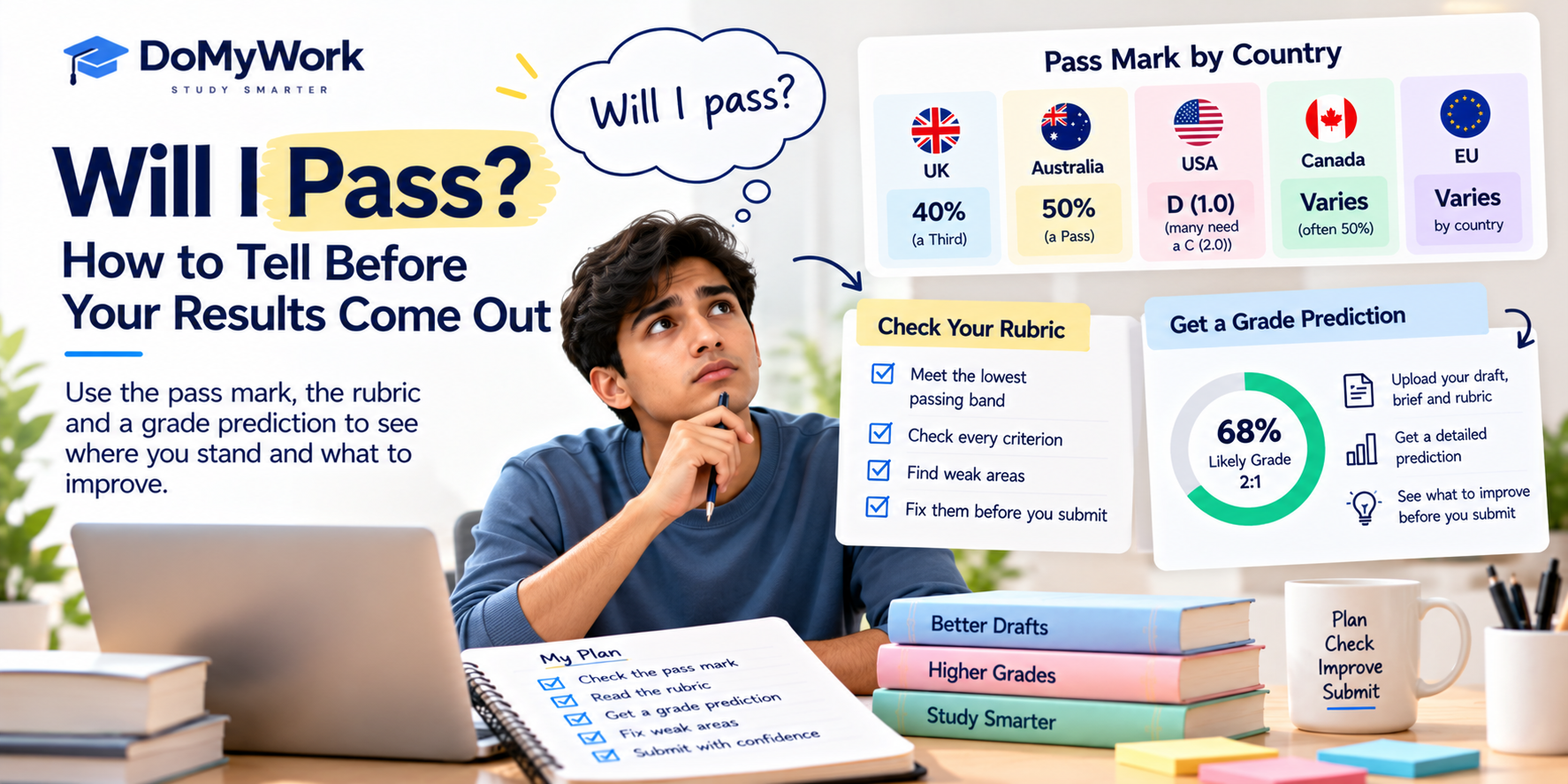
Will I Pass? How to Tell Before Your Results Come Out

To tell whether you will pass before results come out, compare your work against two things: the pass mark for your course, and the rubric the marker uses. In the UK the pass mark is usually 40 per cent, in Australia 50 per cent. If your draft clearly meets the lowest passing band on every…

1 Nov 2026 · 3 min read

Grades and marking

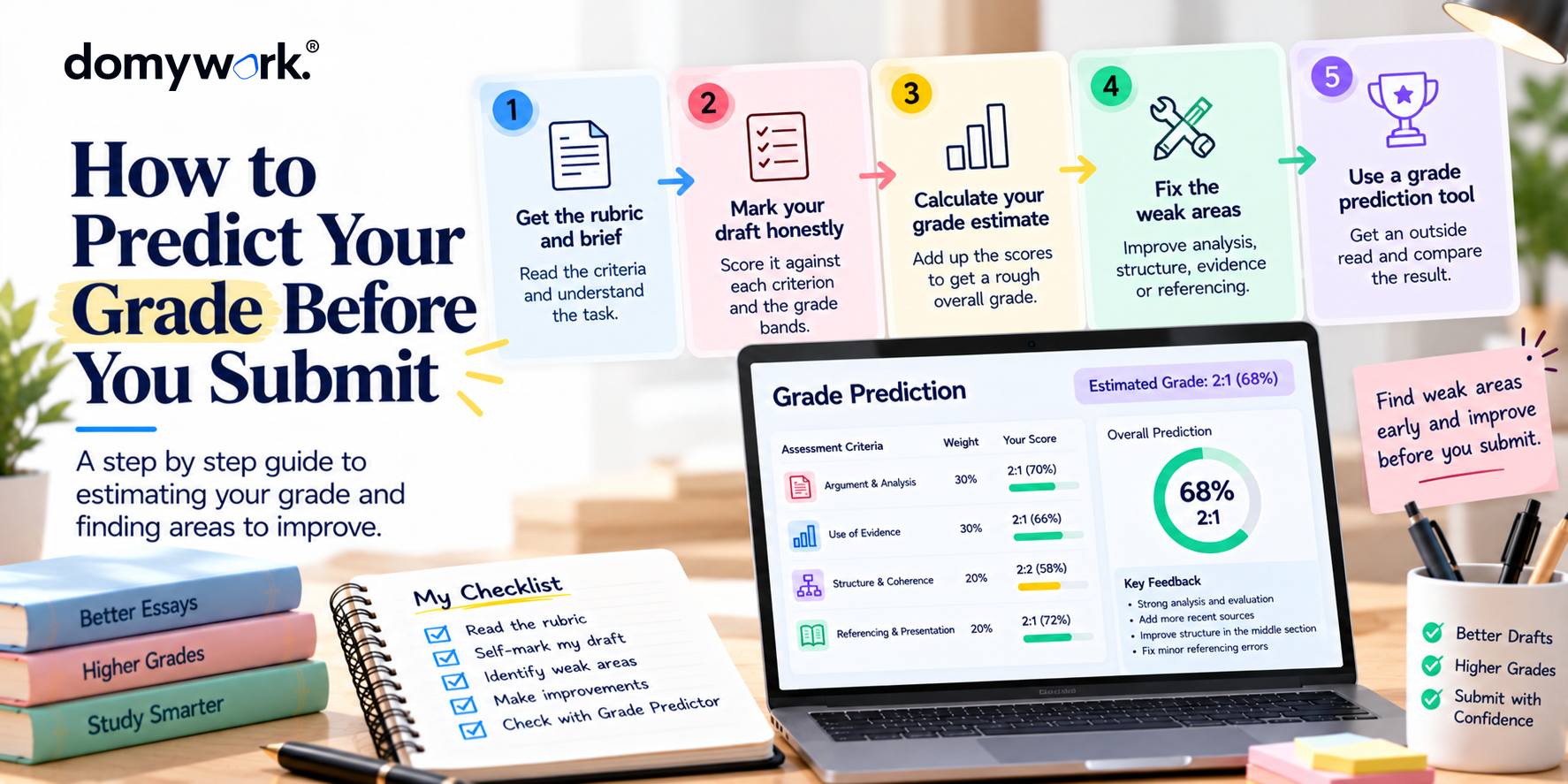
How to Predict Your Grade Before You Submit

You can predict your grade before you submit by marking your own draft against the rubric, the same way a marker will. Read the criteria, score each one honestly against the grade bands, and add them up. For a faster, outside read, upload your draft, brief and rubric to a grade prediction tool and compare…

30 Oct 2026 · 4 min read

Grades and marking

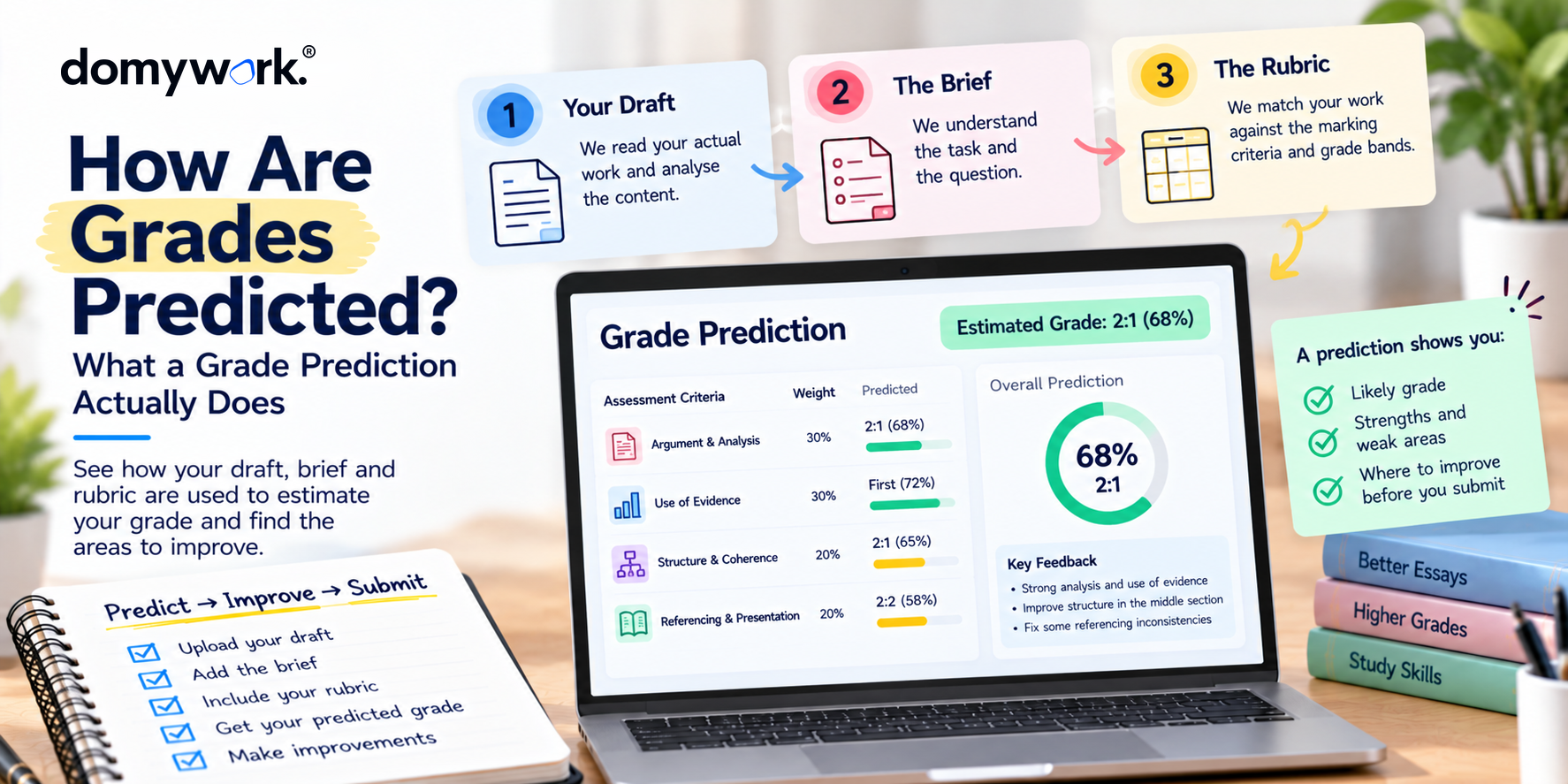
How Are Grades Predicted? What a Grade Prediction Actually Does

A grade is predicted by reading your draft against the same things a marker uses: the rubric criteria and the grade bands for your course. A prediction tool checks how well your work meets each criterion, maps that to the band it falls in, and returns a likely grade with the weak areas flagged. It…

28 Oct 2026 · 3 min read

Grades and marking

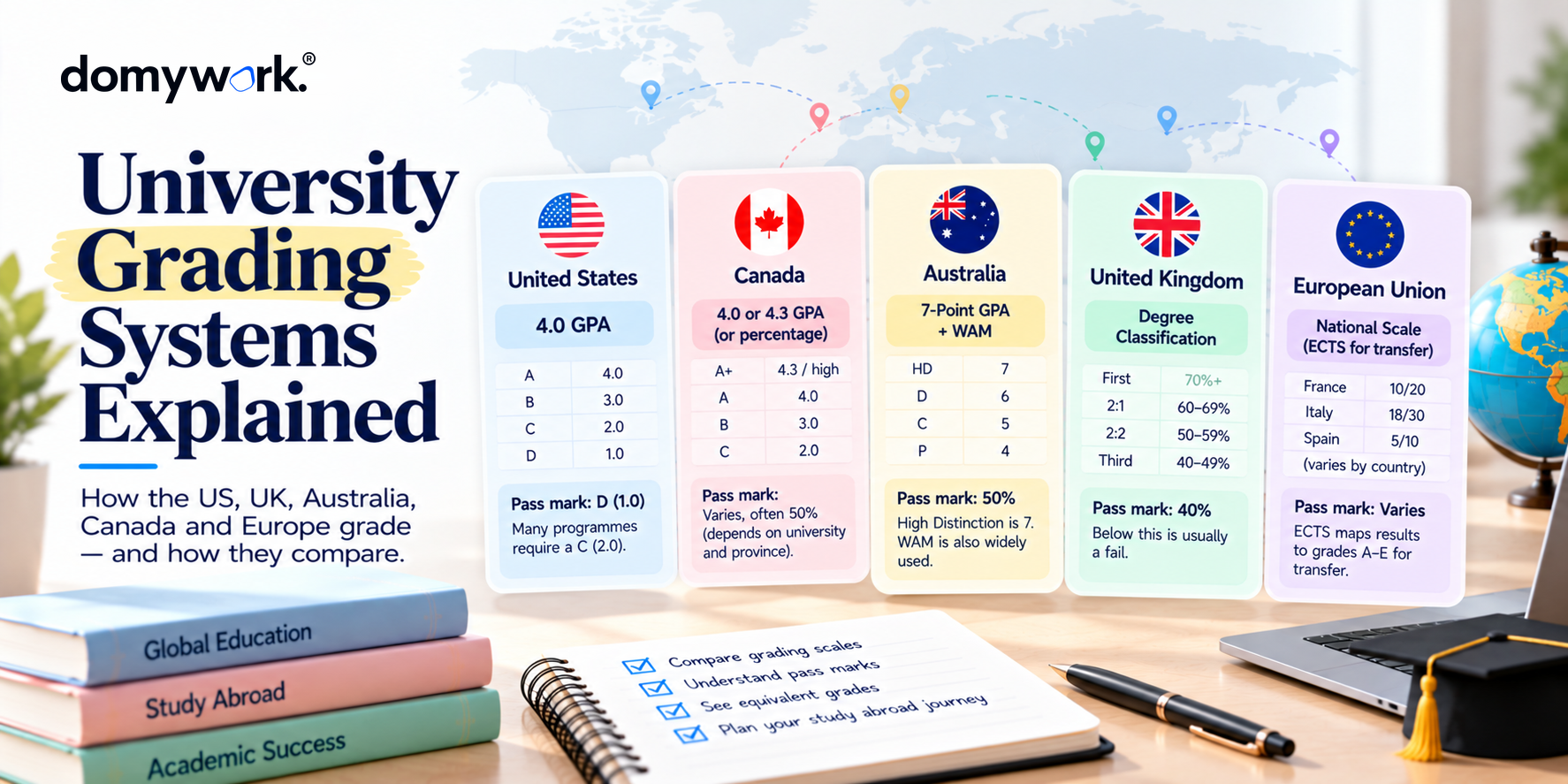
University grading systems compared

University grading is not the same across countries. The US and Canada use a 4.0 grade point average, Australia uses a 7-point scale and a percentage WAM, the UK uses degree classifications, and most of Europe keeps national scales linked by ECTS. Here is how each one works and how they line up. How do…

28 Oct 2026 · 3 min read

Grades and marking

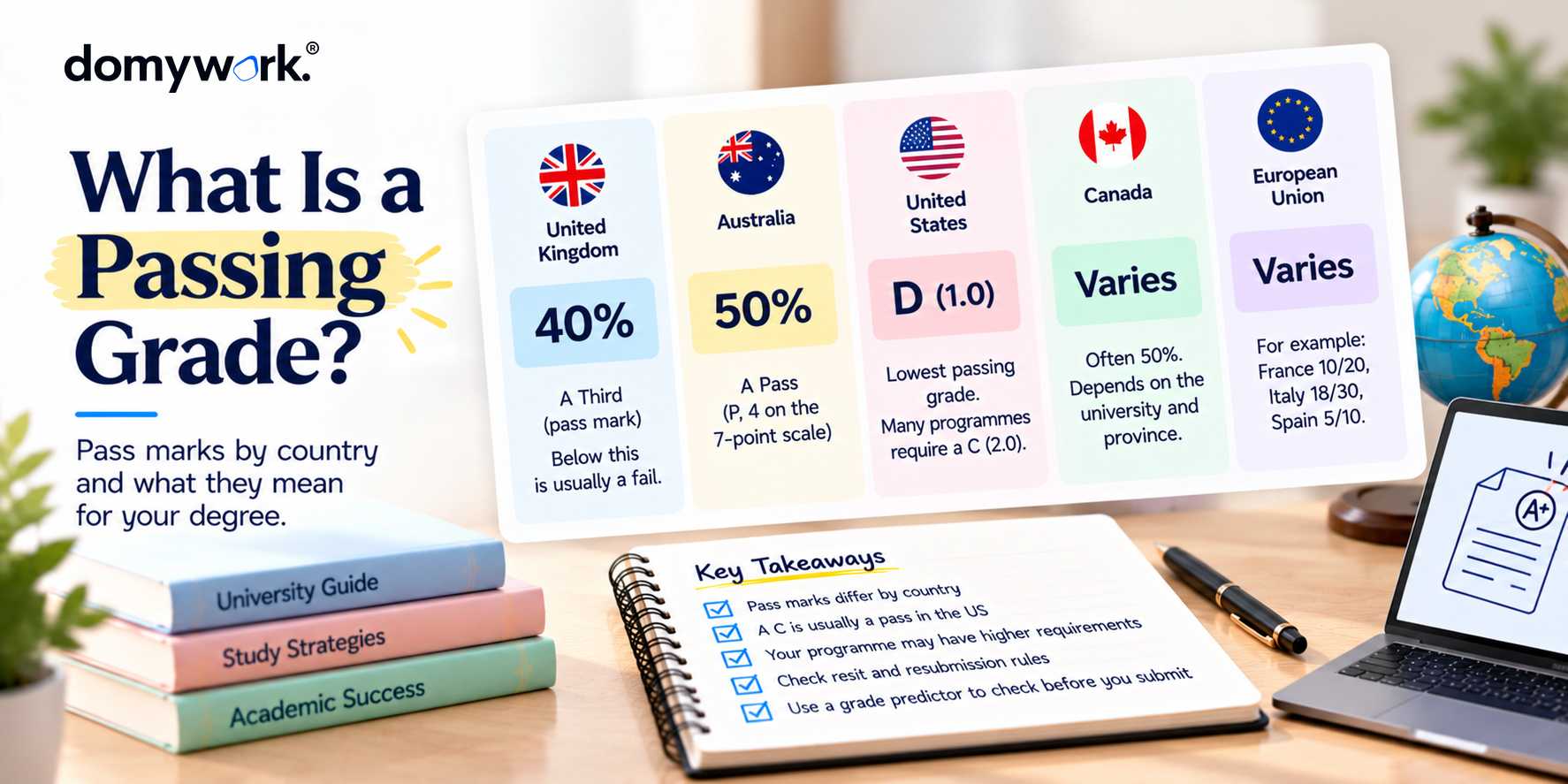
What is a passing grade

A passing grade depends on where you study. In the UK the pass mark is typically 40 per cent. In Australia it is 50 per cent. In the US a D (1.0) is the lowest passing grade, though many programmes require a C (2.0) average. Canada and the EU vary by institution and country. What…

27 Oct 2026 · 3 min read

Grades and marking

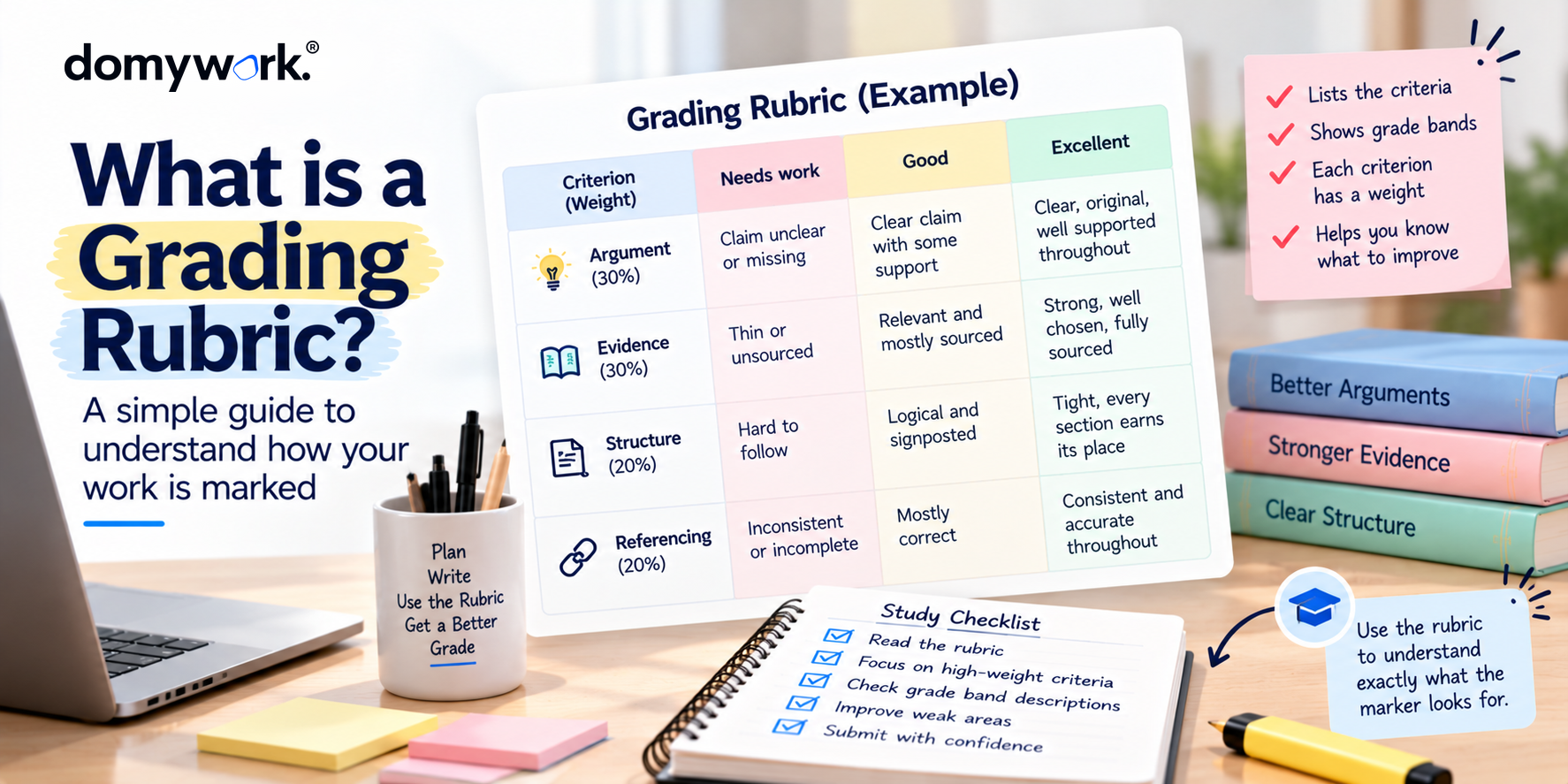
Grading rubrics explained

A grading rubric is the scoring guide your marker uses on your work. It lists the criteria they judge, such as argument, evidence, structure and referencing, and describes what each grade band looks like for each one. Read it closely and you know exactly what the mark is built from, which is often the difference…

26 Oct 2026 · 4 min read

Grades and marking

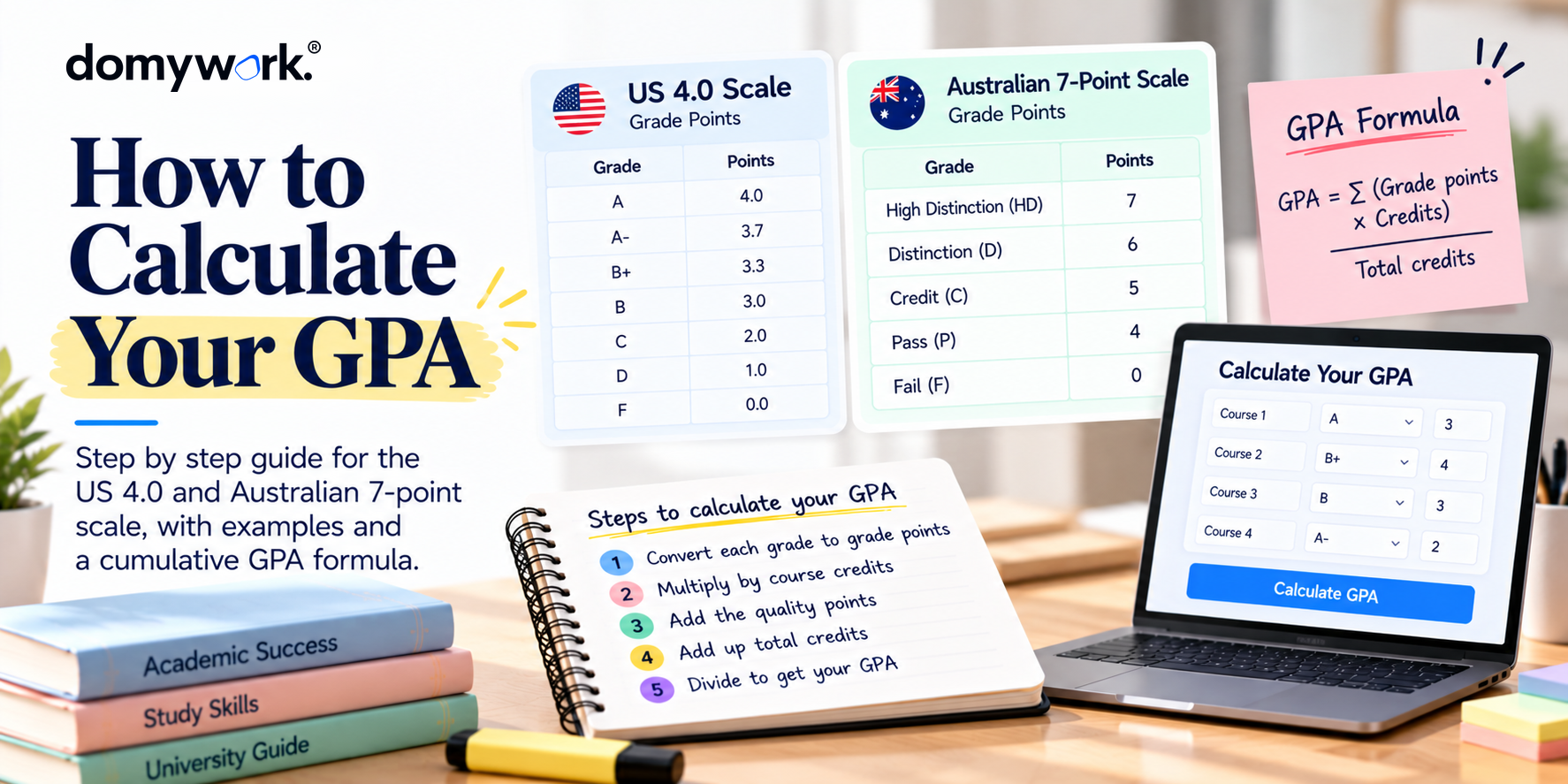
How to calculate your GPA

To calculate your GPA, turn each grade into grade points, multiply by the course credits, add the results, then divide by the total credits. On the US 4.0 scale an A is 4.0. On the Australian 7-point scale a High Distinction is 7. The UK and most of Europe do not use a GPA at…

25 Oct 2026 · 4 min read

Plagiarism and AI

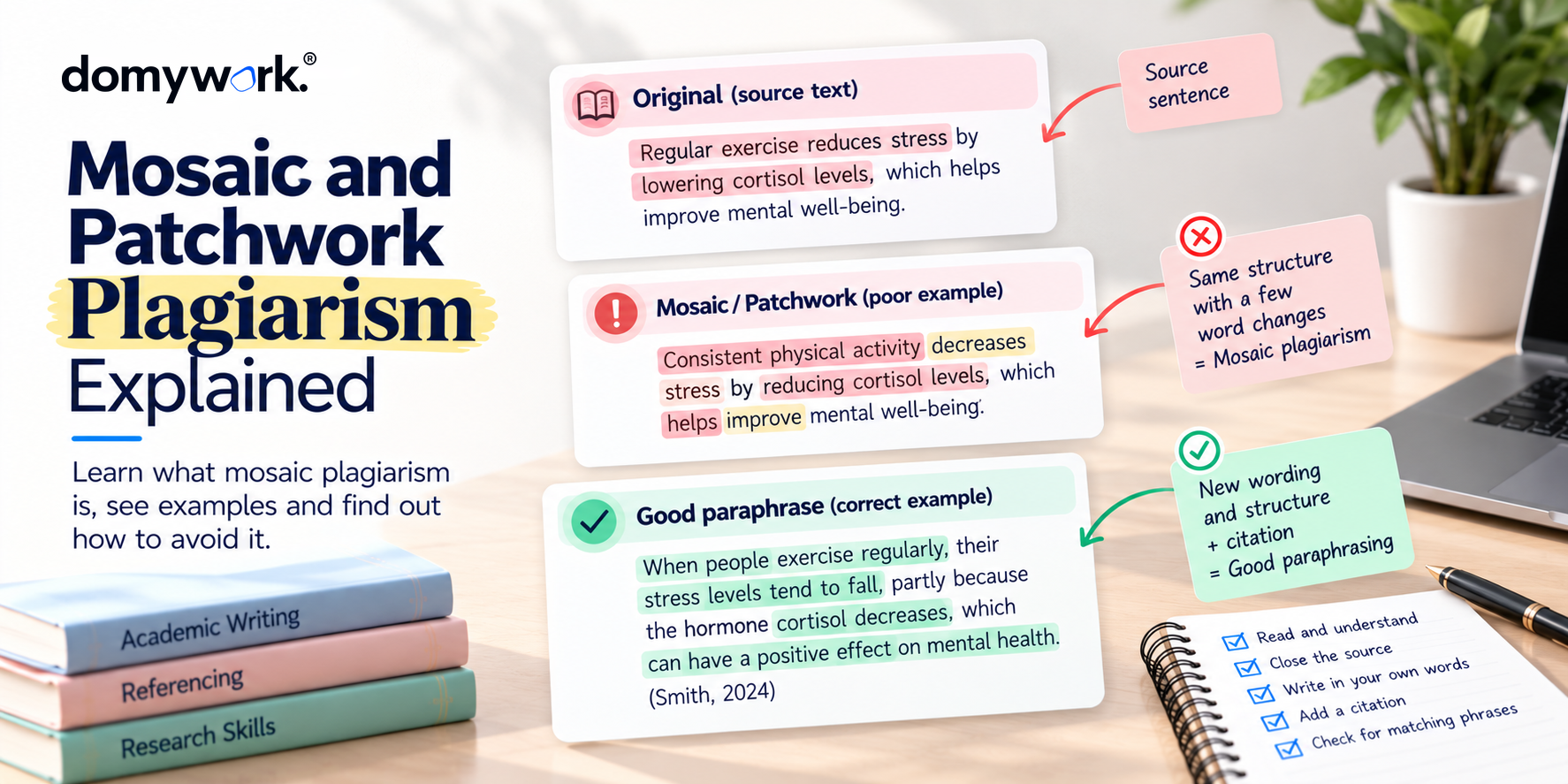
Mosaic and Patchwork Plagiarism Explained

Mosaic or patchwork plagiarism is mixing copied phrases from a source with your own words, often by swapping a few words while keeping the original structure. It is easy to do by accident through close paraphrasing, and it still counts as plagiarism even when cited. The fix is to rebuild the idea fully in your…

24 Oct 2026 · 6 min read

Plagiarism and AI

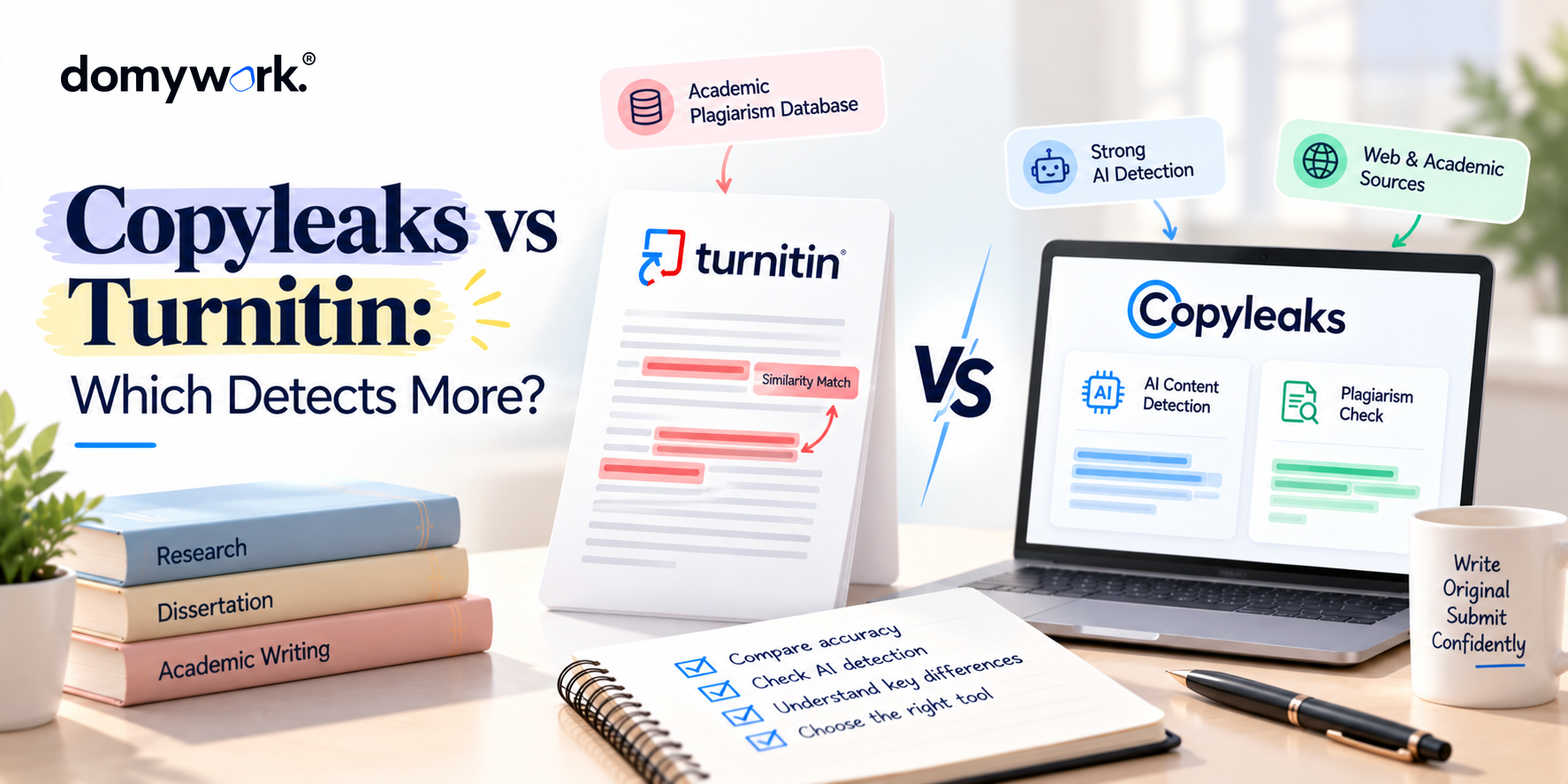
Copyleaks vs Turnitin: Which Detects More?

Turnitin is the academic standard for plagiarism, with the largest student and journal database, but you usually cannot run it yourself. Copyleaks is an accessible tool with a strong reputation for AI detection that you can use directly. For the plagiarism result your university grades on, Turnitin wins. For AI detection and self service access,…

23 Oct 2026 · 7 min read

We use cookies for analytics and ads to improve DoMyWork, including our own record of how pages are used and your approximate city (never your IP address). Accept or reject them; the site works either way. Privacy Policy