On this page
The short answer
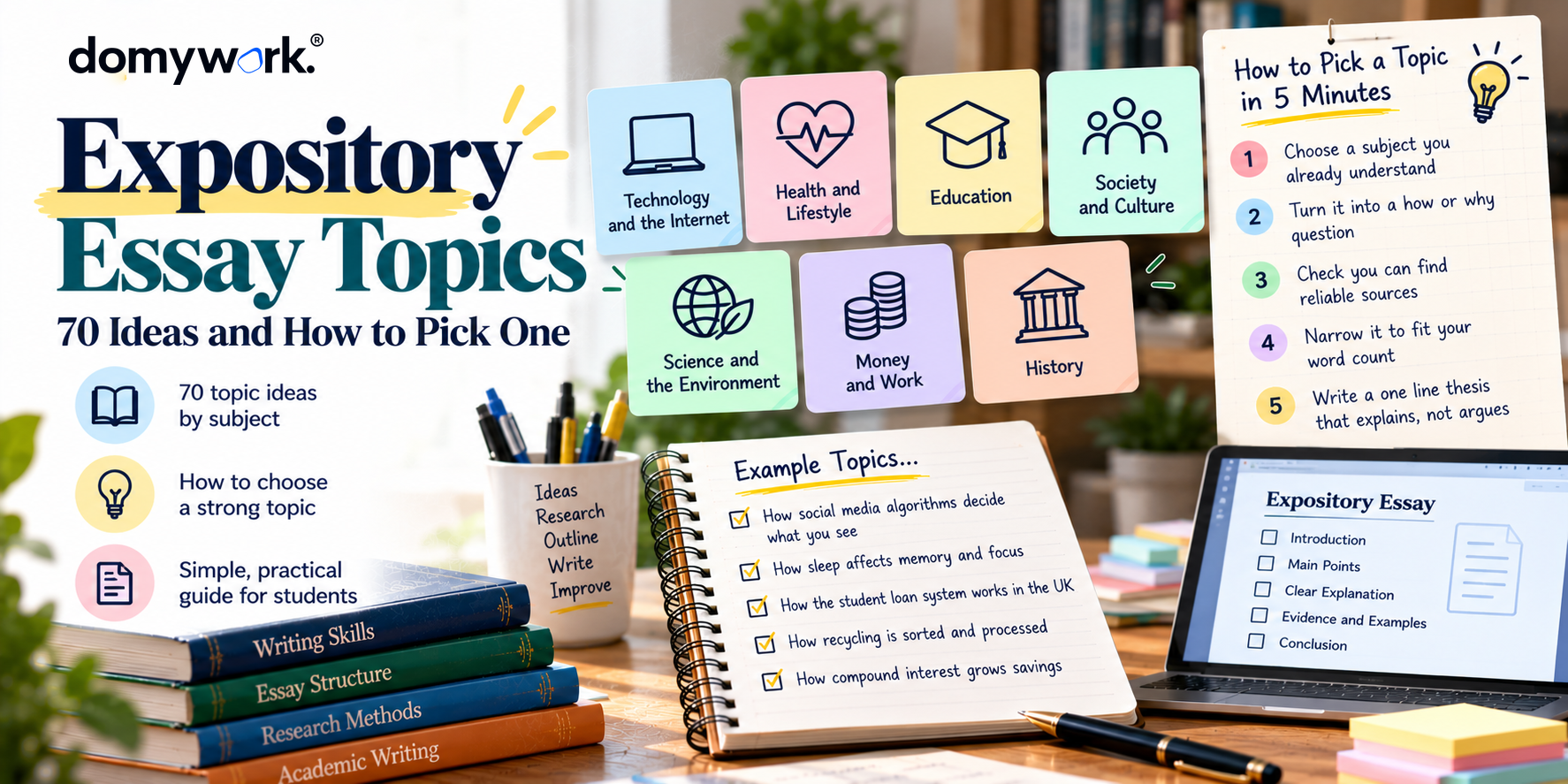
An expository essay explains or informs. It does not argue a side. Good topics are specific, easy to research, and can be explained in clear parts. Below are 70 topics by subject, then a five minute method to pick one you can actually finish.
What makes a good expository topic
- It has a clear how or why you can explain.
- There is enough reliable information to research.
- It is narrow enough to cover in your word count.
It stays neutral. If you find yourself arguing a side, that is an opinion essay, not an expository one. In that case, start from the opinion essay topics list instead.
70 expository essay topics by subject
Technology and the internet
- How social media algorithms decide what you see
- How two factor authentication keeps accounts safer
- How online reviews influence what people buy
- How streaming changed the music industry
- How open source software is built and funded
- How cloud storage works
- How facial recognition is used in everyday apps
- How video games are tested before release
- How a website reaches the first page of search
- How misinformation spreads online
Health and lifestyle
- How sleep affects memory and focus
- How the body processes caffeine
- How hydration affects concentration
- How stress shows up in the body
- How a balanced meal plan is built
- How vaccines train the immune system
- How screen time affects eyesight
- How exercise changes mood
- How first aid works for common injuries
- How meal prep saves time and money
Education
- How the student loan system works in the UK
- How exams are marked and moderated
- How note taking methods compare
- How online courses are built
- How plagiarism checks work
- How study groups improve learning
- How apprenticeships differ from degrees
- How grades are predicted from coursework
- How referencing protects you from plagiarism
- How feedback improves a second draft
Society and culture
- How a jury trial works
- How local elections are run
- How languages change over time
- How festivals shape local economies
- How public libraries are funded
- How charities measure their impact
- How fashion trends start and spread
- How museums decide what to display
- How city planning affects daily life
- How volunteering benefits communities
Science and the environment
- How recycling is sorted and processed
- How solar panels turn light into power
- How weather forecasts are made
- How coral reefs support marine life
- How electric cars store energy
- How water is treated before it reaches your tap
- How the greenhouse effect works
- How earthquakes are measured
- How bees support food production
- How antibiotics fight infection
Money and work
- How compound interest grows savings
- How credit scores are calculated
- How a start up raises funding
- How supply and demand set prices
- How remote work changed offices
- How tax is collected from a salary
- How inflation affects everyday spending
- How a CV gets shortlisted
- How freelancing income is managed
- How a mortgage works
History
- How the printing press changed communication
- How the internet was first built
- How the NHS was founded
- How trade routes shaped early cities
- How photography developed over time
- How women won the vote in the UK
- How space travel progressed
- How ancient libraries collected knowledge
- How currency replaced bartering
- How maps were made before satellites
How to pick a topic in five minutes
1. Choose a subject you already half understand.
2. Turn it into a how or why question.
3. Check you can find three solid sources.
4. Narrow it to fit your word count. If you are writing to a set length, the 1500 word essay plan shows how to split the words.
5. Write a one line thesis that promises to explain, not argue.
Before you submit
Once the essay is drafted, check the structure with clear headings if the brief allows them.
Before you submit, run your draft through Plag Check for a Turnitin similarity and AI report in about 15 minutes. Your draft is not stored in Turnitin’s database, so it will not come back as a match when you hand in.
Not sure where your draft stands? Upload it with your brief and rubric to Grade Predictor and see your likely grade before you submit. The first two predictions are free and you do not need a card. Your files are kept private and never shared, and you can delete them from your result page.
Frequently Ask Questions
What is an expository essay?
An essay that explains or informs a reader about a topic. It stays neutral and does not argue for one side.
How is it different from a persuasive essay?
A persuasive essay argues a position and tries to convince you. An expository essay just explains how or why something is the case.
How long should an expository essay be?
Follow the brief. Many run between 500 and 2,000 words. If yours is set at 1,500, see the 1500 word essay plan.
Can I use the word I in an expository essay?
Usually avoid it. Keep the tone neutral and third person unless your tutor says otherwise.
Written by the DoMyWork team. First published 20 Oct 2026.